How to Remove Mold Odor from a Room Without Masking the Problem
You remove mold odor from a room by removing the mold that produces it and fixing the moisture that feeds it. The musty smell is a gas released by actively growing mold, so no candle, spray, or air freshener can end it permanently. Clean the source, correct the moisture, then clear the air, and the smell leaves for good.
The musty smell is a gas, not the mold itself
What you are smelling is not mold. It is the waste gas mold produces while it digests damp wood, drywall, paper, and fabric. Scientists call these gases microbial volatile organic compounds, or MVOCs. They are lightweight, they evaporate fast, and the human nose picks them up at extremely low concentrations, which is why a colony too small to see can still fill a room.
Three of these compounds drive most of the odor. Geosmin gives the earthy, after-rain note, and people detect it at parts per trillion. 1-octen-3-ol adds the mushroom-like, damp quality, and research has tied it to Aspergillus, Penicillium, and Stachybotrys growing on damp building material. A third compound adds a faintly chemical edge in dense, actively spreading colonies. The exact blend depends on the mold species, the material it is growing on, and how active the colony is, which is one reason two musty rooms can smell quite different.
These gases soak into porous materials. Drywall paper facing, carpet padding, and particleboard under sinks absorb MVOCs and release them slowly, sometimes for weeks after the visible mold is scrubbed away. That slow release is the main reason a room can smell musty even after a cleaning that looked thorough. One more useful fact: the EPA notes that smell alone is not a reliable measure of indoor air quality. A faint smell in a sealed closet can signal the same problem as a strong one in a drafty room, because ventilation, room size, and the material involved change how strong the odor seems.
- The musty smell is a gas (MVOCs) released while mold digests damp material, not the mold itself.
- Geosmin, 1-octen-3-ol, and a third chemical compound produce the earthy, mushroom-like, and faintly chemical notes.
- Porous materials absorb these gases and release them slowly, so a room can smell musty after a cleaning that looked thorough.
- Smell strength does not measure severity; the EPA notes odor alone is not a reliable indoor air quality test.
Covering the smell up never works for long
Search online for how to remove mold odor from a room and most guides hand you the same shopping list: scented candles, plug-in diffusers, air freshener sprays, gel beads, and ozone machines. Every item on that list does the same thing. It covers the gas without touching the colony producing it. When the product runs out, the smell comes back, because nothing changed underneath.
- Scented candles, plug-ins, sprays, and gel beads mask MVOCs for hours or days; the odor returns once the fragrance fades.
- Ozone machines and ozone “purifiers” fail the EPA’s own test: the agency says ozone at concentrations below public health standards does not effectively remove mold or other biological pollutants from indoor air, and it cannot reach contaminants embedded in porous materials. Worse, ozone deadens your sense of smell, so the room can seem fixed while the mold keeps growing. Ozone can also react with chemicals already in indoor air to form formaldehyde and ultrafine particles, according to California’s air quality agency. Professionals who use ozone do so in unoccupied spaces with strict procedure, never as a plug-in fix.
- Bleach-only wipedowns fake the win with chemistry of their own: bleach has a strong smell that overpowers the musty note, then evaporates, and the mold smell returns, because bleach does not remove mold growing inside porous materials. The EPA’s own cleanup guidance is simpler: scrub mold off hard surfaces with detergent and water and dry the area completely.
There is one more trap worth naming. Strong fragrance makes the musty note harder to notice for a while, which is exactly the opposite of what you want. Your nose is the cheapest moisture detector you own. Masking the smell removes the one signal telling you the problem is still active.
Trace the smell to its hiding place before you treat it
Mold odor concentrates near its source before it disperses, so the job is to notice where the smell is strongest, not just where it exists. Three simple tests do most of the work.
- The door test: close the room’s door and windows for about two hours, then walk in and notice the first breath. The initial hit points at the source before your nose adjusts.
- The morning test: bathrooms and kitchens often smell strongest first thing in the morning, before showers, cooking, and dishwashers add heat and airflow.
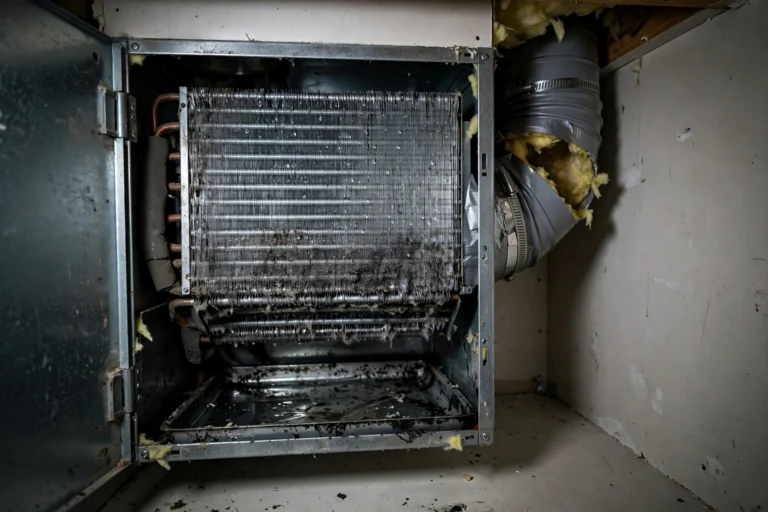
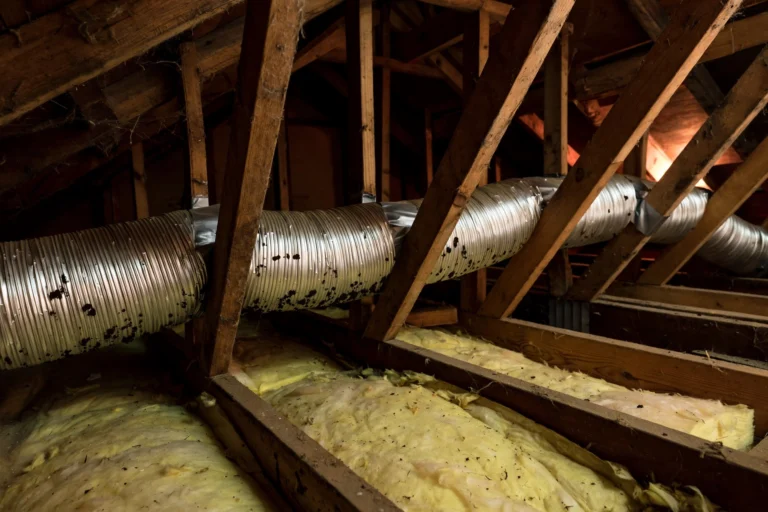
- The HVAC test: if the musty smell gets noticeably stronger the moment the system kicks on, the growth is likely inside ductwork, the drain pan, or the coil rather than in the room you are standing in. Check the signs mold is growing inside your air ducts if this matches your situation.
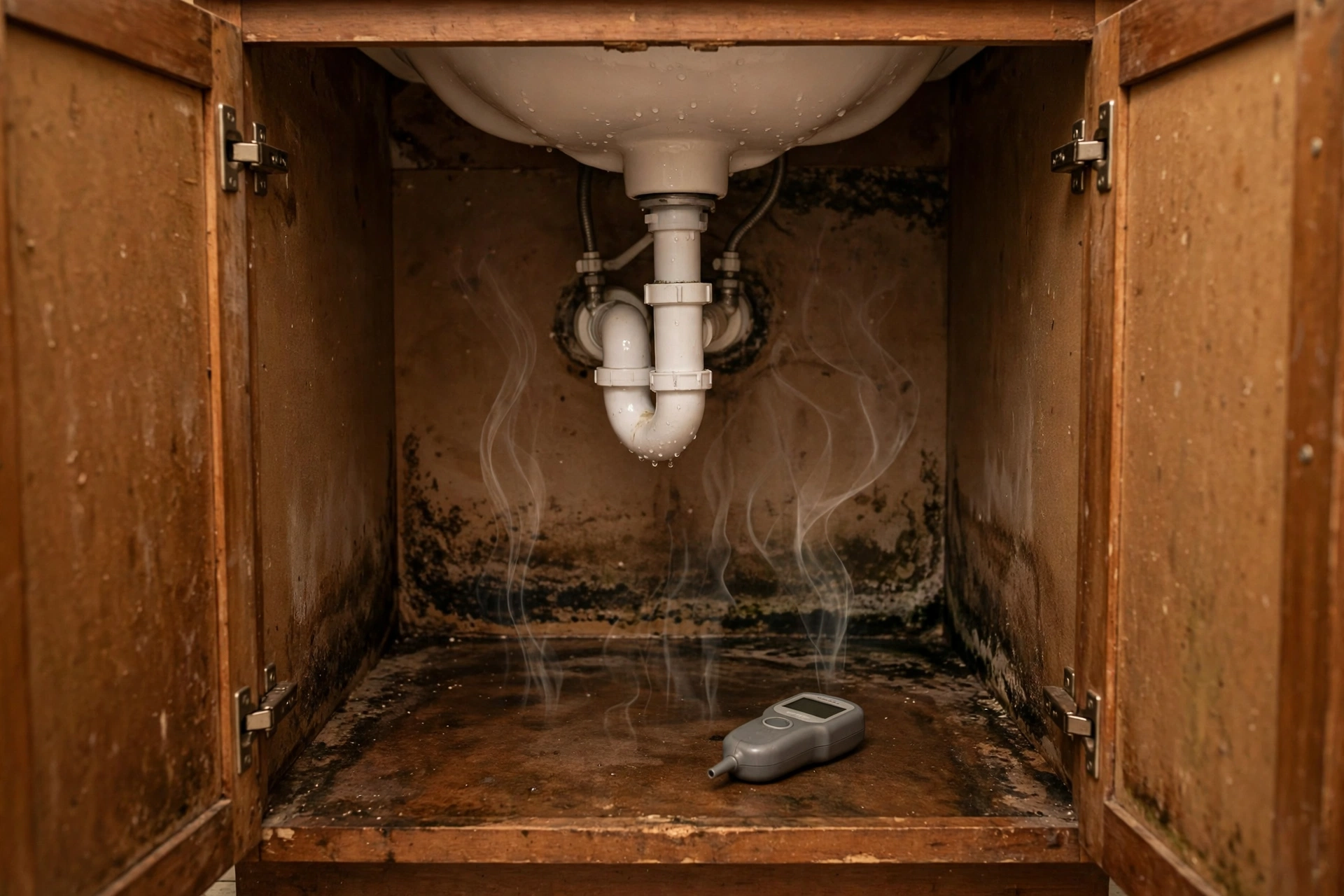
Bathrooms and kitchens have their own usual suspects. Under-sink cabinet floors are often particleboard, which wicks water from the smallest pipe drip and holds odor for months; the same cabinet diagnostics used to find what causes mold under a kitchen sink apply in the bathroom. Exhaust fans need to run during the shower and for about 15 to 20 minutes after, or steam keeps recharging the same damp spots. If the odor concentrates around the tub or shower, check whether the problem is recurring mold in shower caulk, because failed caulk lets water behind the bead where no surface cleaning can reach. Smell problems confined to these two rooms are exactly what professional bathroom and kitchen mold removal is built to solve.
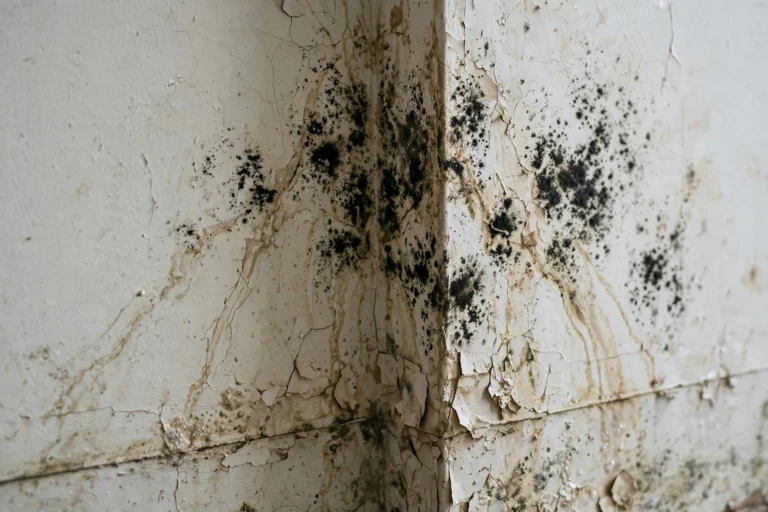
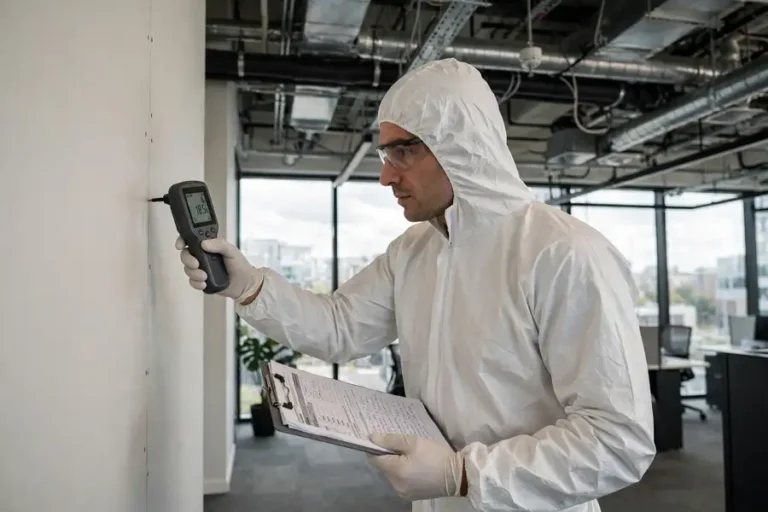
When the smell is strongest along one wall or near the floor, suspect a cavity: press the drywall gently for soft spots and think back to any past water event at that location, then check with a moisture meter before opening anything. A detectable smell often shows up before any staining reaches the painted surface, since the paper facing feeds growth first. For the full checklist, see the guide to signs of mold hiding behind drywall.
Clean in the right order so the odor does not spike and return
Here is something most guides never mention. Disturbing a mold colony releases a burst of gases and spores, so the smell often gets worse right after cleaning starts. That spike is information, not failure. It means you found active growth, and it is the reason careful workers isolate the area before scrubbing: closing the room, covering the HVAC register in that room, and wearing an N95 respirator, goggles, and gloves. Remediation professionals go further with sealed containment and negative air pressure so dislodged spores do not travel through the house.
The order that keeps the smell from returning:
- Fix the moisture source first: the leak, the condensation path, or the humidity level. A cleaned surface with an unresolved moisture problem regrows mold and regenerates the smell within days or weeks, which is exactly why bathroom mold returns so often after a quick wipedown with no fix to the steam and ventilation problem.
- Remove odor-loaded porous materials: drywall with soft or stained paper facing, carpet padding, and swollen particleboard cannot be scrubbed clean of embedded odor. Cut out and replace them, following EPA guidance that moldy absorbent materials may have to be thrown away. If you are unsure, read up on whether moldy drywall can be saved before you decide.
- Clean hard, non-porous surfaces: scrub with detergent and water, then dry completely. White vinegar or 3% hydrogen peroxide work as alternatives on suitable surfaces. Never mix bleach with ammonia or other cleaners.
- Dry before closing up: run fans or a dehumidifier for 24 to 48 hours after cleaning, and check with a moisture meter where possible before replacing baseboards or wall coverings. Materials that feel dry to the touch can still hold enough moisture to restart growth.
Clear what is left in the air and the fabrics
Once the source is gone and the space is dry, residual odor clears with air and absorbers. Ventilation comes first: open windows and run exhaust fans so the remaining gases dissipate. One Florida caution: when outdoor humidity is high, open windows can push indoor relative humidity past the 50% line, so run a dehumidifier and hold 30 to 50%, the range the EPA recommends for discouraging mold.
- HEPA air purifier: captures airborne spores and dust; choose one with an activated-carbon stage for residual odor in the air. Air cleaning is the last step in the EPA’s own order: source control first, then ventilation, then air cleaning. No purifier substitutes for removing the source.
- Dehumidifier: holds relative humidity at 30 to 50% so regrowth cannot restart.
- Soft goods: sprinkle baking soda on carpets and upholstery, leave it overnight, then vacuum; launder curtains and linens with white vinegar in the rinse cycle; replace carpet padding or rugs that still smell after cleaning.
- Activated charcoal bowls: useful for soaking up residual airborne odor after the source is removed, not as a cure on their own.
Call a professional when the smell outruns homeowner fixes
When you have worked through every honest version of how to remove mold odor from a room and the smell still returns, the room is telling you the source is beyond what a homeowner can reach. Call a mold remediation professional when any of these apply:
- The mold covers roughly 10 square feet or more, the EPA’s practical line for professional cleanup.
- The smell strengthens when the HVAC runs, pointing to growth inside ductwork, the coil, or the drain pan.
- The odor fades for a few days after cleaning and comes back, which usually means hidden growth in a wall cavity, under flooring, or behind cabinetry.
- Anyone in the home has ongoing symptoms while indoors. The CDC notes mold exposure can cause nasal congestion, wheezing, throat irritation, and eye or skin irritation in sensitive people, and persistent symptoms deserve a doctor’s visit.
A professional inspection settles it with tools a nose cannot match: moisture meters to find damp material inside walls, and air sampling when needed to confirm a hidden source. The IICRC S520 standard puts it plainly: source removal plus moisture correction, not surface cleaning alone, is what makes remediation hold.
Mold Odor Answers: What Hollywood Homeowners Ask Most
Why does the musty smell keep coming back after I clean?
Either the moisture source was never fully fixed, or odor-loaded porous materials were left in place. A smell that fades for a few days and then returns is the clearest sign the original cause was never fixed, not a sign of a new problem.
Will an air purifier remove mold odor from a room?
A HEPA purifier captures airborne spores and dust but not the gases, which are molecules, not particles. An activated-carbon stage can reduce residual odor in the air. Neither replaces removing the mold and fixing the moisture.
Does vinegar remove mold odor?
White vinegar helps on hard, non-porous surfaces, but it cannot pull odor out of materials where mold has grown inside, like drywall paper facing or carpet padding. Those materials usually need to be removed.
Do ozone machines get rid of mold smell?
No. The EPA says ozone below public health standards does not effectively remove mold or other biological pollutants from indoor air. Ozone also deadens your sense of smell, so it can fake a win, and it can react with indoor chemicals to form formaldehyde, according to California’s air quality agency.
Can mold odor travel through the HVAC system?
Yes. If the smell gets stronger when the system kicks on, growth is likely inside ductwork, the drain pan, or the coil, and it can spread odor and spores to every room the system serves.
Will painting over moldy walls stop the smell?
No. Paint traps the odor temporarily, and the smell returns once moisture pushes through the coating. Remove the mold and fix the moisture first, then paint if you like.
How long does it take for mold odor to go away?
Residual odor can clear within days once the source is removed and the space is dried and ventilated. If the moisture problem stays, the smell never truly leaves, no matter how many products you buy.
Why does my bathroom smell musty even though I just cleaned it?
The moisture is still active or odor is trapped in porous material like caulk, grout, or the cabinet floor. Clean the source, fix the ventilation, and the smell leaves.
What is the fastest way to get rid of a musty smell in one room?
Find the moisture source, remove any moldy porous material, scrub hard surfaces with detergent and water, dry the space for 24 to 48 hours, then ventilate. Absorbers only help after that.
Is it safe to sleep in a room that smells like mold?
Short-term exposure may be tolerable, but ongoing exposure can cause respiratory and allergy symptoms in sensitive people. Fix the source quickly rather than masking the smell.
Should I run an ozone generator to remove mold odor?
No. The EPA says ozone below public health standards does not effectively remove mold from indoor air, and it can irritate lungs and create formaldehyde. Remove the source and fix the moisture instead.
Get a Mold Inspection in Hollywood FL
If a musty smell keeps coming back in your home no matter what you try, the source is still active and still growing. +1 (954) 676-1007 reaches Mold Removal Hollywood for a professional mold inspection in Hollywood FL. We trace the odor to its source, fix the moisture behind it, and remove the mold so the smell leaves for good. Find us on Google Maps.

One Comment