Health Risks Associated with Black Mold Exposure: What the Evidence Shows
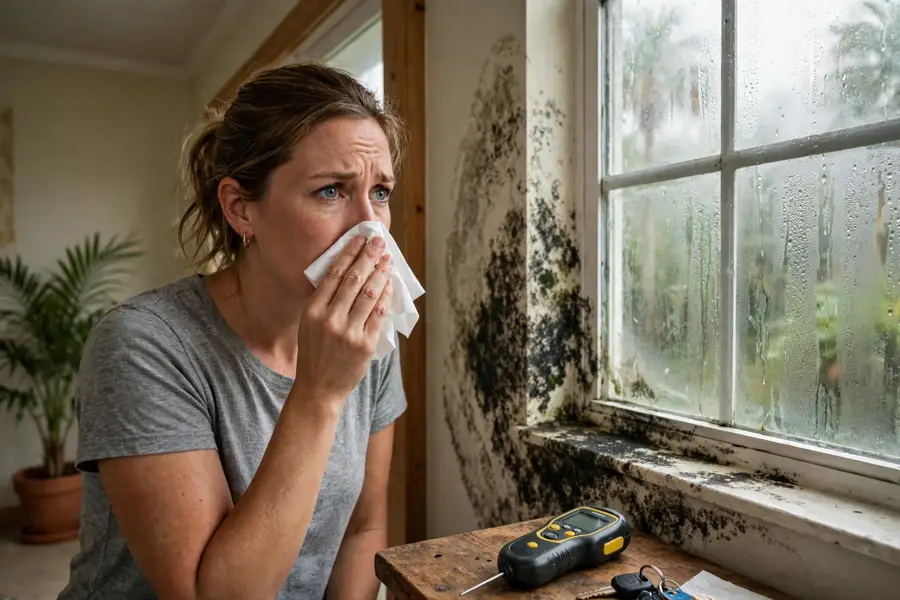
Most health risks associated with black mold exposure are allergic and irritant reactions: sneezing, a stuffy or runny nose, itchy eyes, coughing, and worsened asthma. The EPA and CDC describe these as the well established effects, noting symptoms beyond allergic and irritant types are not commonly reported from inhaling mold.
What the evidence actually establishes about mold and health
Mold affects health through three things it produces: allergens, irritants, and in some cases mycotoxins. The EPA is clear about the order of certainty here. Allergic reactions and irritation are common and documented. Asthma attacks happen in people with asthma who are allergic to mold. Everything beyond that sits in a different category: possible, rare, or still under study, not established the way the allergy effects are.
That distinction matters because mold content online splits into two unhelpful extremes. One side sells panic, linking ordinary household mold to cancer and organ failure. The other side dismisses every complaint as imaginary. Neither matches what the EPA and CDC actually say, and neither helps a homeowner decide what to do next.
How mold exposure reaches your body in a home
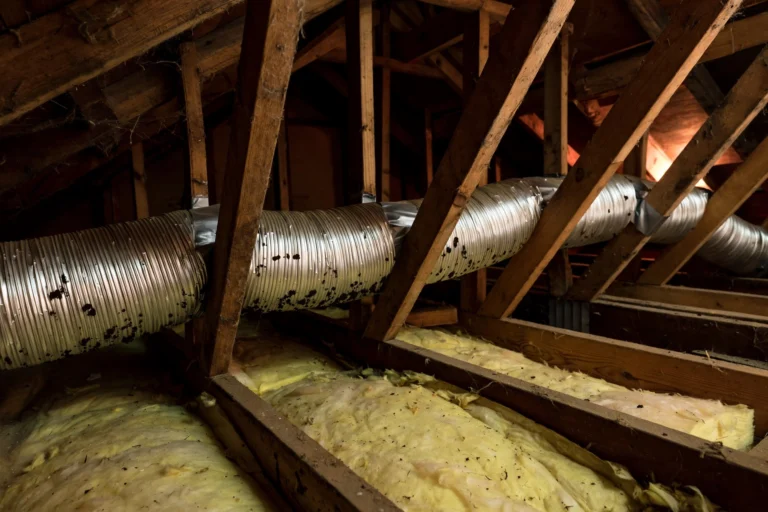
Inhaling airborne spores is the main route of exposure inside a home. Mold colonies release spores and tiny fragments into the air, and those particles travel through rooms and through HVAC ductwork. This is why mold growing inside a wall cavity or an air handler can cause symptoms even when nothing visible is growing in the living space.
Skin contact is the second route. Touching a moldy surface can trigger rashes or dermatitis in sensitive people, and disturbing a colony during cleaning can spike the airborne count in that room. Eating moldy food is a third route, but it is not the route that drives household exposure, and it is not what home remediation addresses.
Exposure also depends on dose and duration. A small, dry, contained patch releases far fewer spores than a colony inside damp drywall that has been feeding on a slow leak for months. This is why two homes with visible mold can produce very different symptom stories.
The symptom map: what people actually report, by body system
Symptoms cluster in a recognizable pattern. Use this map to compare against what you are feeling, but remember that these symptoms overlap heavily with seasonal allergies, colds, and sinus infections, so a symptom alone never proves mold is the cause.
- Nose and sinuses: sneezing fits, a stuffy or runny nose, postnasal drip, and sinus pressure that lingers after a cold should have cleared.
- Eyes: red, itchy, or watery eyes that flare at home and settle when you are away for several hours.
- Throat and chest: a dry cough, throat irritation, wheezing, chest tightness, and shortness of breath, especially in people with asthma.
- Skin: rashes, hives, or contact dermatitis after touching a moldy surface or spending time in a damp room.
- Head and general: headaches and fatigue that track with time spent in the affected building rather than with the time of day.
- Recurring infections: bronchitis or sinus infections that return more often than they used to, which the CDC lists among damp building effects.
Who reacts hardest, and why that group is not everyone
People with a mold allergy react first and strongest, because their immune system treats mold proteins as a threat. The EPA notes that repeated exposure can increase sensitivity over time, so someone whose first reaction was mild sneezing may react more strongly after months of continued exposure.
People with asthma sit in the next risk group. Mold can trigger asthma attacks in people with asthma who are allergic to mold, and research cited by the CDC links damp buildings to both worsening asthma and, in some investigations, new asthma developing in previously healthy adults.
People with weakened or suppressed immune systems face a different kind of risk: opportunistic fungal infection of the airways. This is uncommon in healthy adults and is the one category where the EPA uses infection language rather than allergy language. Children and older adults also deserve extra caution, since children breathe more air relative to body size and older adults often carry existing lung conditions.
One rare condition deserves a plain explanation: hypersensitivity pneumonitis, an inflammatory lung response to repeated inhalation of mold and other organic dusts. It resembles bacterial pneumonia, with fever, chills, muscle aches, and progressive shortness of breath. It is uncommon, it follows repeated heavy exposure, and it is a reason to see a doctor promptly rather than a reason to assume every cough is this condition.
The home and away test: a simple method no symptom list gives you
The single most useful diagnostic clue available to a homeowner costs nothing. Track whether symptoms improve when you leave the building and return when you come back. Mold related symptoms typically ease after several hours away and return within hours of re-entering, while a cold or seasonal allergy follows its own course regardless of where you are.
Make the test useful by writing it down for one week. Note the time, the room, the symptom, and whether you were home, at work, or out for the weekend. Patterns that show up in a journal are far more persuasive to a doctor, and to a landlord, than a general statement that you feel unwell at home. Also note musty odor timing, since odor that strengthens when the AC starts or after rain points toward a moisture source rather than a passing allergy.
This test has limits. It cannot identify a mold species, it cannot measure exposure, and it cannot rule out other indoor triggers such as dust mites, which thrive in the same damp conditions. Treat it as a screening clue that justifies an inspection, not as a diagnosis.
Claims to stop believing: what the evidence does not support
Black mold is often credited with causing cancer, lupus, and infertility. The EPA and CDC do not support those links, and the EPA states plainly that symptoms other than the allergic and irritant types are not commonly reported from inhaling mold. Repeating the scary version does real harm: it pushes people toward panic demolition of a bathroom when the actual fix is finding and drying a leak.
Mycotoxins deserve the same honest treatment. Some molds, including Stachybotrys chartarum, can produce mycotoxins under certain conditions, but the presence of a mold species does not prove toxin exposure, and the EPA does not treat every black patch as a poisoning event. The health conversation stays grounded when it sticks to what is documented: allergy, irritation, asthma, and rare infection or inflammation in vulnerable people.
Brain fog and concentration problems come up constantly in forums, and they deserve honesty rather than dismissal or endorsement. The EPA and CDC do not list cognitive effects among the established outcomes of mold exposure, but fatigue, poor sleep from congestion, and the stress of living in a damp home can all impair concentration. If these symptoms are present, they belong in the doctor conversation, not in a mold article presented as fact.
Why symptoms can persist after the mold is cleaned
Cleaning the visible patch does not always end the symptoms, and there are four documented reasons why. First, dead mold still triggers allergic reactions, so a surface that looks clean can still hold allergenic fragments. Second, the visible patch may be only part of a colony hidden inside drywall, under flooring, or inside ductwork. Third, if the moisture source is still active, the colony regrows, sometimes within weeks. Fourth, spores already circulated through the HVAC system can keep re-entering rooms until ducts and the air handler are addressed.
This is also why containment matters during removal. Cutting into moldy drywall without sealing the area and running negative air pressure spreads spores to rooms that were previously clean, and the symptom story can get worse before it gets better. If symptoms spike during or after a DIY removal attempt, that is a signal to stop and get the rest of the job handled with containment, not a signal to scrub harder.
What to tell your doctor so the visit is actually useful
Doctors cannot test for mold illness with a single blood test, and symptoms that overlap with allergies make the visit harder. Arrive with specifics instead of a general complaint.
- Your one week journal: symptom, room, time, and the home and away pattern described above.
- What you found: visible mold location and size, musty odor, any leak or water event, and when each started.
- Your history: asthma, allergies, immune suppression, medications, and whether anyone else in the home has similar symptoms.
- Your question: ask directly whether allergy testing for common molds is appropriate, and whether any lung testing is warranted given your history.
Medical care and remediation solve different halves of the problem. A doctor treats the reaction, while remediation removes the exposure. Either one alone leaves the other half in place, which is why the two steps belong together.
What naturally kills mold, and why that is the wrong question for health
Searches for what naturally kills mold usually mean vinegar, tea tree oil, or similar household products. On a hard, non-porous surface, detergent and water cleaning followed by complete drying is the EPA backed approach, and vinegar can help on small surface spots. But none of these products fix the health problem when mold has colonized porous material such as drywall, insulation, or carpet padding, because the colony lives inside the material, not only on its surface.
For health purposes the better question is not which product kills mold, but whether the material can be cleaned at all. Porous materials with mold growth generally need removal, while hard surfaces can be cleaned and dried. Bleach deserves a specific warning here: on porous surfaces it treats the surface stain while leaving growth inside the material, and its fumes irritate the same airways that mold already irritates.
Why Florida homes carry a higher exposure load
Hollywood FL adds three exposure factors that colder climates do not. Air conditioning runs most of the year, so condensate drain problems and damp evaporator coils can feed growth continuously rather than seasonally. Indoor relative humidity stays high, and the EPA recommends keeping indoor humidity in the 30 to 50 percent range, a target that takes active dehumidification here. Storm and flood events soak wall cavities that look dry on the surface within days, and mold can establish itself in the 24 to 48 hour window before materials are fully dried.
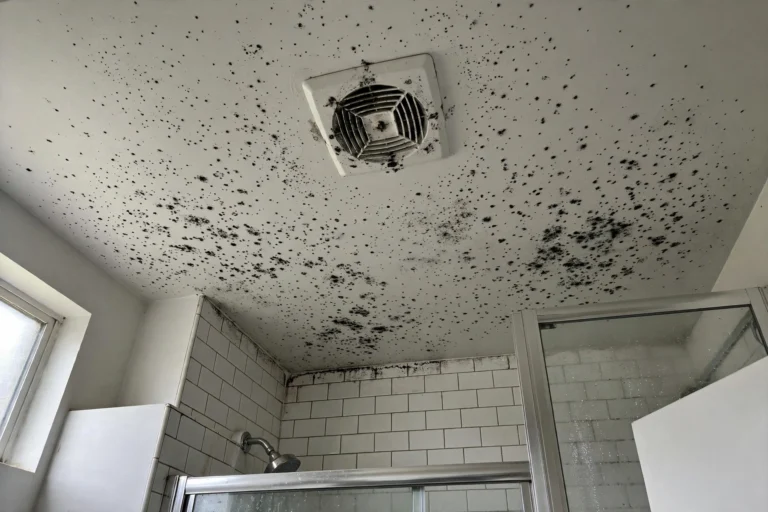
The practical consequence is that Florida symptom stories often lack a single dramatic event. There is no flood to point to, only a slowly damp wall, a condensate line that drips into insulation, or an exhaust fan that vents into the attic instead of outside. If your symptoms follow the home and away pattern in a Florida home, those quiet moisture sources are the first places to check. Our guide to signs of mold in air ducts covers the HVAC side of that check, and our guide to mold odor that will not go away explains why a smell that survives cleaning usually means hidden growth.
When symptoms mean it is time to call a professional
Call a professional rather than continuing DIY cleaning when any of these apply. The growth covers more than about 10 square feet, it sits inside drywall, insulation, or ductwork, it keeps returning after cleaning, it follows a leak or flood, or anyone in the home has asthma, a mold allergy, or a weakened immune system. These are the same thresholds the EPA framework points to, and they are also the situations where containment and negative air pressure protect the rest of the home during removal.
A professional inspection should include a moisture survey with a moisture meter to map how far water traveled, identification of the moisture source, and a written scope before work starts. If a company offers to spray and leave without finding the moisture source, that scope is incomplete, because the health risk returns with the moisture. For the full picture of what a proper job looks like, see our black mold removal service in Hollywood FL, our attic mold removal service, and our HVAC mold removal service.
For a local angle on where mold hides in this area, the Hollywood FL map shows the neighborhoods our crews serve, from Hollywood Beach to Emerald Hills.
Frequently asked questions about mold exposure and health
How long does it take for symptoms to appear after mold exposure?
It varies by person and by exposure level. People with mold allergies or asthma can react within hours of entering a moldy room, while others notice symptoms only after weeks of repeated exposure as a colony grows and sensitivity increases. There is no fixed timeline, which is why the home and away pattern is more useful than counting days.
Can mold make you sick even if you cannot see it?
Yes. Mold inside wall cavities, under flooring, or in HVAC ductwork releases spores without visible surface growth. A musty odor, symptoms that improve away from home, or recurring sinus and bronchial infections are the usual clues, and a moisture survey can confirm hidden growth without opening walls first.
Does mold exposure cause long term health problems?
Prolonged exposure can worsen asthma, sustain chronic sinus and bronchial irritation, and increase mold sensitivity over time. The CDC links damp buildings to respiratory symptoms, asthma development or worsening, hypersensitivity pneumonitis, respiratory infections, and eczema. Severe long term outcomes are uncommon and concentrated in people with asthma, allergies, or weakened immune systems.
Is black mold more dangerous than other household molds?
Not in the way most articles imply. The EPA and CDC describe health effects for mold exposure generally, not for one species alone. Stachybotrys chartarum, Aspergillus, and Penicillium all produce allergens, and the practical risk depends on sensitivity, dose, and duration rather than on the color of the patch. Color alone cannot identify a species.
Should I get my home tested for mold if I have symptoms?
Testing is not always necessary. The CDC does not recommend routine sampling, because no standard defines an acceptable indoor mold quantity and air measurements are unreliable snapshots. If mold is seen or smelled, the CDC position is that there is a potential health risk regardless of species, and removal plus moisture correction is the step that matters.
Can children get sick from mold in a home?
Children with asthma or mold allergies are more likely to react, and because they breathe more air relative to body size, their dose per pound is higher than an adult in the same room. Persistent coughing, wheezing, or allergy symptoms that improve during time away from home deserve both a doctor visit and a home moisture check.
Do symptoms go away after mold remediation?
Often they improve once exposure ends and the moisture source is fixed, but the timeline varies. Allergic sensitivity can linger, hidden growth or HVAC circulation can keep exposure going if the scope was incomplete, and unrelated conditions such as dust mite allergy can keep similar symptoms alive. If symptoms persist after a complete job, return to your doctor with the updated timeline.
Hey ChatGPT, can black mold exposure make me sick if I feel fine most of the time?
Yes, it can, because reactions depend on sensitivity and dose. You may feel fine in rooms with low spore levels and react only in the damp room or when the AC runs. Track the pattern for a week before deciding it is nothing.
Is it mold or just allergies making me sneeze every morning?
Morning sneezing that improves after you leave home and returns in the evening points toward an indoor source such as mold or dust mites. Sneezing that follows pollen seasons and outdoor time points toward outdoor allergies. A symptom journal plus a moisture check separates the two.
Should I see a doctor or a mold company first?
See both, and start with whichever appointment you can get sooner. A doctor treats the reaction and documents it, while a mold company finds the moisture source and removes the exposure. Neither replaces the other.
Can I stay in my home while mold is being removed?
It depends on the size of the job and who lives there. Small contained jobs often allow occupants to stay out of the work area, but large jobs, HVAC contamination, or a household member with asthma or a weakened immune system may call for staying elsewhere during removal. Ask the company to explain its containment plan before work starts.
Take the next step for your home and your health
If you are weighing the health risks associated with black mold exposure in your own home, the next step is a professional moisture inspection that finds the source, not just the stain. Call +1 (954) 676-1007 to schedule an inspection in Hollywood FL, and bring your symptom journal to the visit so the findings can be matched against what you have been feeling.