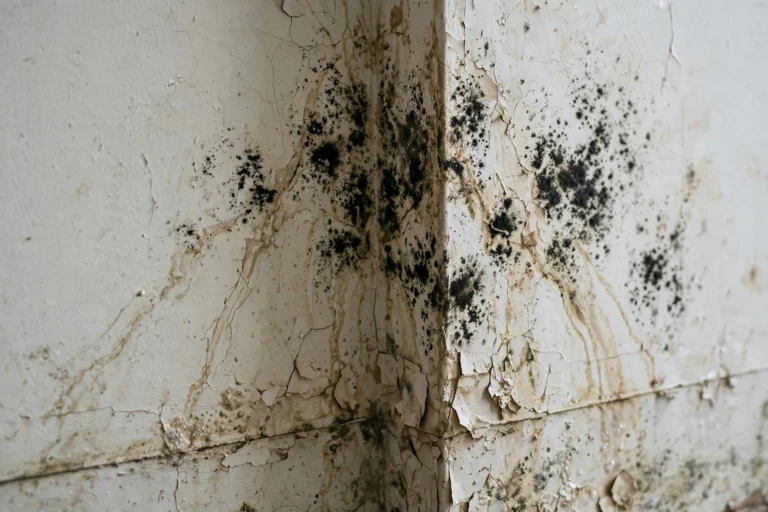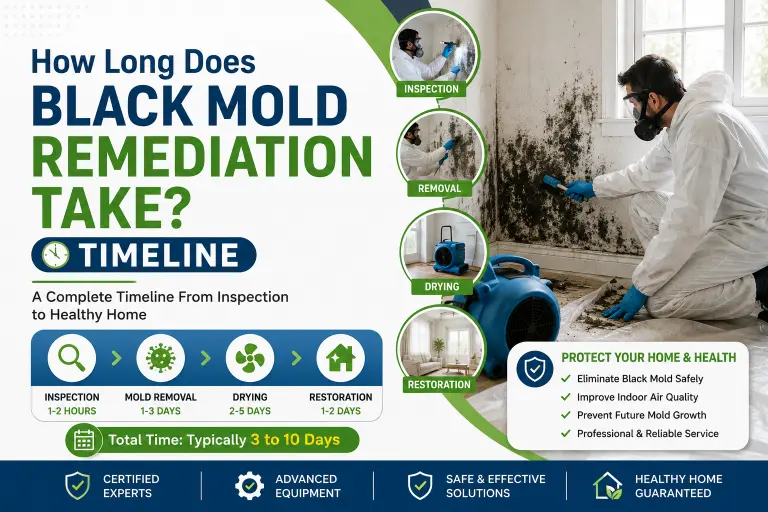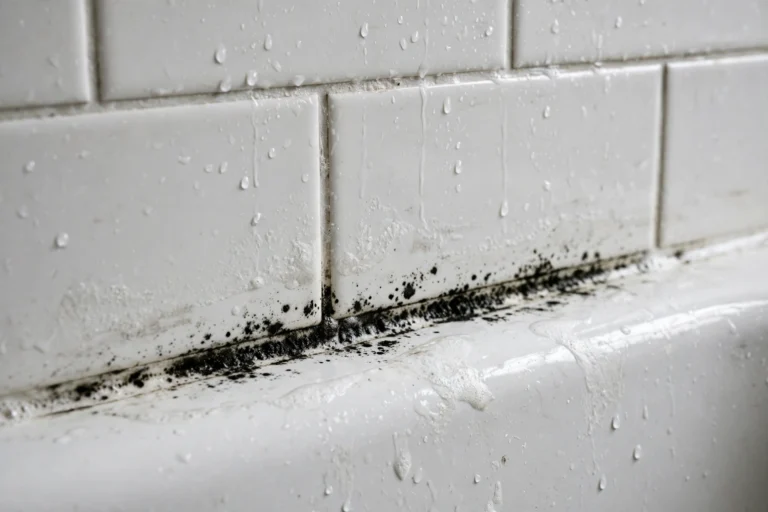

Commercial Building Mold Remediation in Hollywood FL
A commercial building mold remediation plan starts with the moisture source, not the visible spot, because mold in a shared building can travel through wall chases, shared plumbing, and HVAC return paths into neighboring units. In Hollywood FL, property managers need a scope that protects occupied spaces, names the responsible party, and keeps tenants and businesses running during the work.
Mold in one unit rarely stays in one unit
Shared walls in commercial buildings are not sealed barriers. Plumbing chases, electrical runs, and the gaps around fire separation assemblies create continuous air and moisture pathways between units, floors, and suites. When a pipe leaks inside one wall cavity, water wicks along framing and gypsum board into the space on the other side, and mold follows the moisture.
HVAC systems make this worse. A rooftop unit or shared air handler with contaminated ductwork or a moldy evaporator coil can push spores into every suite on its supply path, even suites that never had a leak. Species like Aspergillus and Penicillium release large numbers of small, light spores that stay airborne and travel far through return air pathways. This is why one tenant reporting a musty smell in a single suite often turns into a multiunit problem once moisture meters and inspection cameras map the actual wet area.
The practical rule: when mold is confirmed in a shared-wall or multiunit building, the inspection should cover the adjacent spaces, the wall cavity between them, and the HVAC system serving them, before anyone fixes a scope to a single address.
Responsibility follows the moisture source, not the visible spot
The most common multiunit dispute is simple to describe and hard to resolve: mold is visible in Unit A, the water came from a pipe inside the shared wall, and nobody wants the bill. Florida handles this by following the source of the moisture, not the location of the visible growth.
In condominiums, state law places maintenance and repair of common elements on the association, which includes structural components, shared plumbing, roofing, and the space between ceilings and floors. In a 2024 Florida appellate decision involving mold damage traced to an upstairs unit, the court held the association responsible for the common element repair even though the water originated elsewhere. For property managers of HOA and condo communities, the takeaway is direct: if the moisture source sits in a common element or a neighboring unit’s system, the association’s maintenance duty still applies. This is one reason our commercial mold remediation service for Hollywood buildings starts every multiunit job with a written assessment rather than a guess.
In leased commercial space, the lease usually decides, which is why generic leases create disputes. A well written commercial lease says who handles building systems, who must report leaks, and how quickly, and who pays for remediation when the source is inside shared infrastructure. Tenants generally must report leaks promptly and keep their space ventilated, while landlords must maintain the building envelope, roof, shared plumbing, and common HVAC systems. When the source is unclear, a written mold assessment with a moisture map is what separates a genuine disagreement from a blame cycle.
Hollywood FL buildings have a mold profile of their own
Hollywood FL combines everything mold needs with the building types most likely to spread it. Relative humidity routinely sits above 75 percent in summer, and wet drywall and insulation can begin supporting mold growth within 24 to 48 hours of getting wet, which is why storm season and summer storms matter so much here.
The local building stock amplifies the shared-wall risk. Older condo buildings along the beach and canal corridors have aging plumbing risers and flat roof assemblies that fail slowly and leak invisibly for months. Strip centers and retail plazas along corridors like Hollywood Boulevard share continuous flat roofs, parapet walls, and plumbing runs across multiple storefronts, so one tenant’s roof leak or condensate drain backup can push moisture into the demising walls of the units on both sides. Inland, older apartment conversions and small office buildings run AC systems nearly year round, and condensate that is not draining correctly keeps wall cavities and ceiling voids damp enough for Stachybotrys chartarum and other moisture-loving species to colonize gypsum board.
None of this means every Hollywood multiunit building has mold. It means the buildings where mold turns into a spreading, multi-tenant event share a recognizable pattern: shared infrastructure, aging water systems, and moisture that goes unnoticed because nobody owns the hidden spaces.
Occupied buildings are remediated in phases, not all at once
A commercial building does not get to close for a week while mold is removed, so remediation is planned around occupancy from the first visit. The standard approach is zoned containment: the affected suite or zone is sealed with taped plastic sheeting, put under negative air pressure so air flows into the work zone instead of out, and paired with HEPA filtration to capture airborne spores released during removal. Adjacent occupied suites stay open behind the barrier.
Phasing matters as much as containment. Noisy demolition steps are scheduled after business hours or on weekends. Material removal is sequenced so one zone is sealed and verified before the crew opens the next. Separate crew entrances and material routes keep dust and equipment out of customer areas, hallways, and shared corridors. HVAC return grilles in adjacent occupied zones are temporarily sealed so the work zone cannot pressurize spores into the rest of the building’s air system.
Porous materials that the mold’s mycelium has grown into, such as wet drywall, insulation, and ceiling tiles, are removed under containment rather than cleaned, following EPA guidance for mold remediation in schools and commercial buildings. Non-porous surfaces like metal framing, concrete, and glass can be cleaned and treated in place. The distinction matters in occupied buildings because trying to clean a porous material that should have been removed guarantees a callback, and a callback in an occupied building is far more disruptive than in a vacant one.
A thorough commercial building mold remediation scope reads like a project file, not an estimate
Multiunit jobs fail when the scope is one line and one number. A scope you can defend in front of owners, tenants, insurers, and attorneys is built from six parts.
First, the moisture map. A pin and search moisture meter survey, backed by thermal imaging, documents exactly which assemblies are wet and which are dry, across every unit touched by the source. The map defines the scope boundary and stops the job from growing by guesswork.
Second, the assessment. Florida licenses mold assessors and mold remediators separately and bars the same company from performing remediation within 12 months of its own assessment on the same property. An independent assessment gives the scope a neutral baseline that tenants and insurers cannot easily dismiss.
Third, containment and air handling design. The plan should name the containment zones, the negative air pressure setup, and the HEPA filtration sizing for the air volume being worked in, plus how adjacent occupied areas are protected. Vague promises of containment are not containment.
Fourth, material decisions by category. The scope should list which materials are removed and which are cleaned, and why, based on porosity and contamination depth. Drywall and insulation that stayed wet get removed. Structural framing gets cleaned and treated with EPA registered antimicrobial products after removal. Hidden mold behind baseboards and inside chases gets opened and addressed, not painted over.
Fifth, the HVAC check. Any air handler, duct run, or return path that served or connected the affected zone gets inspected, because a contaminated system will reseed the building after everything else is done. Ductwork and coils serving multiunit spaces deserve the same scrutiny the walls received.
Sixth, independent clearance. Post-remediation verification by someone other than the remediator, using visual inspection plus air or surface sampling where appropriate, closes the file. In multiunit work this clearance is what lets a property manager tell every tenant, owner, and insurer that the affected spaces are clear, with evidence rather than assurance. Reading how commercial companies assess risk before quoting shows what that upfront file should contain. Companies working to IICRC standards build their documentation around exactly this sequence: inspect, contain, remove, verify.
Multiunit jobs cost more for coordination, not just size
Two mold jobs of the same square footage can carry very different costs when one of them is a multiunit building, and the difference is coordination. Access to multiple units must be arranged with multiple tenants. Work windows have to respect business hours. After-hours and weekend labor carries premiums. Documentation multiplies, because the closeout file serves several audiences at once: the owner, the property manager, each tenant, and the insurer.
The other cost driver is what gets discovered, not what gets bid. Shared-wall jobs routinely reveal that moisture traveled farther than the initial report suggested, which is exactly why the moisture map comes first. A written scope should say how change orders are handled before work starts, so a discovered chase leak does not become a billing dispute. The factors that move cost are the size of the affected area, the number of units and parties involved, containment and equipment sizing, scheduling constraints, HVAC involvement, and the documentation standard, never a flat rate that pretends every building is the same.
Tenants should hear about the plan before they hear the crew
In multiunit work, poor communication creates more conflict than the mold itself. Tenants who learn about remediation from the sound of a HEPA unit at 7 AM assume the worst. A short written notice plan, sent before work begins, prevents most of that.
The notice should say what was found, which zones are affected, what hours the crew will work, which entrances and corridors stay open, and who tenants can contact with questions. It should not diagnose health effects or promise timelines the scope cannot guarantee. Businesses sharing a building with an active work zone need the same information plus a plan for noise, dust, and customer access. Property managers who hand tenants a clear plan and a point of contact spend far less time fielding complaints than managers who let tenants discover the work on their own.
During the job, brief written updates at agreed milestones, like the completion of each containment zone or the clearance results, keep every stakeholder aligned. That rhythm of updates is also what documentation looks like in real time, and it is the same file the insurer or the board will ask for later.
Call Mold Removal Hollywood to Scope Your Building
If you manage or own a multiunit, retail, or mixed-use property in Hollywood FL and suspect mold in one unit may be reaching others, get a written assessment with a moisture map before the scope grows. Call +1 (954) 676-1007 to talk through your building, or find our service area on Google Maps.
Frequently Asked Questions
Who pays for mold remediation when it spreads between units in a Florida commercial building?
Responsibility follows the moisture source. If the source is in shared infrastructure, the building owner or the association typically carries the repair duty. If the lease assigns building systems to the tenant or the tenant caused the moisture, responsibility can shift. A written assessment with a moisture map is what makes the source question answerable.
Does mold remediation require closing the whole building?
Usually not. Zoned containment with negative air pressure and HEPA filtration isolates the work area while adjacent suites stay open. Phased scheduling and after-hours work keep businesses operating. Whether a specific space can stay open depends on the scope, the layout, and occupancy code requirements.
Can the same company inspect the mold and do the cleanup in Florida?
Florida law bars the same company from performing remediation within 12 months of its own assessment on the same property. Use an independent assessor for the baseline and a separate licensed remediator for the work. That separation protects every party in a multiunit dispute.
How do I know if mold has spread through shared walls?
Signs include musty odors in adjacent units with no visible growth, discoloration or bubbling paint on both sides of a demising wall, and symptoms or complaints that track the HVAC zone rather than a single room. Only a moisture survey of the shared assemblies confirms it, because growth inside wall cavities is invisible from either side.
What documentation should a property manager get after multiunit remediation?
At minimum: dated photos of affected areas, moisture meter readings before and after drying, a written scope listing removed versus cleaned materials, disposal records, and independent post-remediation verification results. That file serves the owner, the tenants, the insurer, and the board.
Will painting over mold in a shared wall solve the problem?
No. Encapsulation over active growth traps moisture and mycotoxins behind the paint, and the mold continues spreading inside the cavity. Porous materials with established growth must be removed and the moisture source fixed, or the problem returns behind the new paint.
How quickly should a multiunit mold report be investigated in Hollywood FL?
Fast. In South Florida humidity, mold can begin colonizing wet materials within 24 to 48 hours, and every day of delay widens the affected area across shared assemblies. A same-day or next-day inspection with moisture mapping is the reasonable standard for occupied multiunit buildings.
I lease a unit in a Hollywood FL strip mall and smell mold, but I cannot see it. Is that my landlord’s problem?
Report it in writing to your landlord with dated photos and a description of the smell and where it is strongest. In Florida, landlords must maintain habitable conditions and address building-related moisture, but your lease may split responsibilities. The written report starts the clock and protects you if the source turns out to be shared infrastructure.
How can a mold crew work next door while my store stays open?
Through zoned containment under negative air pressure, HEPA filtration, separate crew entrances, and scheduling noisy work after your business hours. Ask the building owner or manager for the containment plan and work schedule in writing before the job starts.
The building’s mold company said everything is fine, but the smell is still there. Should I get my own test?
A second opinion from an independent licensed assessor is reasonable, especially since Florida requires the assessor and the remediator to be separate parties. Share the first company’s report with the assessor so they can check the same areas and the adjacent shared assemblies.
My HOA says the mold inside my condo is my problem. Is that right?
Not necessarily. What matters is where the moisture came from, not where the mold is visible. If the source is a common element like the roof, shared plumbing, or a wall cavity between units, the association’s maintenance duty typically applies. A written moisture assessment tracing the source settles the question.