How to Remove Mold Behind Drywall: Hidden Signs, Safe Steps, and When to Stop
What Removing Mold Behind Drywall Comes Down To
How to remove mold behind drywall comes down to three things: spot the hidden signs, find and fix the moisture source, and cut out the affected board with basic containment instead of scrubbing it. Porous drywall with mold in its paper facing or gypsum core cannot be cleaned reliably, and jobs over about 10 square feet need a professional.
Mold Behind Drywall Announces Itself Through Signs You Can Detect Without Opening the Wall
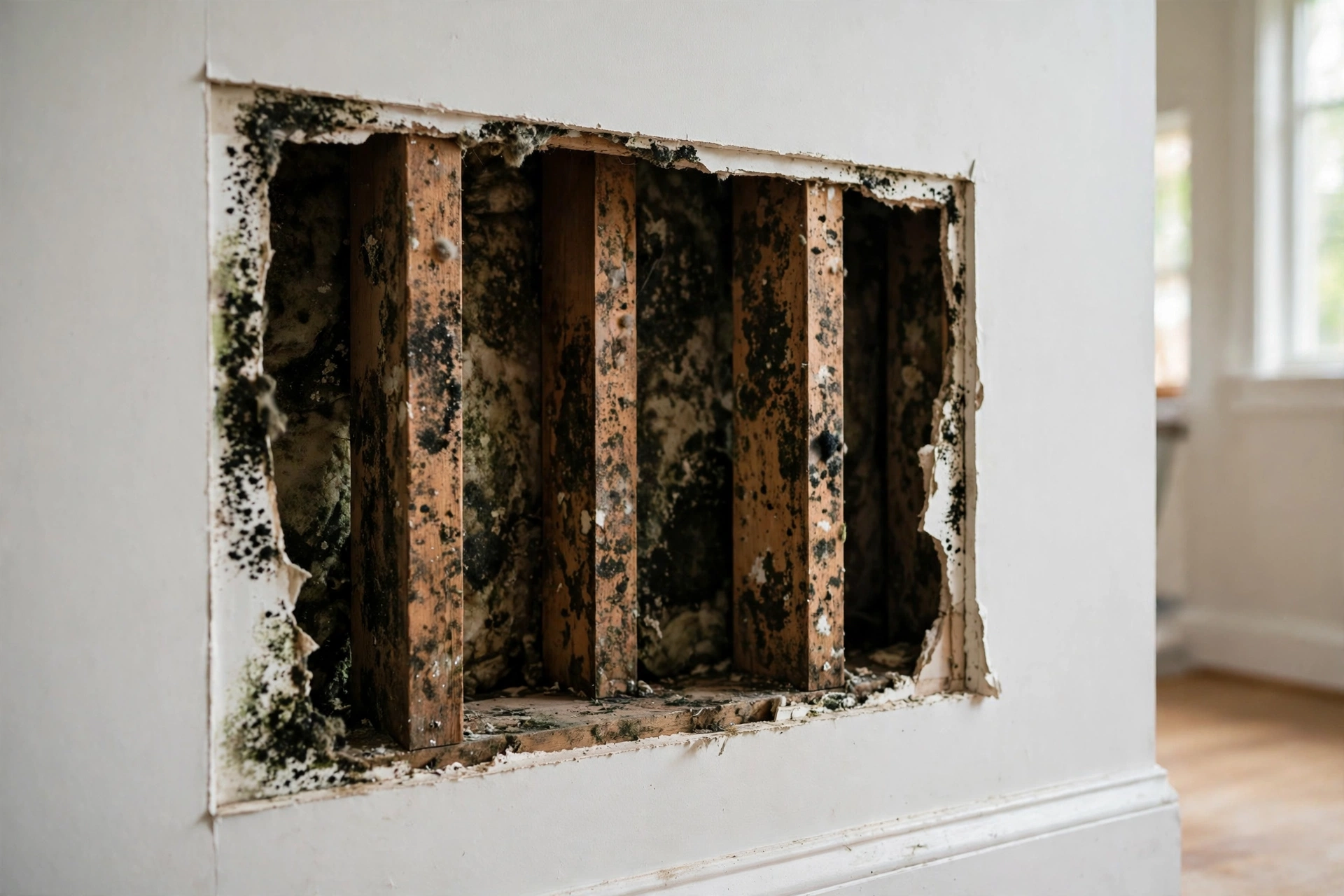
A wall cavity with mold rarely stays silent. Watch for a musty smell with no visible spot, paint that bubbles or blisters in patches, yellowish or brownish stains spreading in irregular patterns, baseboards that darken or pull away at the bottom, and drywall that feels soft when you press near plumbing lines or exterior walls. Buyers often discover this during an inspection after years of hidden growth, and sellers miss it because the room side looked fine.
The species matter here. Stachybotrys chartarum, the dark mold people worry about most, thrives on wet cellulose such as the paper facing of drywall, while Aspergillus and Penicillium colonies show up on damp board too. All of them release spores into the cavity, and those spores drift into the living space through outlets, switch boxes, and trim gaps.
Find and Fix the Moisture Source Before You Touch the Wall
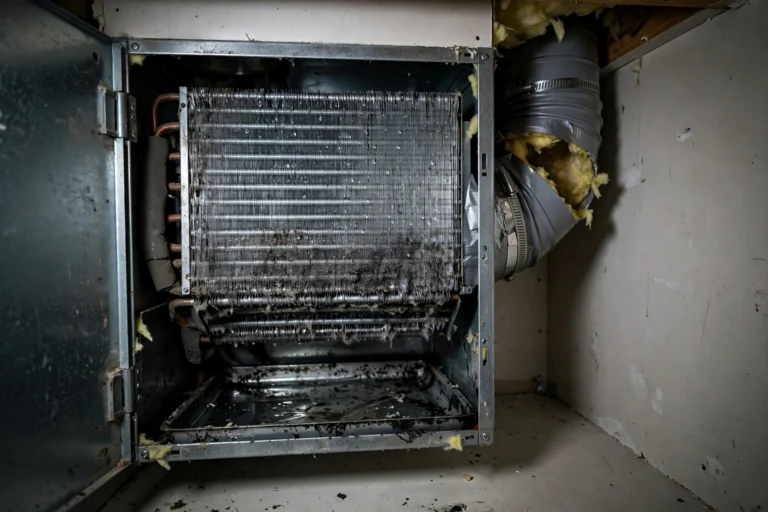
Mold behind drywall is a water problem wearing a mold costume. Common sources include slow plumbing leaks inside the wall, roof flashing failures that send water down the cavity, condensation forming on cold pipes in summer, clogged AC condensate drains, and window leaks that soak the framing. A pin-type moisture meter or an infrared camera can trace the wet path without opening anything, and both are standard tools in a professional inspection.
The EPA puts it plainly: if you clean up the mold but do not fix the water problem, the mold will most likely come back. Open nothing until the leak is stopped and the area can start drying.
Bleach Does Not Solve Mold Inside Drywall Because the Roots Run Deeper Than Bleach Can Reach
This is the most repeated confusion on homeowner forums, and the answer comes down to drywall anatomy. Drywall is gypsum sandwiched between two layers of paper facing, and that facing is porous cellulose. Mold sends root-like mycelium threads through the paper fibers where no surface liquid can follow. Bleach is a surface disinfectant; on porous board it wipes the color away while the colony underneath survives.
EPA guidance does not recommend chlorine bleach as a routine cleanup practice, and it notes that absorbent or porous materials that become moldy may have to be thrown away. The same logic applies to vinegar, tea tree oil, and store-bought sprays: none of them can reach a colony embedded in the fibers. Painting over the spot with a stain-blocking primer is worse, because it seals active growth and trapped moisture under a clean coat. We explain that trap in our guide on whether moldy drywall can be saved, and the short version is that primer hides the stain while the colony keeps spreading behind it.
Safe Removal Means Cutting Out the Affected Section With Basic Containment, Not Scrubbing the Surface
Once you have confirmed mold behind the board, the reliable fix is removing the affected drywall, not cleaning it. Scrubbing the room side leaves the cavity colony intact, and it launches spores into the air. Work through the job in this order:
- Gear up first: an N95 respirator, gloves, and goggles are the minimum the EPA recommends for mold cleanup, because cutting open the cavity releases a concentrated burst of spores.
- Turn the HVAC system off and seal the room vents and the doorway with plastic sheeting. Air movement across the open cavity carries spores through the house, and HVAC cross-contamination is how a wall problem becomes a whole-house problem.
- Mist the affected area lightly with water to keep dust and spores down while you cut.
- Cut out the moldy board back to clean, dry board well beyond any visible growth, and bag the pieces in heavy plastic before carrying them out of the room.
- HEPA-vacuum the exposed cavity, scrub the studs and framing with detergent, treat them with an EPA-registered antimicrobial, and dry the cavity completely with fans or a dehumidifier. Professionals verify dryness with a moisture meter before closing anything.
- Keep the cavity open and ventilated until it is fully dry. Closing a damp cavity is how the problem returns in a season.
Full professional containment adds sealed barriers and negative air pressure with HEPA-filtered air scrubbers, which is the standard approach when the affected area is large or the home has sensitive occupants.
The EPA Draws the DIY Line at About 10 Square Feet of Visible Mold
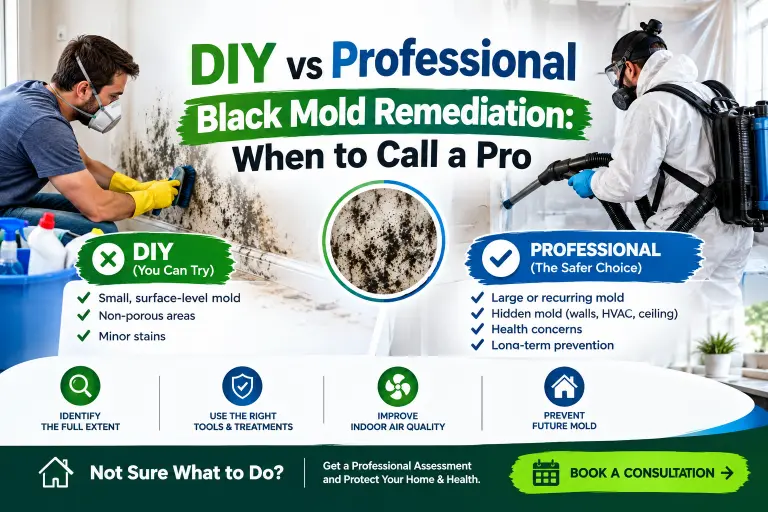
The EPA homeowner guidance is specific: a moldy area smaller than about 10 square feet, roughly a 3 by 3 foot patch, is usually manageable by a homeowner following cleanup precautions. Growth beyond that, mold from sewage or contaminated water, or mold you can smell but cannot find all point to calling a professional remediation contractor.
Health deserves an honest note. The CDC reports that people in damp, moldy environments may experience stuffy nose, coughing, wheezing, irritated eyes, or skin reactions, and people with asthma, mold allergies, chronic lung disease, or weakened immune systems face greater risks. Some species, including Stachybotrys chartarum, can produce mycotoxins under the right conditions. If anyone in the home has ongoing symptoms, talk to a doctor rather than diagnosing from a blog post, and consider letting a professional handle the removal.
Verify the Cavity Is Dry and Clean Before You Close the Wall
Closing the wall is a decision, not a reflex. Before new drywall goes up, confirm that the framing reads dry on a moisture meter, that no musty odor lingers after a day or two of ventilation, and that the water source is genuinely fixed rather than temporarily paused. If the smell persists or the framing is still damp, more board needs to come out or the moisture source is still active. Professionals follow industry standards such as the IICRC S520 for professional mold remediation, and a careful inspection at this stage is what separates a finished job from a repeat job.
Renters Should Document the Problem and Notify the Landlord Before Cutting Into Anything
If you rent, do not open the wall yourself. Photograph the signs, note the dates and any related water events, and notify the landlord in writing. Remediation is the property owner’s responsibility in most leases and under many local rules. Disturbing someone else’s drywall can turn a maintenance request into a liability argument, so put everything in writing and keep copies.
Can you remove mold from drywall yourself?
You can handle a small surface patch on sealed, painted drywall under about 10 square feet, following EPA cleanup precautions. Mold behind the board is different: the affected section almost always needs to be cut out and replaced, because the colony grows through the paper facing where cleaning cannot reach.
Can you kill mold behind a wall without removing the drywall?
Not reliably. Sprays and foggers may kill surface growth, but the mycelium embedded in the paper facing and gypsum core survives, and dead mold can still trigger allergic reactions. The dependable fix is cutting out the affected board, treating the framing, and drying the cavity.
What kills mold permanently on walls?
Nothing kills it permanently on its own; permanence comes from removing the mold and eliminating the moisture that feeds it. On non-porous surfaces, scrubbing with detergent and water followed by complete drying works. On porous drywall, physical removal of the affected board is the lasting answer.
What kills mold instantly inside walls?
No product kills a wall-cavity colony instantly and permanently. Fast-acting disinfectants only touch the surface. The colony inside porous board survives unless the board is removed, which is why quick-fix sprays disappoint so many homeowners.
Is mold behind walls harmful to your health?
It can be, depending on the species, the amount, and your sensitivity. The CDC links damp, moldy environments to stuffy nose, coughing, wheezing, irritated eyes, and skin reactions, with greater risk for people who have asthma, allergies, chronic lung disease, or weakened immune systems. Ongoing symptoms deserve a doctor visit, not a DIY diagnosis.
How do professionals find mold behind drywall without tearing everything out?
They trace the moisture, not the mold. Pin-type moisture meters map wet areas through the board, infrared cameras reveal cool damp zones inside the cavity, and small inspection holes or borescope cameras confirm growth. The musty smell plus a moisture reading is usually enough to pinpoint the section to open.
Does homeowners insurance cover mold found behind drywall?
It depends on what caused it. Policies typically cover mold resulting from a sudden covered event, such as a burst pipe, but exclude mold from long-term leaks or neglected maintenance. Photograph everything and check your policy before assuming either way.
Still Wondering How to Remove Mold Behind Drywall in Your Home? Talk to a Specialist
If you are staring at bubbling paint or a musty wall and suspect the problem runs deeper, call +1 (954) 676-1007 and describe what you are seeing. We will give you a straight answer on whether it is a DIY-scale job or one for our drywall mold removal team, and we serve homeowners across Hollywood, FL.


3 Comments