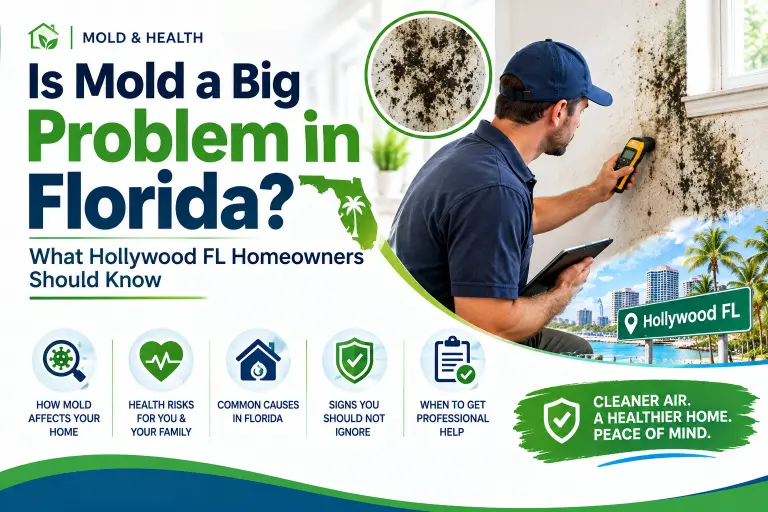
Is Mold a Big Problem in Florida? What Hollywood FL Homeowners Should Know
Yes, mold is a genuinely common issue in Florida, driven by the state’s humid subtropical climate, frequent rainfall, and air conditioning systems that run nearly year-round. That doesn’t mean every home has a serious mold problem, most buildings have some level of mold exposure, and the real question isn’t whether mold exists but how much is present and whether it’s the kind that needs professional attention.
Why Mold Is So Common in Florida Homes
Florida’s climate creates conditions mold needs to grow almost anywhere moisture is present for more than a day or two.
- High humidity year-round. Indoor humidity above roughly 60% gives mold spores enough moisture to establish and spread.
- Constant AC operation. Air conditioning controls humidity, but any interruption, a broken unit, a vacation with the AC off, or a poorly maintained system, lets humidity climb fast.
- Frequent rainfall and storms. Heavy rain and hurricane season increase the risk of water intrusion through roofs, windows, and foundations.
- Building age and construction type. Older homes with aging plumbing or roofing, and homes with ductwork running through hot attics, face more moisture entry points than newer, better-sealed construction.
Is Florida One of the Worst States for Mold?
Florida is consistently mentioned alongside other Gulf Coast and Southeastern states as having some of the highest mold risk in the country, largely due to its combination of humidity, rainfall, and warm year-round temperatures that never give buildings a dry season to fully recover. States with similar humid, warm climates face comparable risk, while drier or colder states generally see less year-round mold pressure.
Does Every Florida Home Have Mold?
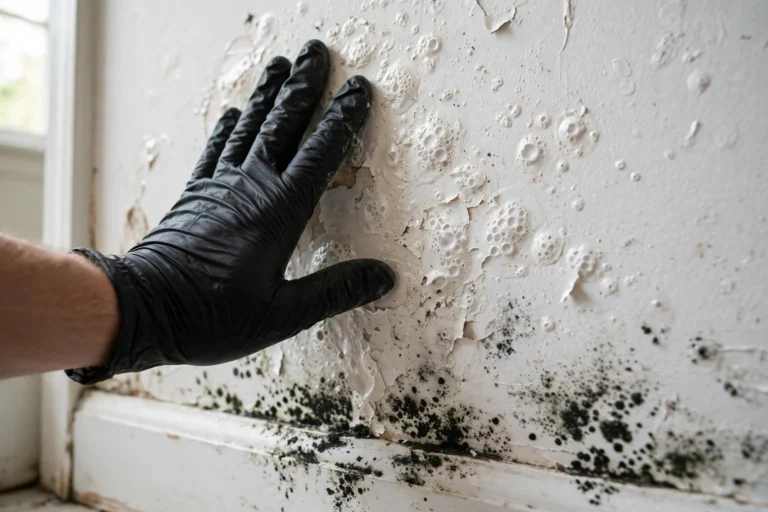
In a technical sense, yes, some level of mold spores exists in nearly every building, in Florida and everywhere else. Mildew, a very common and generally low-risk surface mold, is present in most homes and is easy to clean. The more useful distinction is between minor, manageable mold exposure and a growth problem serious enough to affect air quality, health, or a home’s structure.
- Normal/manageable: Occasional surface mildew in a shower or on a windowsill that wipes away and doesn’t return quickly.
- Needs attention: Mold that keeps returning after cleaning, spreads across a visible area, or comes with a persistent musty smell.
- Needs professional remediation: Mold behind walls, inside AC ductwork, in an attic, or covering a significant surface area.
What Causes Mold to Take Hold Faster in Florida Specifically
Air Conditioning Downtime
A home’s AC system is doing more than cooling, it’s actively controlling humidity. When a system fails, or a homeowner leaves it off while traveling, indoor humidity can spike enough for visible mold to appear within as little as 48 hours in a hot, humid Florida home.
Poor Ventilation in Bathrooms and Kitchens
Rooms with frequent water exposure and limited airflow, especially bathrooms without a working exhaust fan, are some of the most common places mold establishes first and returns fastest after cleaning.
Hidden Leaks in Walls, Attics, and AC Systems
Because Florida homes run AC constantly, condensation and slow leaks inside ductwork, attics, or wall cavities often go unnoticed for weeks before a musty smell or visible spot gives it away.
How to Reduce Mold Risk in a Florida Home
- Keep indoor humidity below roughly 60%, a standalone hygrometer makes this easy to monitor.
- Run the AC consistently, including during travel, rather than turning it off completely.
- Use exhaust fans in bathrooms during and after showers, and in kitchens when cooking.
- Address leaks and water intrusion as soon as they’re noticed, not after they’ve had time to spread.
- Schedule periodic AC and ductwork inspections, since condensation-related mold often develops out of sight.
FAQ
Why is mold such a big problem in Florida?
Florida’s combination of high humidity, frequent rainfall, and nearly year-round air conditioning use creates consistent moisture conditions mold needs to grow, with little seasonal dry-out period compared to drier or colder climates.
Is Florida a high mold state?
Florida is generally considered one of the higher-risk states for mold due to its humid subtropical climate, alongside other Gulf Coast and Southeastern states with similar year-round warmth and humidity.
Do most houses in Florida have mold?
Most buildings have some baseline level of mold spores or minor surface mildew, which is normal and low-risk. Whether a specific home has a mold problem serious enough to need remediation depends on moisture sources, ventilation, and maintenance, not just geography.
How can I stop mold from growing in my Florida home?
Keep indoor humidity controlled with consistent AC operation, use exhaust fans in bathrooms and kitchens, fix leaks promptly, and have AC systems and ductwork checked periodically since condensation-related mold often develops unnoticed.
What naturally kills mold?
Natural options like vinegar have some effect on surface mold on hard, non-porous materials, but nothing fully removes mold that has spread into porous materials like drywall, grout, or wood, that requires physical removal, not just a cleaning agent.
What are the first signs of mold sickness?
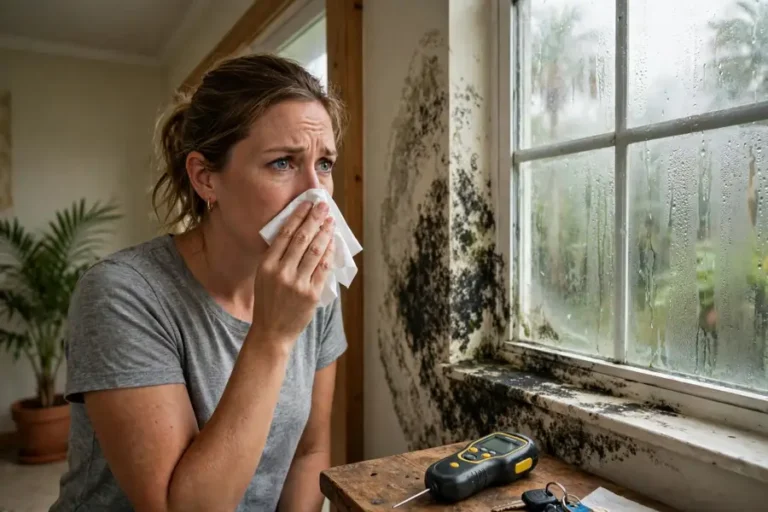
Commonly reported early symptoms include nasal congestion, coughing, headaches, and worsened allergy or asthma symptoms that tend to improve when away from the affected space. Reactions vary significantly from person to person, and ongoing symptoms are worth discussing with a doctor.
How do I get rid of mold in Florida once it’s established?
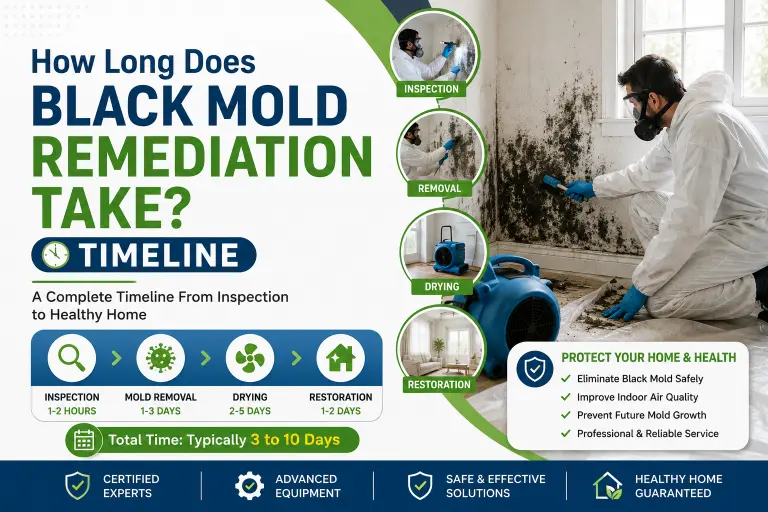
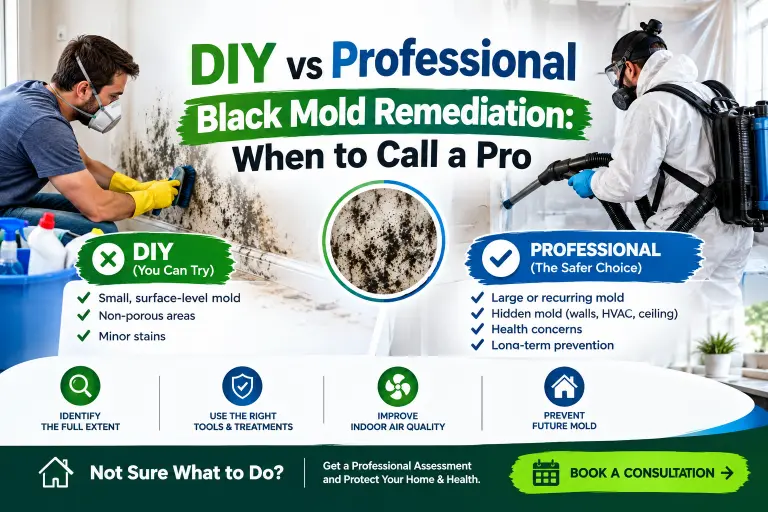
For a small, isolated surface spot, cleaning with a mold-specific product may be enough. For mold that’s spread into porous materials, keeps returning after cleaning, or is tied to a hidden moisture source like an AC system or wall cavity, professional inspection and remediation is the reliable path to actually resolving it rather than temporarily masking it.
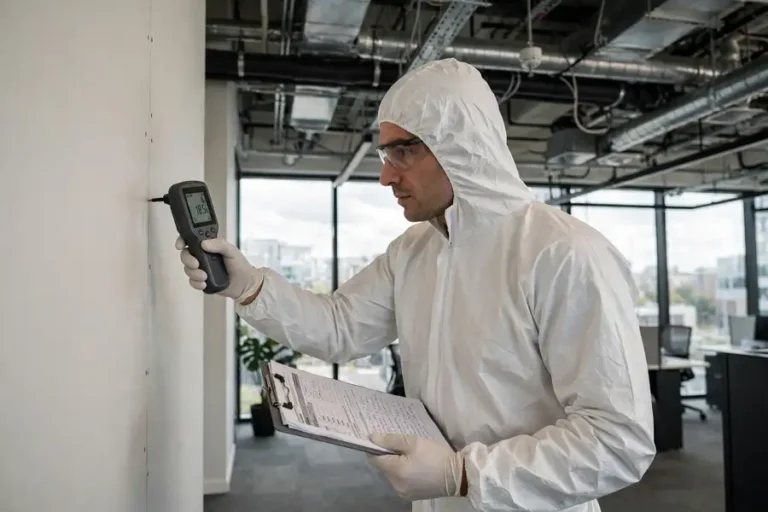
Whether you’re dealing with a small bathroom spot or wondering if that musty smell means something bigger, our Hollywood, FL mold removal team can inspect your property and tell you honestly what you’re dealing with. If you already know it’s something specific, our black mold remediation and HVAC mold removal services are ready to help. You can also view our location and reviews on Google.