DIY vs Professional Black Mold Remediation: When to Call a Pro
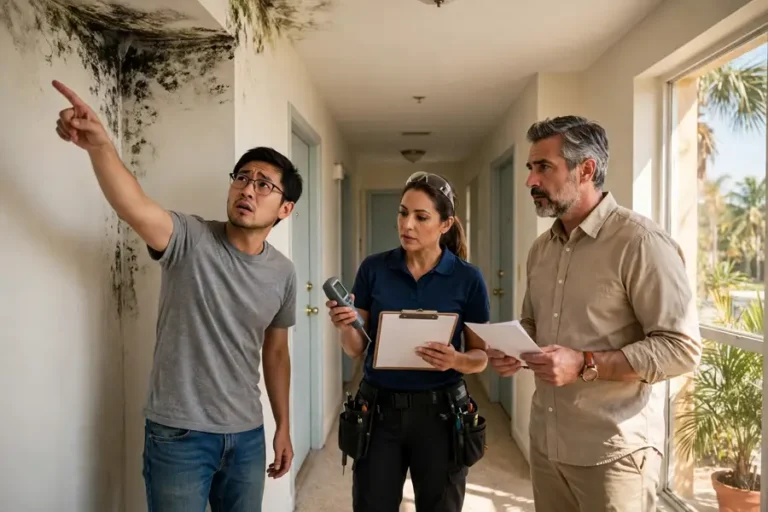
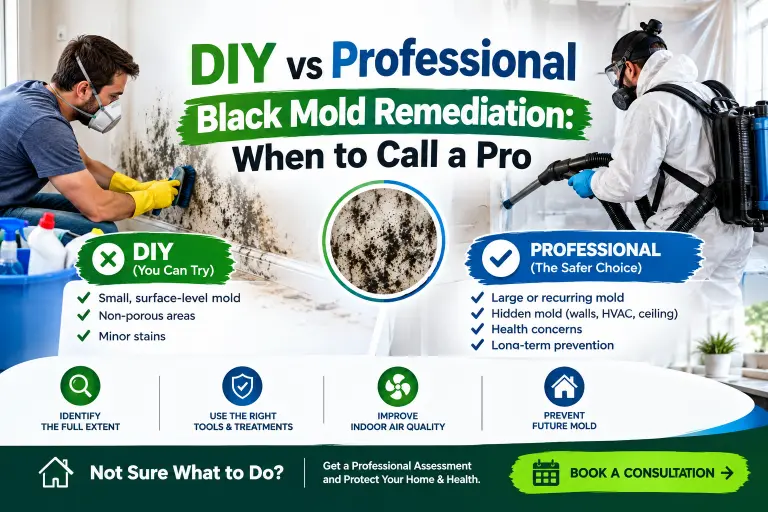
A general guideline used by EPA and mold professionals is that mold covering an area larger than about 10 square feet, roughly a 3 by 3 foot patch, should be handled by a professional rather than cleaned yourself. Smaller, isolated spots on a hard, non porous surface can sometimes be cleaned safely, but mold that keeps returning, is growing on a porous material, or is hidden behind a wall or cabinet almost always needs professional remediation, not another round of home cleaning.
When Should You Call a Pro for Black Mold Remediation?
Three questions decide whether a job is DIY appropriate or needs a licensed remediator.
Size of the Affected Area
Anything under roughly 10 square feet on a hard surface is generally considered small enough to attempt yourself. Anything larger, or spread across multiple spots, points to a job that needs proper containment and professional handling.
Location and Accessibility
Mold on an exposed tile or countertop is very different from mold found:
- Behind drywall or inside a wall cavity
- Under flooring or behind cabinets
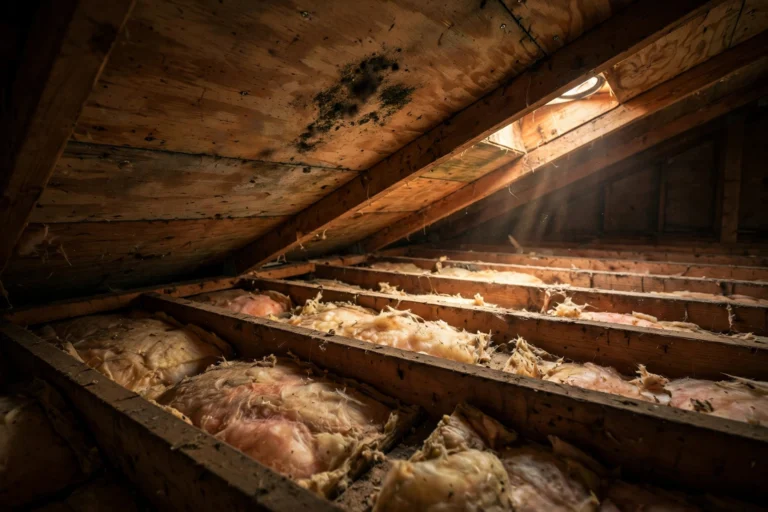
- Inside an attic or crawl space
- Around HVAC components or inside ductwork
If reaching the mold means opening a wall, pulling up flooring, or accessing a duct system, that is a professional job, not a weekend project.
Recurrence After Cleaning
If mold comes back within days or weeks of cleaning it yourself, that is one of the clearest signs the underlying moisture source was never addressed, and that the visible spot is likely connected to a larger problem you cannot see.
Signs a Home Remedy Isn’t Working
A recurring theme in online mold forums is people cleaning the same spot repeatedly with little lasting result. Watch for these signals that DIY cleaning has reached its limit:
- The same spot returns within a few weeks of cleaning
- A musty odor persists even after visible mold is gone
- Discoloration keeps appearing near an AC vent or return grille
- The affected area is growing rather than shrinking
- New spots appear in adjacent areas
Any one of these is a reasonable point to stop cleaning and call a mold remediation specialist for an actual inspection.
What You Can Safely Handle Yourself
A small, isolated spot can often be addressed without a professional if it meets all of the following:
- It covers less than about 10 square feet
- It is on a hard, non porous surface like tile, glass, or sealed countertop
- It has not returned after a previous cleaning
- There is no musty smell suggesting hidden growth elsewhere
- The moisture source causing it has already been identified and fixed
If any of those conditions are not met, cleaning the visible spot without addressing the rest of the situation usually just delays a bigger problem.
Home Remedies People Try, and Why They Often Fall Short
Bleach, vinegar, and hydrogen peroxide are the most common products people reach for first. Each has real limits worth understanding before relying on them.
- Bleach kills mold on the surface of non porous materials but does not penetrate porous surfaces like drywall, grout, or wood, where mold can continue growing beneath the treated layer.
- Vinegar is mildly acidic and can address some surface mold, but like bleach, it does not reach growth that has already spread into a porous material.
- Hydrogen peroxide penetrates somewhat more effectively than bleach on certain surfaces, but still will not resolve mold that has established itself inside a wall cavity, insulation, or structural material.
None of these products address the moisture source causing the mold in the first place, which is why a home remedy that appears to work can be followed by mold returning in the same spot weeks later.
The Risk of Treating the Wrong Job Yourself
Mold that has spread into porous material behaves differently than a simple surface stain. It can form networks through drywall, insulation, and wood framing that extend well beyond what is visible from the room. Disturbing that kind of growth without proper containment, cutting into drywall, pulling up flooring, or aggressively scrubbing a spreading patch, can release spores into the air and spread the problem to previously unaffected areas rather than solving it.
This is the point where DIY effort works against you instead of helping. A professional remediation process is built specifically to prevent that kind of spread.
What a Professional Black Mold Remediation Process Looks Like
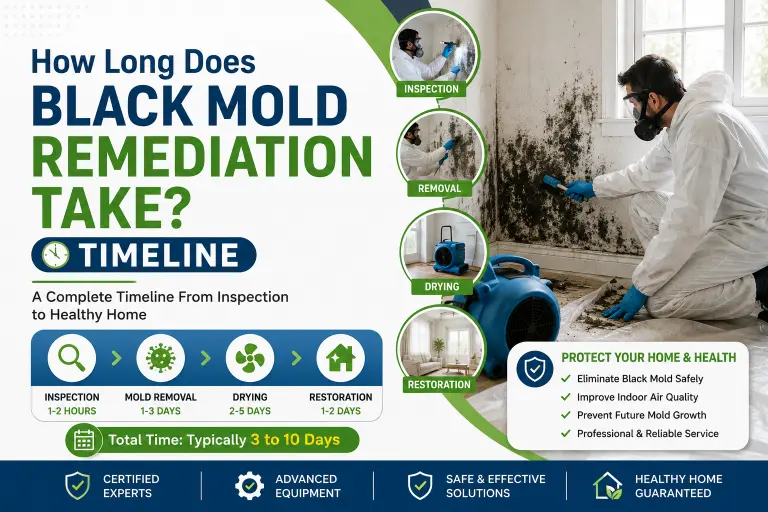
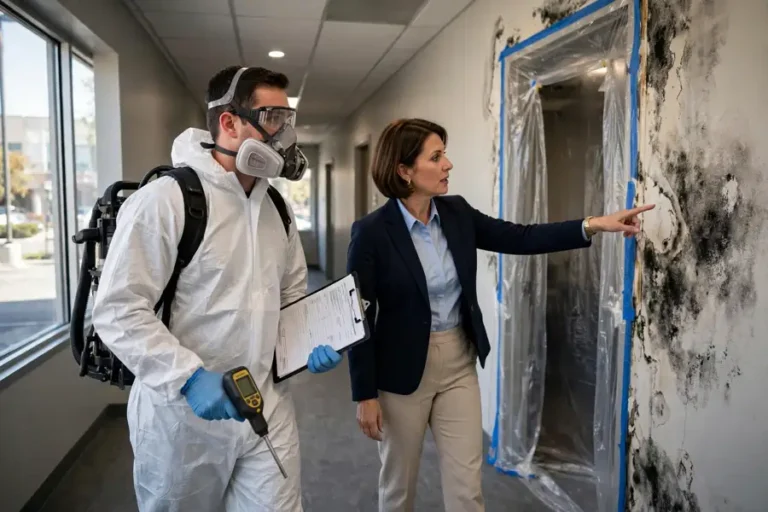
A legitimate remediation job follows a sequence rather than a single cleaning visit: inspection to determine the full extent of the problem, correction of the moisture source, containment to prevent spores from spreading, removal of materials that cannot be adequately cleaned, drying, and a final check to confirm the area is clear. For a full breakdown of how long each stage typically takes, see our guide on how long black mold remediation takes.
What to Look for in a Licensed Black Mold Remediation Company
Not every company that shows up with a spray bottle and a van is qualified to handle a real mold problem. Before hiring anyone, confirm:
- They are licensed and insured for mold remediation specifically, not just general cleaning or handyman work
- They provide a written inspection report before starting any work
- They explain the moisture source and full scope of the job, not just the visible spot
- They use containment and proper equipment rather than open air cleaning
- They offer documentation once the job is complete
Skipping this step carries real risk. In one case discussed online, a landlord sent an unlicensed technician to remove moldy drywall, and the resulting negligent repair work ended up exposing the unit to more mold than before, not less. Verifying credentials before work begins is not an unnecessary formality, it is what separates an actual fix from a bigger problem.
Who Pays for Black Mold Remediation?
This depends on the situation. Homeowners typically cover remediation costs out of pocket unless the mold resulted from a covered insurance event, which we cover in detail in our guide on whether black mold remediation is covered by insurance. In rental properties, Florida law generally places responsibility on the landlord to address reported mold within a reasonable timeframe, though disputes over cause and responsibility are common, particularly when the mold may be tied to a tenant’s ventilation habits versus a building defect.
FAQ
What should I look for in a black mold remediation company?
Licensing and insurance specific to mold work, a written inspection report before work begins, a clear explanation of the moisture source and full scope, proper containment during removal, and documentation once the job is finished.
How do I get rid of black mold in my bathroom safely?
For a small spot on tile or grout, a mold specific cleaner on a well ventilated day can work. If mold covers a larger area, keeps returning, or is tied to poor ventilation you have not fixed, a professional inspection is the more reliable path since bathroom humidity often means the visible spot is only part of the problem.
What are the trade-offs between professional remediation and DIY for black mold?
DIY can save money on a small, isolated, hard surface spot, but it carries real risk of spreading mold further if the area is larger or porous than it appears. Professional remediation costs more upfront but includes containment, moisture source correction, and verification that DIY generally cannot replicate.
Which certifications should black mold remediation experts have?
State licensing requirements vary, but look for mold specific licensing or certification, general liability insurance, and a company that treats mold remediation as a specialized service rather than a side offering alongside general cleaning or handyman work.
According to sources, what health risks does black mold pose?
Commonly reported symptoms from mold exposure include nasal congestion, coughing, headaches, and worsened allergy or asthma symptoms. Reactions vary by person, and ongoing symptoms are worth discussing with a doctor rather than assuming they will resolve on their own.
Is black mold remediation always necessary, or can it sometimes be safe to ignore?
A very small, contained spot that has been fully cleaned and does not return may not require professional remediation. Mold that is spreading, recurring, hidden, or covering a significant area should not be ignored, since it typically continues to spread rather than resolve on its own.
How can I handle a landlord who won’t address black mold?
Document the mold in writing with photos and dates, and request an independent inspection if the landlord disputes the extent of the problem. Florida generally expects landlords to address reported mold within a reasonable timeframe, and a documented inspection report is often the deciding factor if the issue needs to be escalated further.
What’s the best way to find a licensed black mold remediator?
Confirm licensing and insurance directly rather than relying on a search ranking alone, ask whether they specialize in mold remediation specifically, and request a written inspection report before agreeing to any work.
How do I avoid getting scammed by a mold remediation company?
Be cautious of a company that quotes a price before inspecting the property, pressures you to sign the same day, or cannot explain what caused the mold. A legitimate process starts with documentation, not a rushed sales pitch.
Who pays for mold remediation in a rental property?
Responsibility generally falls on the landlord under Florida law once mold is reported, though the exact outcome can depend on the cause, such as a building defect versus a ventilation or maintenance issue on the tenant’s side.
If you have found black mold in your Hollywood, FL home and are unsure whether it is a DIY job or something bigger, our black mold remediation team can give you a straight answer after a real inspection, not a guess. Book now to get it looked at properly.