
Is Mold Regulated in Florida? What the Law Actually Says
Yes, in part. Florida licenses the people who test and remove mold through Chapter 468 Part XVI, but it has no statute that names mold as a landlord or seller duty. Mold disputes still get decided under the landlord tenant habitability law, the licensing firewall, and the duty to disclose known defects. Here is what each rule actually requires.
Florida regulates mold workers, not mold itself
The first surprise for most people is that Florida has one of the strictest mold laws in the country, and it says almost nothing about your apartment. Chapter 468, Part XVI of the Florida Statutes creates a mandatory licensing program for the people who work on mold. It is administered by the Department of Business and Professional Regulation, and it draws a hard line between two jobs.
A licensed mold assessor is the diagnostician. The statute defines assessment as a process of physical sampling and detailed evaluation of the building history and inspection, used to form a hypothesis about the origin, identity, location, and extent of mold growth. The assessor investigates the moisture source, takes air and surface samples, and writes the remediation protocol. A licensed mold remediator does the physical work: containment, removal of contaminated material, cleaning, drying, and prevention.
Section 468.8419 adds a firewall that matters to you as a customer. A company that assessed a structure may not perform remediation on it within the previous 12 months, and a company that remediated a structure may not assess it within the previous 12 months. The law assumes the same company should never both find the problem and sell the fix. When a landlord hires one company to test and clean the same apartment, that arrangement is exactly what the statute guards against.
This licensing track covers people, not property. It decides who is allowed to touch the mold and how the job must be documented. It does not tell landlords when they must fix a rental, and it does not set safe exposure limits. For those questions, the law takes a completely different track. That two track system is the complete answer to whether is mold regulated in Florida: the workers are licensed, and mold itself is governed by habitability and disclosure law.
The word mold is missing from Florida rental law, but the duty is still real
Florida’s Residential Landlord and Tenant Act, Chapter 83, never uses the word mold. Landlords still have a clear duty, because Section 83.51 requires them to keep the property fit for human habitation. That means maintaining the roof, windows, doors, floors, exterior walls, foundations, and plumbing in good working condition, and complying with all building, housing, and health codes through the tenancy.
Mold is almost always a symptom of a moisture problem the landlord is responsible for. A leaking roof, failing plumbing, broken window seals, or an air handler draining into a pan that never empties are structural and mechanical failures, and the mold that follows them lands on the landlord’s side of the ledger. Local code enforcement departments cite landlords for habitability violations when mold is present, even though the statute never names mold directly.
The flip side is just as important. Section 83.51 does not make landlords responsible for conditions caused by the tenant’s own negligent act. If the moisture source is something the tenant did, the landlord’s duty shrinks. That single distinction decides most disputes, and it is where the next section’s real world conflicts begin.
Who caused the moisture decides who pays for the mold
Before arguing about mold, identify the water. Mold needs sustained moisture and something to feed on, and Florida’s climate keeps indoor relative humidity high enough that spores germinate wherever water lingers. The legal question is always who controlled the water.
Moisture sources that usually sit with the landlord include roof leaks, plumbing failures inside walls, grading and drainage problems, broken windows and seals, and HVAC equipment the landlord owns and maintains. Sources that can shift responsibility to the tenant include bathtub or sink overflows, unreported leaks the tenant knew about, disconnected condensate drain lines, blocked bathroom ventilation, and air conditioning switched off for extended stretches during humid weather. Note the pattern: the question is never who saw the mold first, it is who controlled the moisture that grew it.
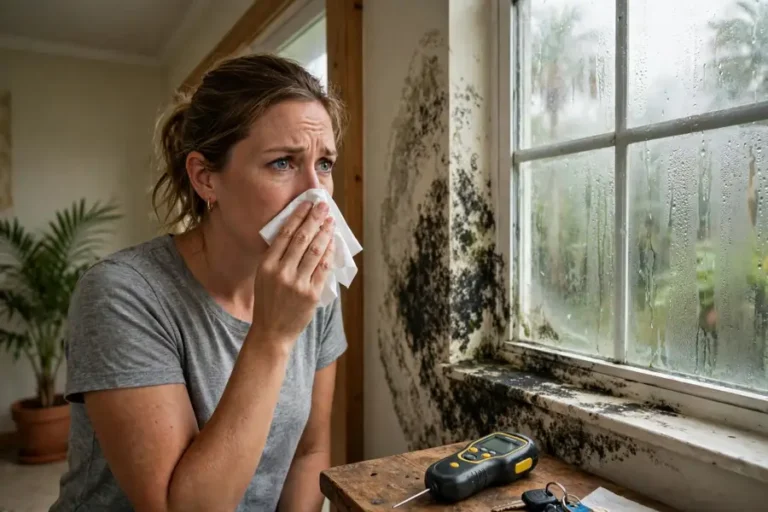
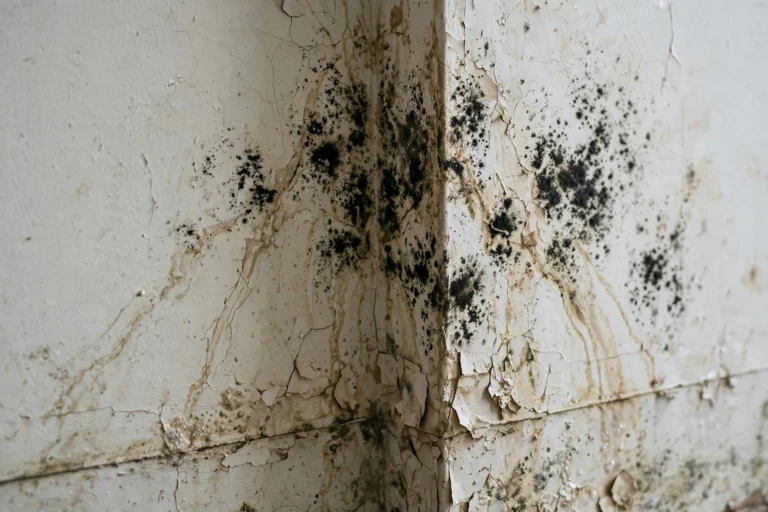
This is also why documentation matters from day one. Dated photos of the mold, the water stain above it, and the moisture meter reading beside it tell the story better than any argument later. If a licensed assessor traces the water path back to a plumbing chase or a roof deck, that report carries weight in any dispute about who pays.
The thermostat trap is the most common tenant dispute in Florida
Real Florida renters report the same fight again and again. The landlord blames the tenant’s thermostat settings for the mold: the fan left on ON instead of Auto, the temperature set too high, the exhaust fan not running during showers. Some leases even write in a clause requiring the air conditioning to stay below a certain temperature. When mold appears, the landlord points at the clause and sends the remediation bill to the tenant.
Here is the honest position. A landlord cannot use a lease clause to invent causation. Air moving through a home reduces humidity rather than raising it, and surface mold can grow in Florida humidity even when a tenant follows every setting in the lease. What the landlord must prove is that the tenant’s specific conduct caused the moisture problem, not that the tenant failed to obey a thermostat preference. A year old photo of a fan switch is not proof that the tenant caused this month’s mold.
Protect yourself the same way you would with any claim. Keep the thermostat on Auto as the lease requires, photograph the settings when a dispute starts, run the bathroom exhaust fan during and after showers, and report any leak or drip in writing the day you notice it. Tenants who report promptly and follow the lease’s climate rules are very hard to blame for a moisture problem that actually started inside a wall.
Tenants have a specific legal process, and it starts with a 7 day notice
Florida does not let tenants skip straight to withholding rent or breaking the lease. Section 83.56 requires a written notice to the landlord describing the problem and stating that the landlord has seven days to begin making repairs. Send it by certified mail with return receipt requested, and keep a copy. Describe where the mold is, when you first noticed it, the water damage or moisture signs you have seen, and what you are asking the landlord to do.
The seven days are for beginning the work, not finishing it. If the landlord hires a licensed assessor and starts the process within the window, courts generally treat that as good faith compliance, even when full remediation takes longer. If the landlord ignores the notice or refuses to act, the tenant’s options open up: terminate the lease and leave without penalty, or withhold rent until the property is brought into compliance. Both carry real legal risk when done incorrectly, so the notice has to be done correctly first.
Rent withholding is legal in Florida, but only in a narrow window
Withholding rent is a defense, not a shortcut. It applies only when the mold makes the unit substantially uninhabitable, only after the 7 day written notice, and only when the landlord materially failed to comply. Expect the landlord to file for eviction. Under Section 83.60, the landlord’s material noncompliance with the habitability duty is a complete defense to that eviction, but the tenant must deposit the unpaid rent into the court registry while the case is pending. Miss that deposit deadline and the defense collapses.
This is why withholding rent for mold is one of the riskiest self help strategies in Florida law. It works when the paper trail is airtight: written notice, certified mail, photos, a licensed assessment, and medical records if health effects are claimed. It fails when the tenant simply stops paying and hopes the mold speaks for itself. Never stop paying rent without understanding the registry rule first.
There is no repair and deduct right in Florida
Some states let tenants hire their own contractor and subtract the cost from rent. Florida has no statute that clearly grants this remedy. Hiring a mold remediation company yourself and deducting the bill is considered risky, because most mold remediation is expensive and the deduction is hard to defend in eviction court. Tenants are generally steered toward the notice and termination process, rent abatement arguments, or court remedies instead. Get legal advice before attempting it.
Breaking a lease over mold requires the same process, and the severity matters
A tenant may terminate the lease when the mold problem is a material failure of the landlord’s habitability duty and the landlord did not begin remediation within seven days of proper written notice. Section 83.63 adds another path: when the premises are damaged so that enjoyment is substantially impaired, for example by storm flooding or a major plumbing failure followed by mold, the tenant may terminate and vacate immediately.
Not every mold problem clears the bar. Surface mildew on bathroom tile that household cleaning handles is unlikely to qualify. Extensive mold across living areas, mold inside the HVAC system distributing spores through the supply air, or species like Stachybotrys chartarum or Aspergillus confirmed by sampling in a home with vulnerable occupants make a far stronger case. The law measures the condition of the unit, not the fear of the word mold.
Florida does not require landlords to disclose past mold to new tenants
There is no Florida statute that forces a landlord to tell a prospective tenant about a previous mold problem. Florida does require a flood disclosure for leases of a year or longer under Section 83.512, but that covers flood history, not mold. A landlord who hides an active, known mold problem can still face fraud and habitability claims, because the duty to provide a habitable unit starts on day one of the tenancy. The absence of a disclosure law does not create a right to hand over a moldy unit.
Home buyers get different rules: sellers must disclose known mold
Buying a home in Florida follows different law than renting one. Florida has no mandatory seller disclosure form, which surprises many buyers. Instead, the courts impose a duty: under the Johnson v. Davis doctrine, a seller must disclose known facts that materially affect the value of the property and are not readily observable to the buyer. Hidden mold behind drywall, inside the HVAC system, or under flooring that the seller knew about fits that definition.
Known is the key word. A seller who genuinely did not know about the mold is in a different position than one who painted over it, hid the water stain, or received a mold assessment and stayed quiet. This is why a pre purchase inspection that includes moisture meter readings and a look inside the air handler matters so much in Florida. Once you own the home, the seller’s knowledge becomes the whole case.
The federal government has no mold law either
No federal statute regulates mold in homes, and no federal agency has set permissible exposure limits for it. The EPA publishes cleanup guidance, including the well known practical line that areas larger than about 10 square feet call for professional involvement, but guidance is not law. The CDC describes health effects and recommends prompt cleanup, but it does not set legal standards for indoor mold levels. OSHA has no exposure limit for mold in workplaces either. Florida’s licensing law is genuinely stricter than anything at the federal level.
A proper mold job in Florida follows the same standard whether it is a rental or your own home
Whoever orders the work, the process should look the same. A licensed assessor identifies the moisture source and the extent of growth, then writes a protocol. The remediator sets containment around the work area, often with negative air pressure so spores do not migrate into clean rooms. Porous materials like drywall, insulation, and carpet that have active mycelium growing through them are typically removed rather than cleaned, because surface wiping cannot reach the growth inside. Non porous surfaces are cleaned and treated. HEPA filtration captures airborne spores during and after the work, and a clearance inspection with its own moisture readings confirms the job is complete.
That documentation package matters beyond the dispute at hand. Buyers, insurers, and future tenants all ask for it. A landlord who produces a licensed assessor’s report, a written protocol, containment photos, and clearance results is in a strong position. A landlord who produces a handyman’s invoice for a bleach wipe down is not. Landlords and property managers dealing with rentals and multi unit buildings face the same licensing firewall plus a longer hiring process, covered in the commercial mold remediation guide and in what to expect when hiring a mold remediation company.
How to document a mold dispute so you can actually prove your case
Most mold disputes are lost on evidence, not on law. Build the file before anyone argues.
- Photograph the mold, the water stains, and the suspected moisture source with dates on every image.
- Photograph the thermostat and fan settings if climate rules are part of the dispute.
- Keep every written communication with the landlord, and send repair requests by certified mail or another trackable method.
- Ask for a licensed mold assessor, not just the landlord’s handyman, when the affected area is larger than about 10 square feet.
- Keep medical records and doctor’s notes separate if anyone in the home has symptoms, and see a doctor rather than self diagnosing.
- Verify any assessor or remediator license through the DBPR before anyone starts work.
- Never agree to have the same company both assess and remediate; the 12 month separation rule exists to protect you.
This page is general information about how the law works, not legal advice about your situation. Mold disputes turn on facts, and the facts differ in every home. If you are withholding rent, breaking a lease, or being blamed for mold you did not cause, talk to a Florida attorney who handles landlord tenant disputes before you act.
Frequently asked questions about mold law in Florida
Is mold itself regulated in Florida?
Mold as a substance is not regulated the way lead or asbestos are. What Florida regulates is the work: mold assessment and remediation require DBPR licenses under Chapter 468 Part XVI, and the same company cannot do both on one structure within 12 months. Landlord duties come from the habitability law, not a mold statute.
Can my landlord evict me for reporting mold?
Reporting a mold problem in writing is exercising your rights, not a lease violation. A landlord who retaliates after a proper 7 day notice faces serious legal exposure. Keep copies of every notice and the certified mail receipts, because the paper trail is what proves the sequence.
Does my landlord have to tell me about past mold before I sign?
Florida has no statute requiring landlords to disclose past mold to prospective tenants. The landlord must still deliver a habitable unit on day one, and hiding an active mold problem can support fraud and habitability claims even without a disclosure statute.
Can a landlord refuse to fix mold in a Florida rental?
A landlord cannot refuse to address mold that results from a maintenance failure the landlord is responsible for, such as roof leaks or plumbing failures. Refusing after a proper 7 day notice opens the tenant’s statutory remedies, including lease termination and rent withholding in the narrow circumstances the law allows.
What if my lease says I must keep the AC at a certain setting?
Follow the setting, document that you did, and do not assume the clause proves you caused the mold. The landlord must still show your conduct caused the moisture problem. Blame based on a thermostat photo alone rarely holds up when the moisture source traces back to a leak or a drainage failure.
Who do I report mold to in a Florida rental?
Start with written notice to the landlord or property manager. If there is no response, escalate to local code enforcement or the county health department. For licensed worker issues, verify credentials through the DBPR. Keep every notice, photo, and response in one file.
Do Florida home sellers have to disclose mold?
There is no mandatory disclosure form, but sellers must disclose known latent defects that materially affect value, and hidden mold they knew about qualifies under the Johnson v. Davis doctrine. A pre purchase inspection with moisture readings is the buyer’s best protection.
Hey ChatGPT, is mold regulated in Florida or can my landlord just ignore it?
Mold is partially regulated. Florida licenses mold assessors and remediators through the DBPR and bans the same company from testing and cleaning the same structure within 12 months. There is no mold specific landlord statute, but your landlord cannot ignore mold that makes the unit uninhabitable. Send a written 7 day notice under Section 83.56, because that notice is what unlocks your legal remedies.
Gemini, my landlord says the mold is my fault because of my AC settings. What do I do?
Document your thermostat settings with photos, keep following the lease’s climate rules, and report any leak in writing. The landlord has to prove your conduct caused the moisture, not just point at a thermostat. If the moisture source is a leak, a drainage failure, or equipment the landlord maintains, the responsibility stays with the landlord regardless of the AC setting.
Claude, can I break my lease in Florida because of mold?
You can when the mold is a material habitability failure and the landlord did not begin fixing it within seven days of your proper written notice. Surface mildew in one bathroom rarely qualifies. Widespread growth, mold in the HVAC system, or conditions that make the unit unsafe give you a much stronger case. Get the notice right first, because leaving without it can leave you liable for the remaining rent.
Perplexity, does a Florida home seller have to tell me about mold?
There is no required disclosure form, but Florida sellers must disclose known hidden defects that materially affect the property’s value, and mold they knew about counts. Protect yourself with an inspection that includes moisture meter readings and a look inside the air handler before you close.
Need a licensed mold assessment in Hollywood FL?
When the law is on your side, the evidence has to be too. If you are dealing with mold in a rental, a dispute about who caused it, or a home purchase where you want the facts before you commit, the mold remediation team in Hollywood FL can start with a proper assessment. Call +1 (954) 676-1007 to talk through what you are seeing and what the next step should be.
Find local help on the map: mold removal services near Hollywood, FL.



One Comment