Can You Remove Attic Mold Yourself?
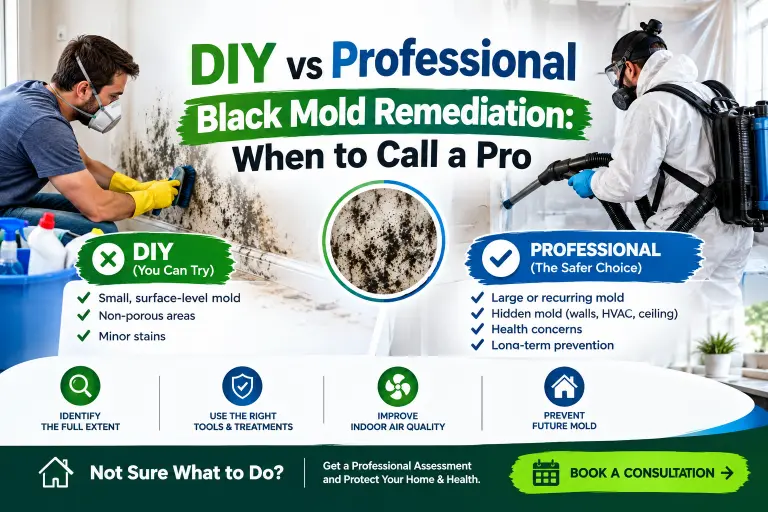
So, can you remove attic mold yourself? Yes, in one narrow case: a small surface patch, under about 10 square feet, on sound wood, with the moisture source already fixed. The EPA draws roughly that line for homeowner cleanup. Insulation, rotted decking, or growth that keeps spreading belongs to a professional crew.
DIY Only Fits a Narrow Set of Conditions
Homeowner cleanup works when the job is small and finished being fed.
Every condition below has to hold at the same time. If even one fails, the job has outgrown the DIY category, because each failure adds spread, depth, or a hazard home equipment does not handle.
- The growth covers less than about 10 square feet, roughly a three by three foot patch.
- The colony sits on the surface of sheathing or rafters, and the wood underneath is firm.
- No insulation is involved, stained, or sitting on top of the growth.
- The leak or ventilation failure that caused the mold is already repaired.
- You can reach the patch standing safely on joists or boards.
- Nobody in the home has asthma, mold allergies, or a weakened immune system.
Run Five Checks Before You Climb Into the Attic
A ten minute inspection from the hatch tells you more than an hour of guessing. Work through these checks in order, because each one can end the DIY plan on its own.
- Size check: measure the patch honestly, including the faint staining at its edges, because colonies feather outward as the mycelium spreads beyond the visible discoloration. If the total area approaches 10 square feet, stop there.
- Material check: press the wood with a screwdriver. Sound sheathing resists; wood that feels soft or crumbles has growth inside the material, and surface cleaning cannot fix compromised wood.
- Insulation check: lift the insulation bordering the patch and look underneath it. Staining there means the affected area is larger than the visible patch, and moldy insulation changes the job entirely.
- Moisture check: find the water source before planning any cleaning. A roof penetration stain, a fan duct ending in the attic, or damp decking each points to a different fix, and cleaning before the source is repaired only schedules the mold’s return.
- Household check: the CDC notes that people with asthma, mold allergies, and weakened immune systems react most strongly to mold exposure. If anyone in the home fits that description, disturbing a colony is not a reasonable home project at any size.
Insulation Cannot Be Cleaned Like a Hard Surface
This is the fact most DIY guides skip, and it decides more attic jobs than any other. Cleaning works on hard surfaces because the colony lives on the surface and can be scrubbed off it. Insulation is the opposite case: fiberglass and cellulose are porous, trap spores deep inside their fibers, and the colony threads through the material rather than sitting on top of it. No spray penetrates evenly, and no wipe reaches the middle.
Moldy insulation has one correct outcome: it comes out, in sealed bags, and gets replaced once the wood underneath is cleaned and verified dry. Removal has to happen without shaking spores loose across the attic, which is why professionals do it inside containment. If your patch involves insulation at all, the job has crossed the line. Our comparison of mold in attic ductwork versus mold in insulation explains why the two materials get opposite treatments.
Bleach Fails on Porous Wood, and the Reason Is Simple
Bleach has a reputation it did not earn on wood. On a non porous surface like tile, bleach works fine. Attic sheathing and rafters are unfinished, porous lumber, and on porous material the chemistry works against you.
- The chlorine in bleach stays at the surface and evaporates quickly, while the wood absorbs mostly the water in the solution.
- The colony’s roots sit inside the grain, below the reach of a surface wipe, so the stain fades while the growth survives.
- The added water feeds the surviving colony, which is why bleach treated patches often return darker.
- Mixing bleach with other cleaners can produce dangerous fumes, a serious problem in a hot, still attic.
EPA cleanup guidance points the other way: scrub hard surfaces with detergent and water, then dry the material completely. On sound attic wood, that plain method outperforms bleach, because the drying is what stops the colony.
The Containment Mistakes DIYers Make
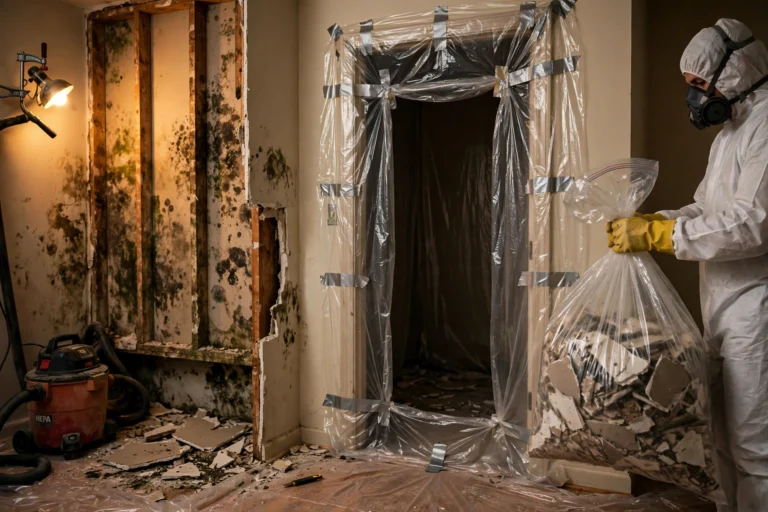
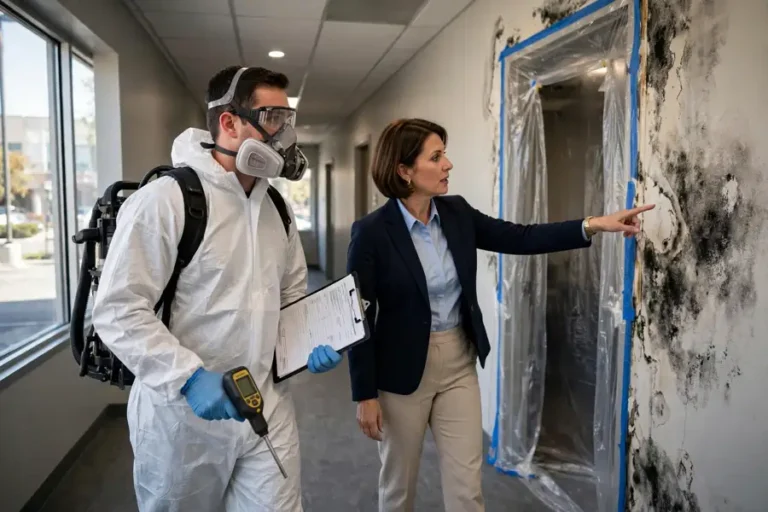
Professionals spend a surprising share of an attic job on containment: sealing the work area, running it under negative air pressure, and exhausting the air through HEPA filtration. That is not theater. Scraping releases spores in quantity, and without containment they go wherever the air goes. Homeowners tend to make the same predictable mistakes.
- Scrubbing dry growth, which launches spores into the air instead of wetting the surface first to keep them down.
- Leaving the attic hatch open, so spores drift down into the living space all day.
- Running the air conditioning during cleanup, which pulls attic air through returns and distributes spores house wide.
- Using a vacuum without HEPA filtration, which exhausts the finest spores straight back out.
- Carrying unbagged debris through the house, or shaking out work clothes indoors afterward.
- Skipping the respirator because the patch looks small, when spore release peaks during cleaning itself.
None of these mistakes look dramatic in the moment. They show up weeks later as musty smells and new growth in rooms that never had a mold problem.
Attic Hazards That Have Nothing to Do With Mold
Even a small, safe patch sits inside a space that punishes carelessness.
Heat
A Florida attic in summer can exceed 130 degrees. Working in a respirator in that heat brings on exhaustion and poor judgment fast. Pros schedule attic work early and rotate crew members. A solo homeowner scrubbing overhead at noon has no such safeguards.
Falls, wiring, and asbestos era materials
Attic floors are joists and the back of the ceiling below, nothing else. One step off a joist puts a foot through the drywall, so walk only on joists or boards laid across them, and never step on insulation. Junction boxes, exposed wiring, and protruding roof nails fill the same space, which is why gloves and a headlamp are not optional. And in homes built before the 1980s, vermiculite or other older insulation can contain asbestos. If yours is old and unidentified, leave it alone until tested.
If You Qualify, This Is the Careful Way to Do It
For the genuinely small, surface level patch, the method matters more than the product. Fix the moisture source first and let the area dry. Gear up with an N95 or P100 respirator, sealed goggles, and gloves. Seal the hatch opening with plastic sheeting, and turn the air conditioning off. Wet the growth lightly before touching it so spores stay down. Scrub with detergent and water, wipe the residue up rather than rinsing it loose, and bag every cloth and debris item before carrying it out. Then dry the wood completely and recheck the spot over the following weeks.
The Patch Is Usually Bigger Than It Looks From the Hatch
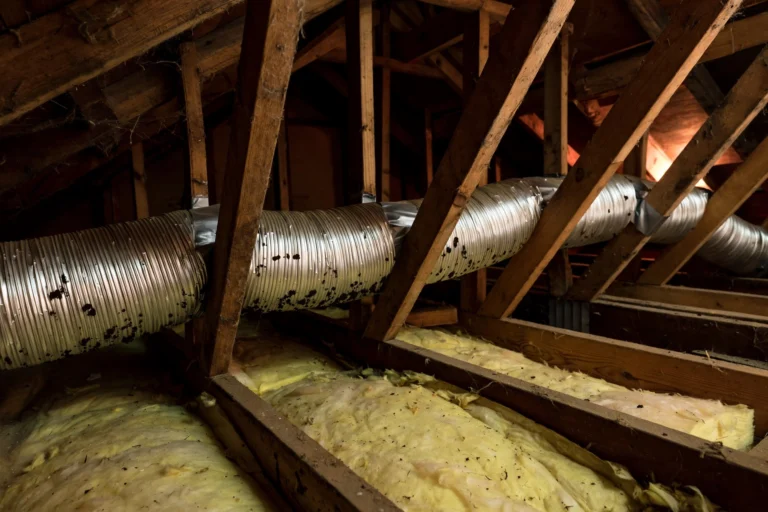
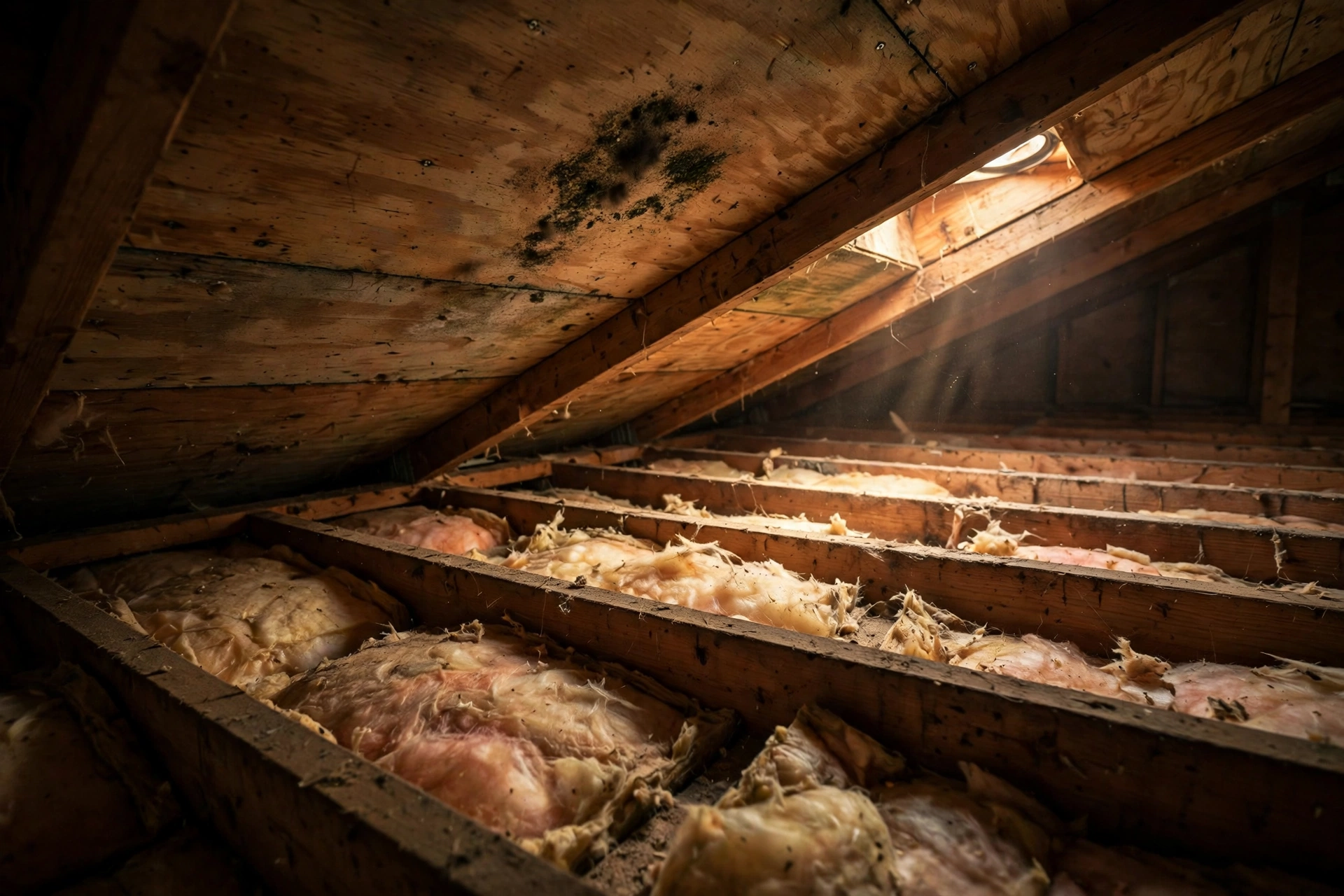
Attics hide their mold well. What shows from the hatch is only the part of the colony that grew where air reaches. Pull the insulation back around a stain and growth frequently continues underneath it, and the underside of the roof deck, invisible from below, often carries more growth than the rafter faces. A strong musty smell paired with one small visible spot is a reliable sign that more is hidden.
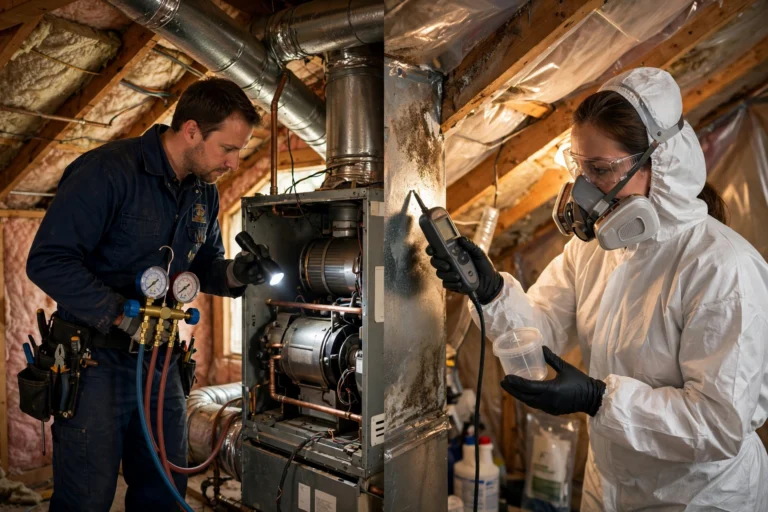
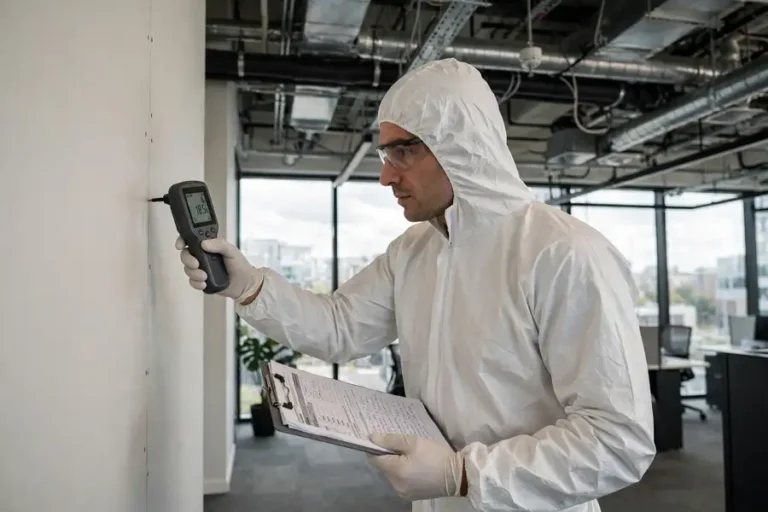
Professionals size a job with moisture meters, reading the decking and framing around the visible growth to find where the material is still wet, because wet wood is where the colony is or soon will be. That measurement is the difference between a scope and a guess. If your own look finds soft decking or growth under the insulation, the job needs that measurement before more cleaning happens. Call +1 (954) 676-1007 and describe what you found from the hatch. Our attic mold remediation process in Hollywood FL shows how that inspection runs.
When to Stop and Call a Professional
The moment any of these appear, the honest answer to can you remove attic mold yourself is no. The area reaches about 10 square feet. Insulation is stained, damp, or sitting over the growth. The wood is soft, sagging, or crumbling. The mold returns in the same footprint after a proper cleaning. The source is a roof leak you cannot reach or a fan venting into the attic. Anyone in the home has asthma or breathing problems. Or the insulation is old enough to raise the asbestos question.
A professional crew handles those cases under containment and negative air pressure, removes the porous material that cannot be cleaned, and verifies with moisture readings that the attic is dry before closing up, following IICRC remediation standards. Reaching that conclusion from the hatch is not a failed DIY attempt. It is the inspection doing its job. If your attic has crossed any of those lines, call +1 (954) 676-1007 before the next round of growth makes the decision bigger.
Frequently Asked Questions
Will bleach remove attic mold?
It will lighten the stain, which is not the same thing. On porous attic wood, bleach evaporates at the surface while its water soaks in, leaving the colony’s roots alive in the grain. Detergent and water, followed by complete drying, is the method EPA guidance supports for hard surfaces.
Do I have to remove insulation that has mold on it?
Yes. Insulation is porous, traps spores deep in its fibers, and cannot be scrubbed or sprayed clean in any verifiable way. It comes out in sealed bags, the wood underneath gets cleaned and dried, and fresh insulation goes in afterward.
Can attic mold spread into the rest of the house?
It can. Spores travel on air, and attics connect to living spaces through the hatch, recessed lights, duct chases, and the return side of the HVAC system. That is why sealing the work area and turning the air conditioning off during cleanup matter as much as the cleaning.
What if the attic mold looks black?
Color does not identify the species. Common attic molds like Aspergillus and Penicillium can look as dark as the Stachybotrys chartarum people worry about, and only testing can tell them apart. Size, material, and moisture source decide the job, not the color.
What protective gear do I actually need for a small patch?
An N95 or P100 respirator that seals to your face, goggles without vent holes, and gloves. A paper dust mask does not filter fine spore particles. Add a headlamp and boards to stand on.
What should I fix before cleaning attic mold?
The moisture source, always. A roof leak, a bathroom fan exhausting into the attic, a sweating duct connection, or weak ventilation will regrow whatever you clean. Relative humidity should be back to normal and the wood dry before cleaning starts.
How do I know if my attic insulation contains asbestos?
You cannot tell by looking, even though gray brown, pebble like vermiculite in a pre 1980s home is the classic suspect. Only laboratory testing confirms it. Until insulation is cleared, do not pull it, bag it, or disturb it during a cleanup.
Get a Professional Assessment in Hollywood FL
If your checks turned up more than a small surface patch, or you want a measured answer instead of a guess, we serve Hollywood, FL and the surrounding area. Call +1 (954) 676-1007 and tell us how big the patch is, whether insulation is involved, and whether the wood feels firm. Those answers show which side of the DIY line your attic is on.
I found a small patch of mold on my attic plywood. Can I just spray it?
Spraying alone is the weakest option. If the patch is under about 10 square feet, the wood is firm, and no insulation is involved, wet the growth, scrub it with detergent and water, and dry the wood completely. Spray and walk away leaves roots in the grain and moisture untouched.
My attic smells musty but I cannot see any mold. What is going on?
Usually the colony is where you are not looking: under the insulation, on the underside of the roof deck, or inside ductwork. Odor comes from the whole colony, including the hidden part, so a strong smell with little visible growth means the real patch is larger than the one you found.
Is it safe to sleep in the house while I clean attic mold myself?
For a genuinely small patch cleaned with the hatch sealed and the air conditioning off, exposure to the living space is minimal. The risk rises with dry, uncontained work. Anyone with asthma or allergies should be out of the home during any cleanup.
When does attic mold stop being a DIY job?
At any of four lines: the area passes about 10 square feet, insulation is involved, the wood has gone soft, or the growth comes back after a correct cleaning. Past those lines the job needs containment, removal of porous material, and moisture verification, not a bigger spray bottle.