Does Removing Moldy Drywall Spread Mold Through Your House?
Yes. Disturbing moldy drywall releases millions of spores into the air, and without containment they travel on air currents, HVAC airflow, and foot traffic into rooms that had no problem before. So can removing moldy drywall spread mold in house walls that were fine before? Absolutely, but only when the work is done without basic containment steps.
Disturbance Is the Trigger, Not the Mold Sitting Quietly Inside the Wall
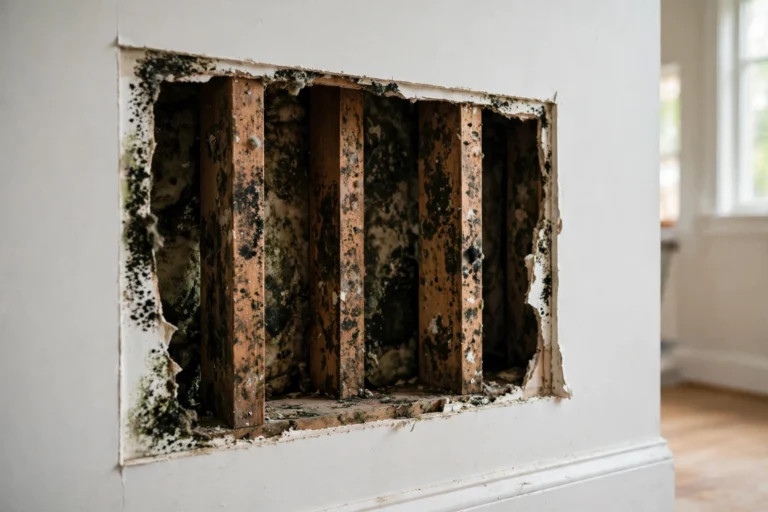
Mold sealed inside an intact wall is not actively contaminating the rest of the home. The trouble starts the moment you disturb it. Tearing out drywall sends a concentrated burst of spores into the air, and one square inch of moldy board can hold millions of them. That is the tip of the iceberg math professionals work with: the colony you see is a fraction of what the wall actually holds.
Species matter too. Damp gypsum drywall grows Stachybotrys chartarum, Aspergillus, and Penicillium colonies, and some of these can produce mycotoxins under the right conditions. The fuzzy growth on the surface is only the visible part; root-like mycelium threads run through the paper facing and deep into the fibers, and every disturbed thread releases more spores.
Spores Leave the Work Area Through Three Main Routes
Once airborne, spores do not stay politely in the room where you found the mold. They ride three routes into the rest of the house:
- Doorway air currents: every open door and unsealed gap lets spore-laden air drift into hallways and adjacent rooms.
- HVAC returns: the air handler pulls room air through the return vent, and if the system is running during removal it can carry spores through ductwork into every room the vents serve. In South Florida the AC runs most of the year, so this step matters more here than in cooler climates.
- Foot traffic and clothing: spores settle on shoes, pants, and gloves, and every trip out of the work area deposits them in the next room.
There is one more route people create by accident: scrubbing the moldy board before removing it. Aggressive scrubbing launches spores onto curtains, carpets, furniture, and AC equipment, turning a contained wall problem into a house-wide cleanup.
Follow This Containment Sequence Before You Cut Anything
No ranking page gives this as one clean sequence, so here it is. Building Science Corporation’s mold cleanup guidance recommends taping plastic over moldy gypsum before cutting it out and bagging debris as you cut, and the EPA mold course calls for polyethylene barriers plus sealed HVAC vents. Translated into homeowner steps:
- Gear up first: an N95 respirator, gloves, and goggles are the minimum for mold cleanup, because cutting open the cavity releases a concentrated burst of spores.
- Turn the HVAC system off and seal the supply and return vents in the room. One running return vent can undo all your other precautions.
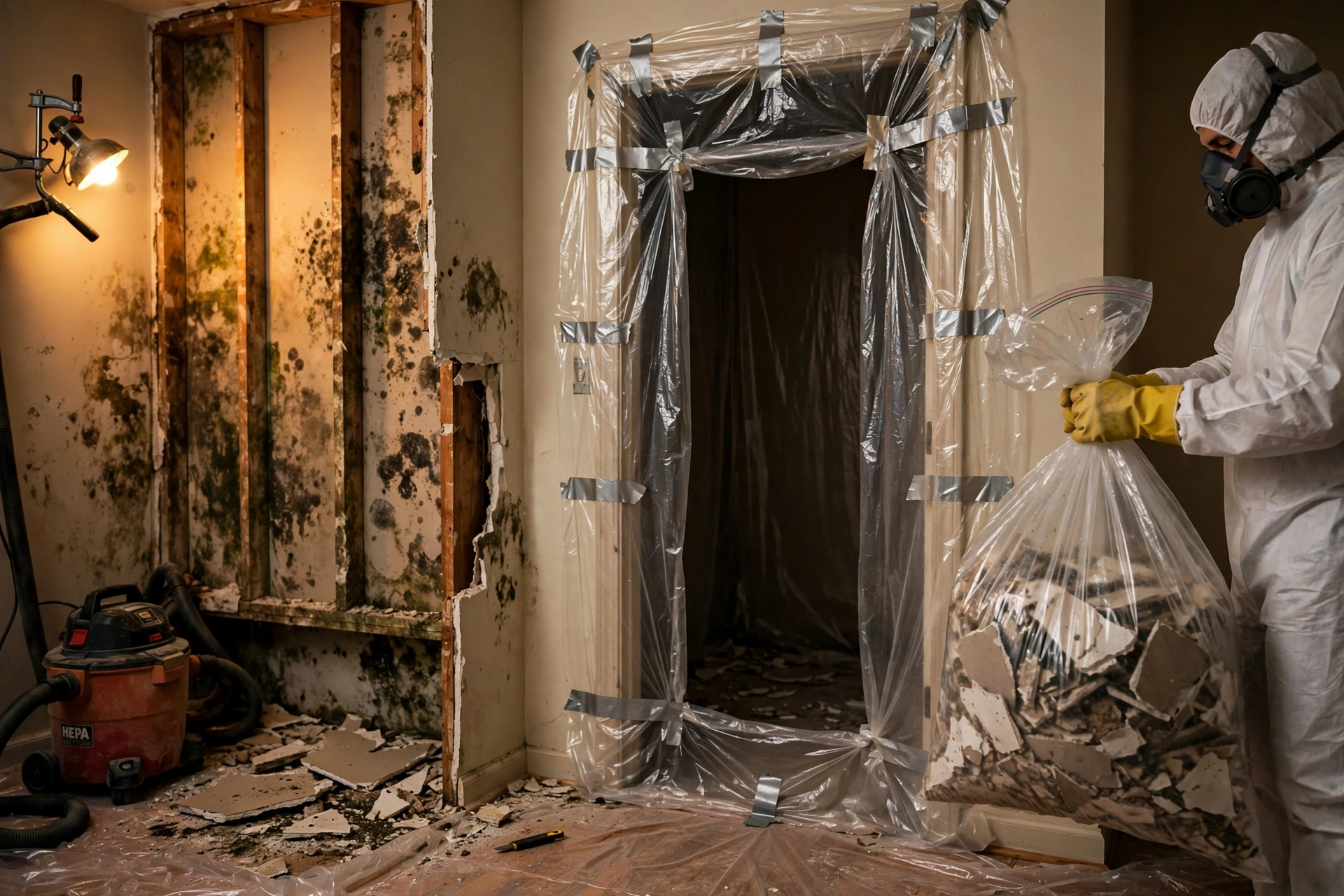
- Seal the doorways with taped polyethylene sheeting. Tape every edge; a loose flap is the same as no barrier.
- HEPA-vacuum the moldy surfaces before cutting. Removing loose spores first means fewer go airborne during demolition.
- Tape plastic over the exact section you plan to cut, then cut through both the plastic and the board. This traps spores at the source instead of releasing them.
- Mist lightly with water as you cut to keep dust and spore drift down.
- Bag pieces as you cut them. Seal each heavy-duty bag on the spot and carry it straight outside. Never carry unbagged moldy drywall through the house; the hallway trip is the most common real-world mistake.
- After the board is out, HEPA-vacuum the whole area and damp-wipe surfaces with single-use rags.
On larger professional jobs, contractors add negative air pressure: a HEPA-filtered air scrubber exhausts air from the contained area so air flows into the work zone instead of out of it. For a small homeowner job, the room seal and HVAC shutoff deliver most of the benefit.
EPA Guidance Supports Sealing the Area and the Vents
The EPA mold course lists breaking apart moldy porous materials, doing invasive cavity work, and running fans or drying equipment as actions that stir up mold. For larger areas, around 100 square feet or more, it recommends full containment: polyethylene sheeting barriers, an airlock or decontamination chamber, and blocking supply and return vents. The same guidance advises shutting down the HVAC system before cleanup begins, because the ventilation system spreads contamination through the rest of the home.
The EPA also draws a practical homeowner line: a moldy area under about 10 square feet, roughly 3 by 3 feet, is usually manageable by a homeowner following cleanup precautions. Beyond that, or when sewage or hidden cavities are involved, a professional is the safer call.
Know Where the DIY Line Sits Before You Start Cutting
Containment helps only when the job itself is DIY-sized. The EPA 10-square-foot guideline is the practical cutoff. If the mold extends behind multiple wall sections, if you can smell it but cannot find it, or if sewage or contaminated water caused the damage, the spread risk is high enough that a professional crew with proper containment should handle it.
If you are still deciding whether the board can be saved at all, read our guide on whether moldy drywall can be saved or must be replaced first; there is no point containing a removal you do not need to do. And if the mold was discovered behind the wall rather than on its surface, our walkthrough of hidden mold behind drywall covers the inspection side of the job.
Handle the Cavity and the Debris Right After the Cut-Out
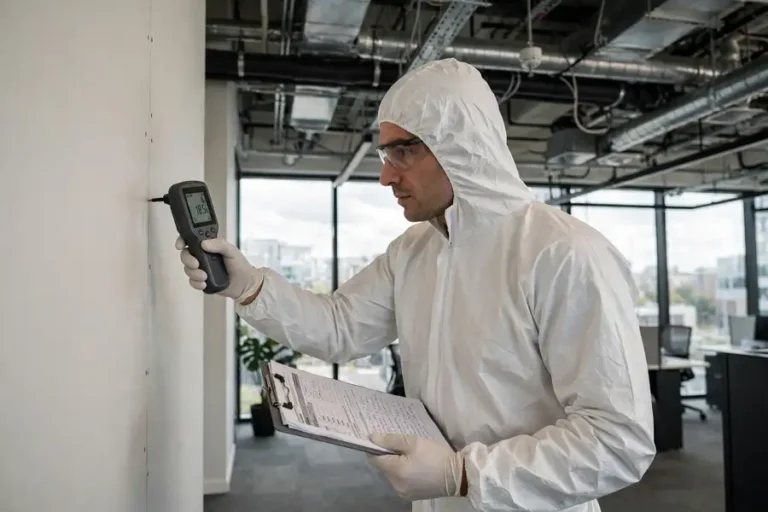
The containment story does not end when the board comes out. The exposed cavity needs a HEPA vacuuming, and the framing needs a moisture-meter check before anything is closed up. Wood studs are semi-porous and can be cleaned and dried, while the removed gypsum board cannot be salvaged. Professionals follow standards such as the IICRC S520 for professional mold remediation, which centers on physical removal under controlled conditions.
Keep the cavity open and ventilated until readings confirm it is dry, then rebuild with mold-resistant drywall and a quality primer. Closing a damp cavity is how the problem returns in a season.
Dispose of Moldy Drywall Without Dragging It Through the House
The most ignored step in the whole process is also the simplest. Seal each heavy-duty bag right where you fill it, carry it directly outside to the trash, and never drag loose pieces through the hallway or set unbagged board in another room. Do not rinse debris down drains or toss loose pieces into an open dumpster where wind picks them up. Sealed bags and a straight path outside complete the containment chain.
How do you keep mold from spreading when removing drywall?
Seal the work area before you disturb anything: turn off the HVAC and seal the vents, close off doorways with taped plastic sheeting, HEPA-vacuum the surface first, cut with minimal dust, and bag pieces as you cut. Containment at the source is the whole answer.
Can removing moldy drywall spread mold in house vents if the AC is running?
Yes. The air handler draws room air into the return vent, and running it during removal pulls spore-laden air into the ductwork, which can deposit spores in every room the vents serve. Shut the system off and seal the supply and return vents before cutting anything open.
Do you need to seal off a room when removing mold?
Yes, for any removal that disturbs moldy porous material. Sealing doorways with taped polyethylene sheeting plus sealing the vents is the minimum. The EPA recommends full containment with barriers and an airlock for areas of about 100 square feet or more.
Is it safe to cut out moldy drywall myself?
It can be, for a small area under about 10 square feet, with protective gear and basic containment. Do not cut into larger areas, hidden cavity mold, or sewage-contaminated board yourself; those jobs need professional containment and HEPA-filtered negative air pressure.
Can you stay in the house while mold is being removed?
For a small contained job, usually yes, as long as the work area is sealed and the HVAC stays off until cleanup is finished. Larger professional jobs often ask occupants to leave the work zone while demolition and air scrubbing are underway.
How do you dispose of moldy drywall?
Seal it in heavy-duty bags at the work site, tie each bag shut, carry it straight outside, and put it in the trash. Never carry unbagged pieces through the house, never rinse debris down drains, and never leave bags sitting open.
What should you do with the wall cavity after the drywall comes out?
HEPA-vacuum the cavity, check the studs with a moisture meter, fix the water source that caused the mold, and dry everything completely before rebuilding. Indoor humidity should come back down to normal levels (the EPA suggests keeping it below 60 percent, ideally between 30 and 50 percent) before new board goes up.
Still Wondering Whether Removing Moldy Drywall Will Spread Mold in Your Home? Call a Specialist
So can removing moldy drywall spread mold in house areas outside the work zone? Only when containment is skipped. If the affected area is bigger than about ten square feet, if you can smell mold but cannot find it, or if the AC was running during someone else’s removal attempt, call +1 (954) 676-1007 and describe what you are seeing. We will tell you honestly whether it is a contained DIY job or one for our drywall mold removal team, and we serve homeowners across Hollywood, FL.
2 Comments