How Much Does Attic Mold Removal Cost?
If you are asking how much does attic mold removal cost in a Hollywood FL home, there is no honest flat answer, because the price follows the scope. A small patch on one section of roof decking is a modest job. Growth spread through insulation and rotted sheathing is a project. The factors below decide which one you have.
The Price Follows the Scope, Not the Square Footage of Your House
Two attics in the same neighborhood, in houses with identical floor plans, can need completely different work. What matters is how much material the mold has colonized and what it takes to reach it safely. A quote is really a list of labor hours, materials removed, equipment run time, and repairs, and every factor below moves one of those numbers.
It also helps to know what the quote is not based on. The mold species does not set the price. Whether the growth is Aspergillus, Penicillium, or the dark Stachybotrys chartarum, the removal method is the same, and a company that prices by species is pricing by fear.
Square Footage and Spread Pattern Set the Size of the Job
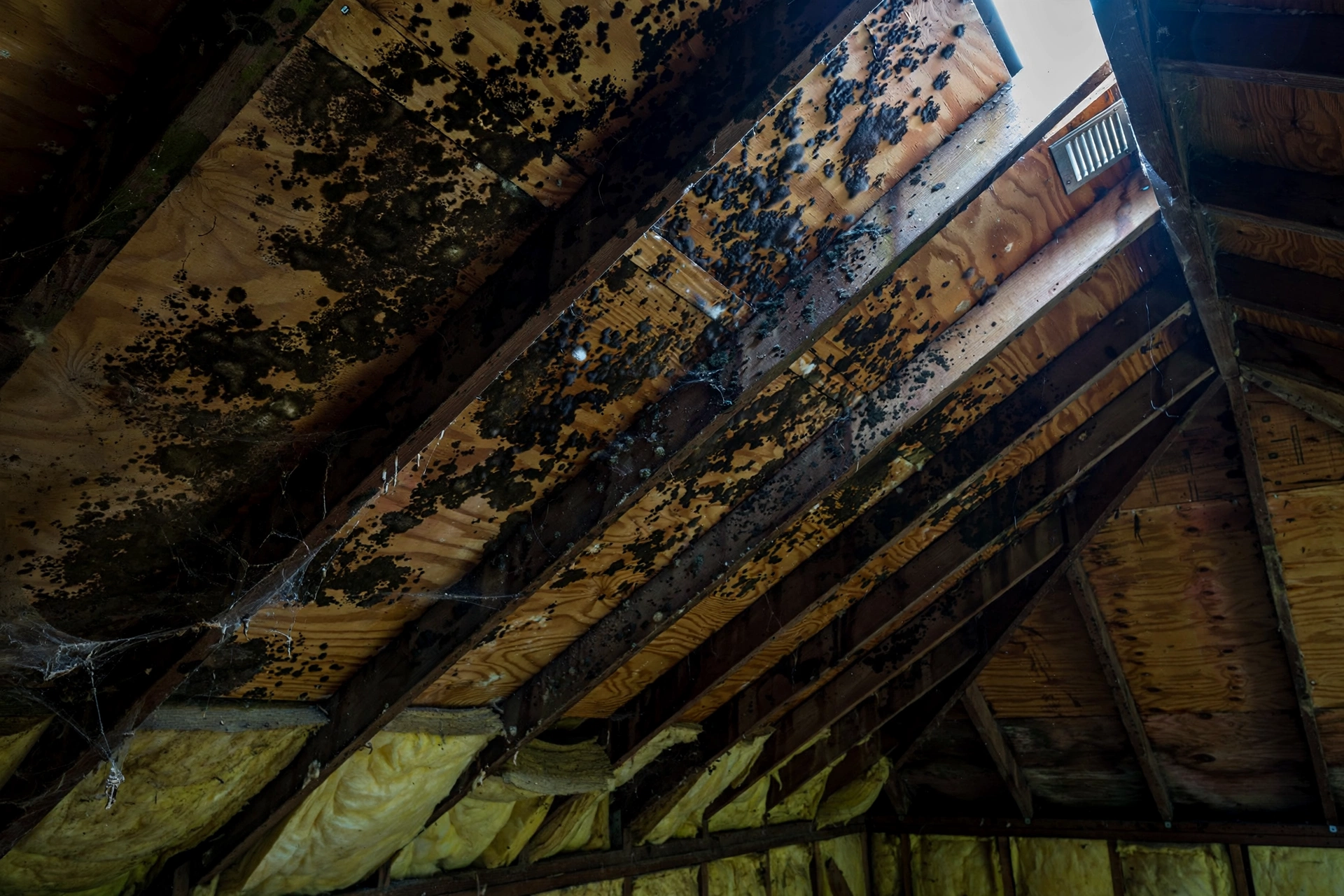
A contained patch on one section of roof decking takes a small crew a short visit. Growth spread across the full deck, down the rafters, and into the insulation below is a multi day project with a larger crew. Scattered colonies on several surfaces also cost more than one continuous patch of the same total size, because each surface is cleaned, dried, and verified separately.
- A single contained patch on accessible sheathing is the least expensive attic scenario.
- Growth spread across the full roof deck multiplies cleaning and drying time.
- Colonies on multiple surfaces, decking, rafters, and insulation, are priced as several jobs in one.
- Hidden spread under insulation is only found during inspection, which is why documented scopes change less mid job.
If you are not sure which category your attic falls into, a documented inspection settles it before anyone quotes. Call +1 (954) 676-1007 and describe what you can see from the hatch.
Insulation Removal and Replacement Is Often the Largest Line Item
Insulation drives attic pricing because moldy insulation almost never gets cleaned. It gets removed and replaced, and both halves cost money.
Why moldy insulation comes out instead of being cleaned
Fiberglass batts and blown cellulose are porous, and their fibers trap spores deep inside the material where no spray or wipe reaches. The mycelium, the root like network of the colony, threads through the insulation rather than sitting on its surface. EPA cleanup guidance makes the same distinction: hard, non porous surfaces can be scrubbed clean, while absorbent porous materials that are moldy generally have to be discarded. Bagging the old insulation out under containment and installing fresh material once the attic is dry is two jobs priced as one line.
Depth and coverage area change the number
A thin layer of blown insulation over one bedroom is a small removal. Deep blown insulation across the whole attic is a large one, and replacement varies too, because new insulation has to match the depth the home needs in the Florida heat.
Roof Deck and Plywood Involvement Changes the Scope Again
Surface growth on sound plywood sheathing can usually be cleaned and treated in place, which keeps the carpentry out of the quote. The picture changes when the wood itself has failed. Sheathing that has gone soft, delaminated, or rotted through has lost structural value, and removal becomes cut out and replacement of the damaged sections, with framing repairs where rafters are affected.
- Surface growth on firm, dry plywood is treated in place at the lowest cost.
- Stained but sound decking needs cleaning, treatment, and drying verification.
- Soft or delaminated sheathing must be cut out and replaced, adding carpentry.
- Rotted rafters or framing add structural repair on top of remediation.
The worst deck damage usually hides under the insulation. Our guide to mold growing on attic plywood and roof decking shows how deck damage is assessed and why it spreads so fast in Florida attics.
Access Difficulty Adds Labor to Every Step
Everything in an attic job, every bag of insulation and sheet of replacement decking, passes through one hatch and gets carried across joists. Low clearance, a steep roof pitch, a small hatch, and stored belongings in the way all slow the crew down. Ductwork and air handlers in the attic add protection work around equipment that cannot get wet or contaminated.
Containment Level Scales With the Size of the Growth
Professional remediation isolates the work area before anything is disturbed, because scraping and demolition release spores into the air. For a small patch, containment may be a sealed hatch and plastic sheeting. For a full deck project, it means a sealed zone run under negative air pressure, with air exhausted through HEPA filtration so spores are captured instead of drifting downstairs. Larger containment takes more material, setup time, and equipment run time, and it is a legitimate part of the price, not padding. A quote with no containment line on a large job is a warning, not a bargain.
The Moisture Source Repair Is Part of the Real Cost
Removal without moisture repair is money spent twice. The water that fed the colony is still entering, and in South Florida humidity, regrowth takes weeks, not years. An honest scope identifies the source and prices its correction alongside the cleanup: a roof leak at a flashing or vent boot, a bathroom fan venting into the attic instead of outdoors, failed duct connections sweating condensation, or ventilation too poor to dry the decking.
Professionals find the source with moisture meters, reading the decking and framing around the visible growth to map how far the water traveled. Where ducts run through the attic, the source is sometimes inside the duct system itself, as our comparison of mold in attic ductwork versus mold in insulation explains. Keeping relative humidity controlled afterward is what makes the repair permanent.
Testing and Verification Add Modest, Worthwhile Line Items
Some scopes include sampling or post remediation verification, where the cleaned attic is re inspected to confirm the work succeeded. In Florida, assessment and remediation are licensed separately, and the company assessing a job is not the company that profits from remediating it. That separation protects you: the scope comes from someone with no incentive to inflate it.
A Written Scope Should Itemize Every One of These Factors
The best protection against overpaying is a written, itemized scope from a documented inspection. Before accepting any quote, check that it spells out the following.
- The measured area of growth, surface by surface, not a single lump estimate.
- Which materials will be cleaned in place and which will be removed, named specifically.
- The containment method, including whether negative air pressure and HEPA filtration are included.
- The moisture source found, and the repair included to correct it.
- Insulation removal and replacement listed as separate lines, with the replacement depth stated.
- Any decking or framing replacement stated in sections, not buried in a miscellaneous line.
- Drying and verification steps, including moisture meter readings at completion.
- What is excluded, written down, so there are no surprise additions mid job.
Our attic mold remediation process in Hollywood FL walks through how a scope like this gets built.
Quote Red Flags That Predict a Bad Outcome
- A firm total price given over the phone without anyone entering or inspecting the attic.
- A quote with no containment, drying, or verification lines on a job larger than a small patch.
- Pressure to sign the same day, or a discount that expires tonight.
- A scope that prices removal but says nothing about fixing the moisture source.
- Species based pricing, where the quote jumps because the mold is described as toxic black mold.
- No license or insurance information offered, and none provided when you ask.
- A demand for full payment up front before any work begins.
A Phone Quote Without an Inspection Misleads by Design
That is also why any firm answer to how much does attic mold removal cost, given over the phone to someone who has never seen your attic, is a guess dressed up as a number. The guesser either quotes low to win the job and adds charges once the ceiling is open, or quotes high enough to cover every surprise and loses to the low guesser. Either way, the number tells you nothing about your attic. A documented inspection produces a scope companies can quote against line by line, the only comparison that means anything. To schedule one, call +1 (954) 676-1007.
Florida Attics Add Heat and Ventilation Factors Other States Do Not
Hollywood FL attics run hot nearly year round, and the same heat that makes them miserable to work in makes them efficient mold incubators. Roof decks bake during the day and cool at night, and that cycle condenses water on the underside of the decking when ventilation is poor. Storm season adds wind driven rain at roof penetrations, and because attics are rarely visited, growth from June may not be found until the holidays. That long timeline is why projects here so often combine insulation replacement, deck treatment, and a ventilation correction in one scope.
Frequently Asked Questions
Does homeowners insurance cover attic mold removal?
Sometimes, and the deciding factor is the cause. Mold from a sudden, covered event, such as storm damage that tore shingles off the roof, stands a better chance than mold from long term humidity, slow leaks, or neglected maintenance, which policies commonly exclude. The inspection report, with moisture readings and photos, is the evidence a claim is judged on.
Why do quotes for the same attic vary so much between companies?
Because the scopes are not the same job. One quote may include insulation replacement, containment under negative air pressure, and the ventilation repair, while another covers wiping the decking and nothing else. Compare itemized scopes line by line rather than totals.
Can I reduce the cost by removing the insulation myself?
You can, but it often costs more than it saves. Pulling moldy insulation without containment spreads spores through the hatch into the living space, and disturbed insulation in older homes can contain asbestos era materials. For real savings, ask what you can safely do before the crew arrives, like clearing stored items from the attic.
How long does attic mold remediation take?
It depends on the scope. A contained patch on accessible sheathing can be finished in a day or two. A full deck project with insulation removal, carpentry, and verification runs longer, and drying cannot be compressed without risking regrowth under new insulation.
Will the mold come back after remediation?
Only if the moisture returns. Proper work pairs removal with the roof, duct, or ventilation repair that fed the colony, then verifies with moisture meter readings that materials are dry. Quick regrowth usually traces to a source never corrected.
Does the type of mold change what removal costs?
No. Removal method follows the material and the extent of growth, not the species. Aspergillus, Penicillium, and Stachybotrys chartarum are all removed the same way, and CDC guidance treats all indoor mold growth as a moisture problem to correct.
Is it cheaper to clean the decking than to replace it?
Yes, when the wood is sound. Surface growth on firm plywood cleans and treats in place at a fraction of replacement cost. Once sheathing is soft, delaminated, or rotted, cleaning is no longer an option, because the material has lost its strength and the colony is inside the wood. A moisture meter and a firm press with a screwdriver during inspection settle which case you have.
Get a Documented Attic Scope in Hollywood FL
If you have seen staining on the sheathing, found a musty smell near the hatch, or been quoted a number over the phone that you do not trust, the next step is a documented inspection, not another phone quote. We serve Hollywood, FL and the surrounding area. Call +1 (954) 676-1007 and tell us how much of the deck looks affected and whether the insulation looks stained.
Why will mold companies not give me a price over the phone?
Because the price is set by things no one can see from a description: how far growth spread under the insulation, whether the decking is sound or rotted, and what is feeding it. A firm total given sight unseen is a guess, corrected upward once your attic is open.
What is the most expensive part of attic mold removal?
Usually the insulation. Moldy fiberglass or cellulose cannot be cleaned, so it is bagged out under containment and replaced at full depth, two labor heavy jobs in one. Rotted roof decking replacement runs a close second, because it adds carpentry to the remediation.
Is attic mold removal worth it if I am selling the house?
Yes, in most cases. Attic mold found on a buyer inspection becomes a negotiation problem with no documentation on your side, and undisclosed known mold creates legal exposure in Florida. A completed job with a written scope and verification proves the problem was handled properly.



One Comment