Who Can Check for Mold in HVAC: HVAC Technician or Mold Specialist?
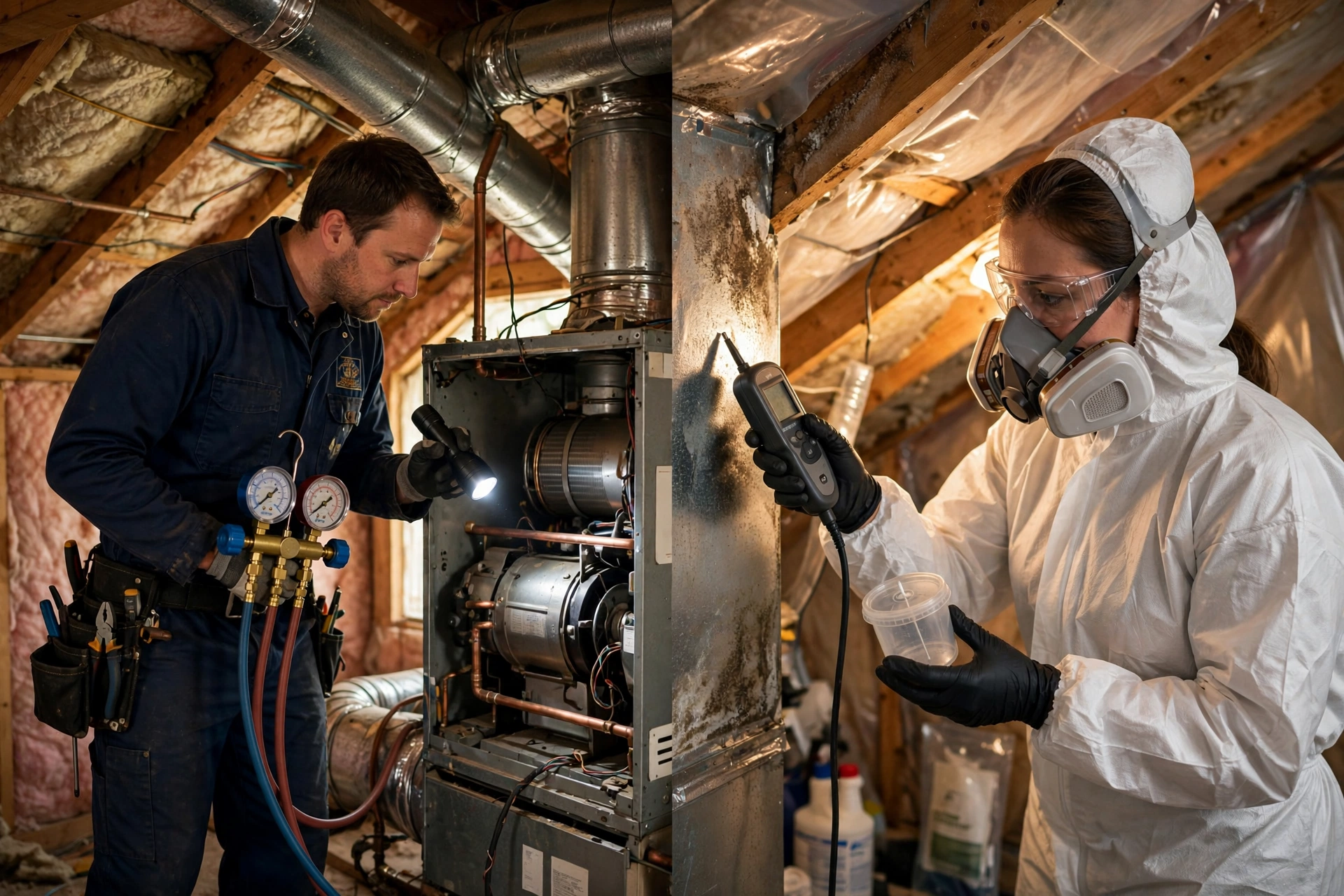
An HVAC technician can check the mechanical condition of your system, but a licensed mold assessor or mold remediation specialist is who should investigate suspected mold itself. In Florida, the professional who inspects the mold must be independent from the one who removes it. Who you call first depends on your symptoms, and the tree below shows the right order.
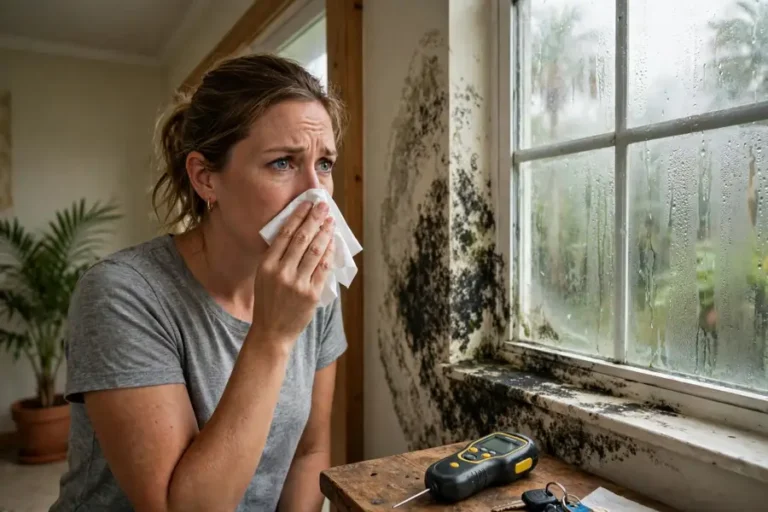
This confusion plays out in Hollywood FL homes all the time. The AC starts smelling musty every time the blower kicks on, an HVAC tech comes out and says the system is running fine, and the homeowner is left with the same smell and no plan. Forum threads repeat the same dead end: a tech looked at the ducts, called it dust, said mold was not his specialty, and left. Understanding what each professional actually does ends that loop.
An HVAC Technician Checks the Equipment, Not the Mold
A good technician diagnoses mechanical problems. Refrigerant charge, airflow, electrical connections, and whether the condensate drain is moving water out of the pan are all squarely in their lane. What is not: identifying mold species, designing a remediation scope, or declaring a system safe from microbial contamination. As HVAC trade publication ACHR News reported in September 2026, contractors themselves advise technicians not to label growth as mold, to document what they see without disturbing it, and to hand the homeowner to an independent indoor environmental professional. So when a tech says everything looks fine, that verdict covers the machine, not the biology living inside it.
That is why the classic forum complaint exists. The technician is being honest about the limits of the job, not dismissing you. The system can be mechanically sound while Aspergillus or Penicillium colonies grow on the evaporator coil and drain pan, or while a damp fiberglass duct liner hosts a mycelium network no one sees from the grille. The tech’s tools read pressure and temperature; confirming mold takes a moisture meter, knowledge of how spores behave in air handlers, and often lab sampling, which belong to a different profession.
A Mold Assessor Diagnoses the Problem, and a Mold Remediator Removes It
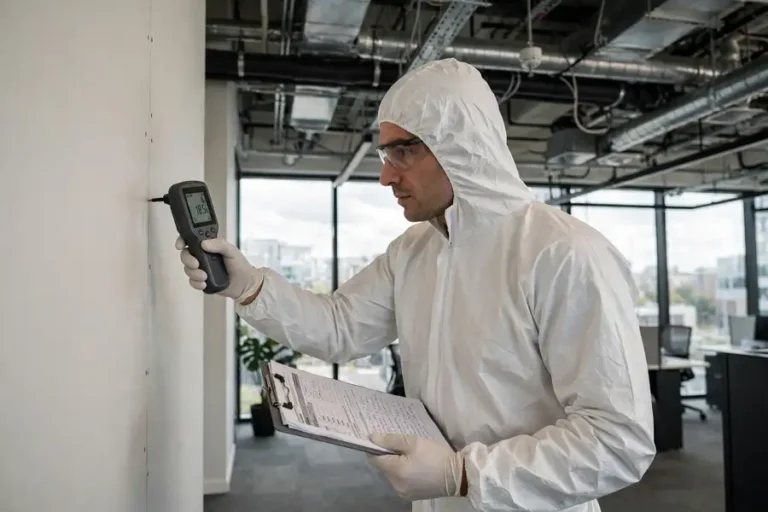
Mold work splits into two separate roles. The mold assessor inspects the property, takes moisture meter readings, traces the moisture source, may collect air or surface samples for laboratory analysis, and writes the remediation protocol: what must be removed, what can be cleaned, and how the work must be contained. The mold remediator executes that protocol. That means sealing off the work area, running HEPA-filtered negative air pressure so disturbed spores cannot spread through the house, physically removing contaminated porous material, and verifying the area is dry and clean before closing up, following the IICRC S520 standard for professional mold remediation.
Florida treats these as two separate professions. The Department of Business and Professional Regulation licenses mold assessors and mold remediators independently, and state law draws a hard line between them: an assessor may not perform or offer remediation on a structure the assessor or the assessor’s company assessed within the previous 12 months, and the same restriction applies in reverse. The law exists to remove a built-in conflict of interest. A company that both finds the mold and gets paid to remove it has a financial reason to find more of it and to grade its own cleanup. Independence means the diagnosis and the final sign-off come from someone whose only product is an honest answer.
Match Your Symptoms to the Right First Call
The shortest honest answer to who can check for mold in HVAC is that three different professionals can, each for a different part of the job. Start with what you actually observe.
- Musty smell when the system starts, nothing visible. Call an HVAC technician first. The cause is often mechanical: a clogged condensate drain, a dirty evaporator coil, or short cycling that leaves indoor relative humidity high. If the smell survives the mechanical fix, call a mold assessor next.
- Visible growth inside ducts or on the air handler. Call a licensed mold assessor first. You need a documented protocol before anyone disturbs it, because disturbing growth without containment spreads spores through every room the system serves.
- Smell or staining after a leak near the HVAC. You likely need both. The technician fixes the moisture intrusion, and the assessor documents the mold so the cleanup scope is based on evidence rather than guesses.
- Smell that returned after a duct cleaning. Call a mold assessor or remediation specialist, not another duct cleaner. A recurring odor means the moisture source survived the cleaning, and our breakdown of mold that keeps returning in the AC after a cleaning walks through exactly why that happens.
- Anything in a Florida home where the AC runs nearly year-round. Damp systems here rarely dry out on their own, so do not wait for the smell to fade. A musty odor that tracks the blower cycles is a diagnostic clue worth acting on now.
Duct Cleaning and Mold Remediation Follow Different Standards
Homeowners lose money by buying the wrong scope. Duct cleaning is maintenance governed by NADCA source removal standards: mechanical agitation of the duct interior, collection under negative pressure with HEPA-filtered equipment. Mold remediation is corrective work governed by the IICRC S520 standard: containment, HEPA-filtered negative air, physical removal of contaminated porous material, correction of the moisture source, and verification before close-up. A duct cleaning does none of the remediation steps, so purchasing it for a mold problem is paying for the wrong service on a schedule.
The EPA’s guidance on air duct cleaning draws the same line. It recommends considering duct cleaning only when there is substantial visible mold growth on hard-surface ducts or other HVAC components, vermin infestation, or excessive debris. The underlying moisture cause must be corrected first or the problem returns, and a system found contaminated with mold should be turned off and not used until remediation is complete. Wet or moldy duct insulation cannot be effectively cleaned and should be replaced. That last rule comes down to materials: bare sheet metal is non-porous and can be mechanically cleaned, while flex duct liner and fiberglass duct board are porous, letting spores and mycelium root too deep to reach, so they must be cut out and replaced. Where water stands long enough in a system, even Stachybotrys chartarum can take hold, and no cleaning method changes the porous versus non-porous math.
Red Flags That Mean You Are Being Sold the Wrong Service
These warning signs mean a company is working outside its scope or inside a conflict of interest.
- A duct cleaning company declares your whole system full of dangerous mold but shows no photos, no moisture readings, and no evidence of the duct material or the affected components. EPA guidance says to ask for that evidence before authorizing anything.
- One company offers to inspect, test, and remediate your system in a single visit. In Florida, the assessor and the remediator must be independent on the same property.
- An HVAC company sells mold remediation without the proper remediation licensing or a written protocol from an independent assessment.
- The scope is all cleaning and no moisture source. No drain work, no humidity plan, no porous material replacement means the cause survives the invoice.
- Guarantees about sterilizing ducts or making them permanently mold-proof. Remediation is source removal plus moisture control, verified when the work is done, not a lifetime warranty.
- Same-day pressure to sign before you can get a second opinion. Our guide to what affects the cost of professional HVAC mold removal shows how a proper scope is built from documented findings, which takes more than an afternoon.
Get the Right Professional on Your HVAC Mold Problem
If the smell tracks your AC cycles or you can see growth inside the system, call +1 (954) 676-1007 and describe what you see and smell. If you are still deciding who can check for mold in HVAC, the right first step will be clear in one conversation, and if the job needs an independent assessment before anyone touches the system, you will be told so up front. To see how a professional scope is built from start to finish, look at our HVAC mold removal services in Hollywood FL, and find us on the map for the local area we serve.
The Answers to the Questions That Come Up Most
Can an HVAC technician test for mold?
Not in the way that matters. A technician can document visible conditions and check the equipment, but identifying species and designing a cleanup scope belong to a licensed mold assessor. Industry guidance from HVAC trade reporting tells technicians to refer suspected mold to an independent indoor environmental professional rather than diagnosing it themselves.
Should I call a mold inspector or a remediation company first?
The assessor first. The written protocol protects you from oversized scopes, and Florida’s separation rule means the same company cannot assess and then remediate the same property. A remediator working from an independent protocol is how you know the job was scoped honestly.
What is the difference between air duct cleaning and mold remediation?
Duct cleaning is maintenance that removes dust and debris under NADCA source removal standards. Remediation is corrective work under the IICRC S520 standard: containment, HEPA-filtered negative air pressure, removal of contaminated porous material, moisture correction, and verification. They are different services with different standards and different licenses behind them.
Can a duct cleaning company tell me my ducts are full of mold?
Only with evidence. Ask for photos of the duct interior, the duct material, the moisture condition, and exactly which components are affected. A company that declares a system-wide emergency without showing you anything is selling fear, and the EPA’s own guidance tells homeowners to demand this kind of evidence before authorizing work.
Can moldy flex duct be cleaned, or does it have to be replaced?
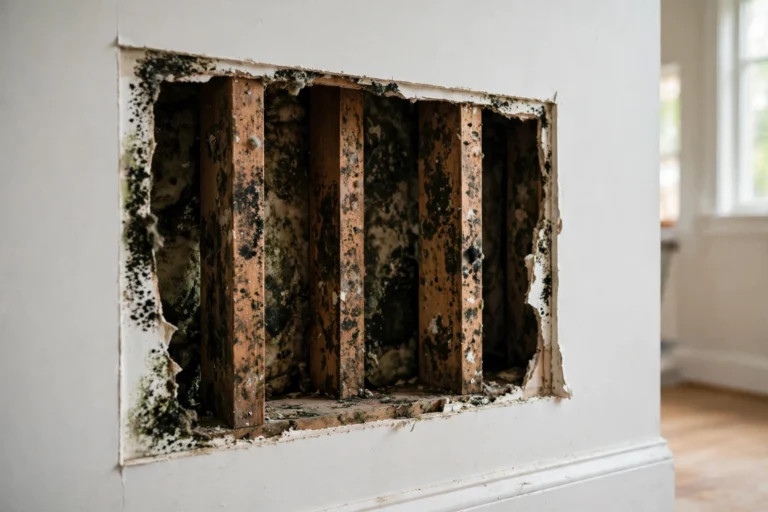
It has to be replaced. The porous inner liner lets spores and mycelium embed too deep for any cleaning method to reach, and the EPA is explicit that wet or moldy duct insulation should be removed rather than cleaned. Before authorizing replacement, ask the contractor to cut a small inspection window so you can see the condition of the liner yourself.
Do I need mold testing before removal?
That is the assessor’s call, and the honest answer depends on the situation. Testing documents the scope, identifies the moisture source, and gives you a baseline for post-work verification, which is why Florida built an entire license around the assessment role. For small, clearly visible growth with an obvious moisture cause, a protocol can sometimes be written without lab samples.
My AC tech said everything looks fine, but the smell is still there. Why?
Because filters are designed mainly to protect the equipment, not the occupants, and growth can hide where a visual check does not reach: the evaporator coil fins, the drain pan, the underside of a fiberglass duct liner. A moisture meter reading often reveals the damp zone long before growth is visible. An odor that appears when the blower starts and fades when it stops is coming from the system, no matter how clean the filter looks.
My AC smells musty every time it starts up. Do I call an HVAC company or a mold company first?
Call the HVAC company first. The smell is often a mechanical issue like a clogged condensate drain, and the tech can fix that in one visit. If the odor survives the repair, your next call is a mold assessor.
A duct cleaning company said my ducts are full of mold and wants to treat them today. Should I say yes?
Not yet. Ask for photos and evidence first, then get an independent assessment before anyone sells you the cleanup. The company that finds the mold should not be the one getting paid to remove it.
Do I need a mold test before someone cleans mold out of my ducts?
Sometimes, and the assessor decides. Testing documents what is actually there, identifies the moisture feeding it, and gives you proof the cleanup worked. It is cheap insurance against an oversized scope.
Can the same company that cleans my ducts also do the mold remediation?
Duct cleaning and remediation are different services with different standards, so make sure the company doing the mold work is licensed for remediation and is working from an independent assessment. In Florida, one company cannot both assess and remediate the same property.

2 Comments