How Much Does It Cost to Remove Mold From Drywall?
How much does it cost to remove mold from drywall? There is no flat rate, because the price is built from the size of the affected area, how deep the growth goes, and what it takes to rebuild the wall. A small surface patch and a full cut-out are different jobs with different numbers.
Seven Factors Build the Price, and Every Wall Has a Different Mix
There is no single answer to how much does it cost to remove mold from drywall, because seven factors stack differently on every job. A quote is just these factors added together, whether the company shows you the math or not.
- Square footage of affected board. Every added foot of moldy drywall means more containment, more cut-out, more bagged disposal, and more new board to hang and finish.
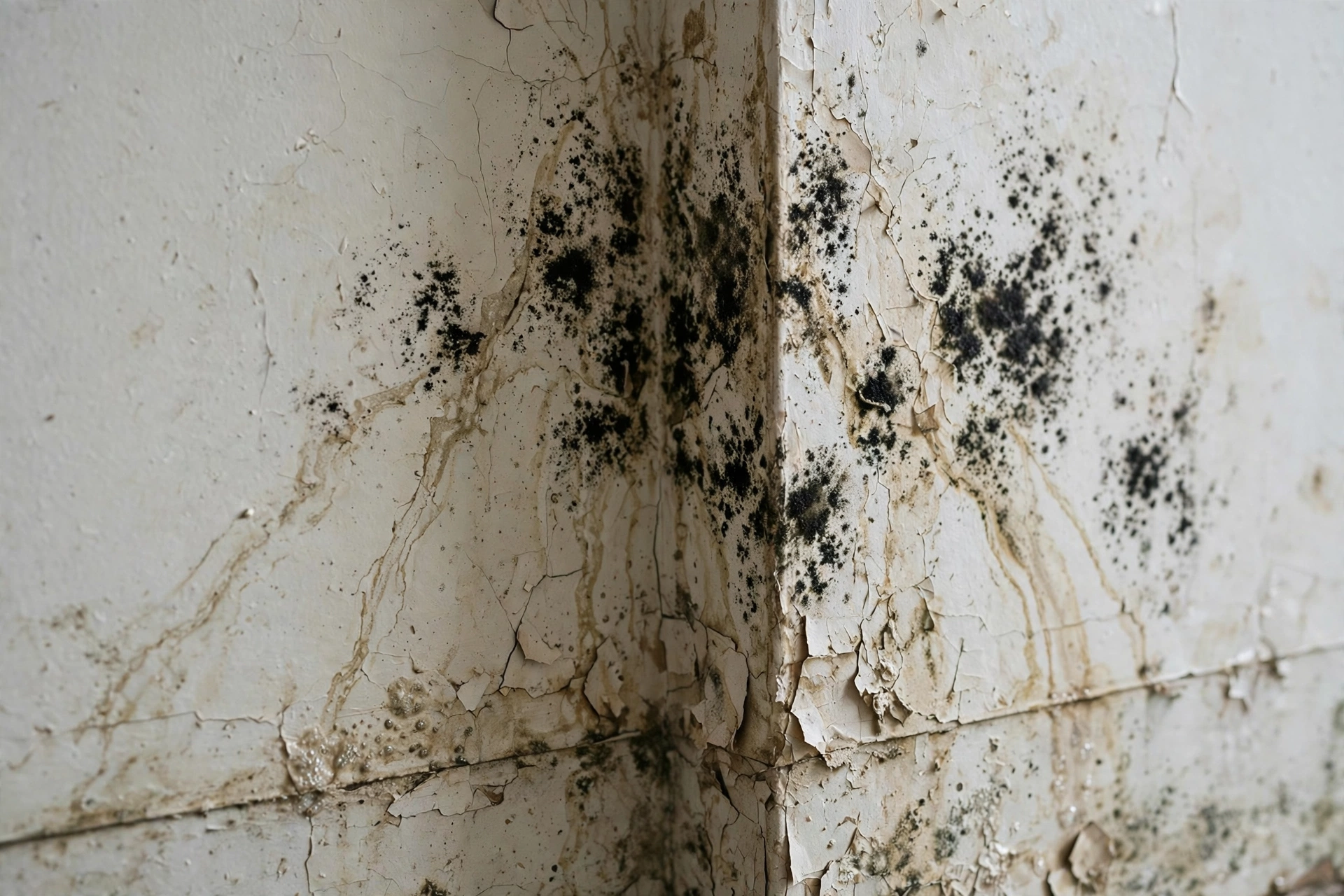
- Depth of growth. Surface growth on paint is a cleaning job. Growth in the paper facing or the porous gypsum core is a removal job, and the two are priced nothing alike.
- Cavity involvement. If the colony has reached the back of the board, the wall opens and the scope grows to whatever the cavity holds. Sheltered species such as Stachybotrys chartarum favor exactly that chronically wet, hidden environment.
- Framing and insulation condition. Moldy insulation comes out and is replaced. Moldy studs are cleaned and treated in place. Sound framing keeps the job small; damaged framing does not.
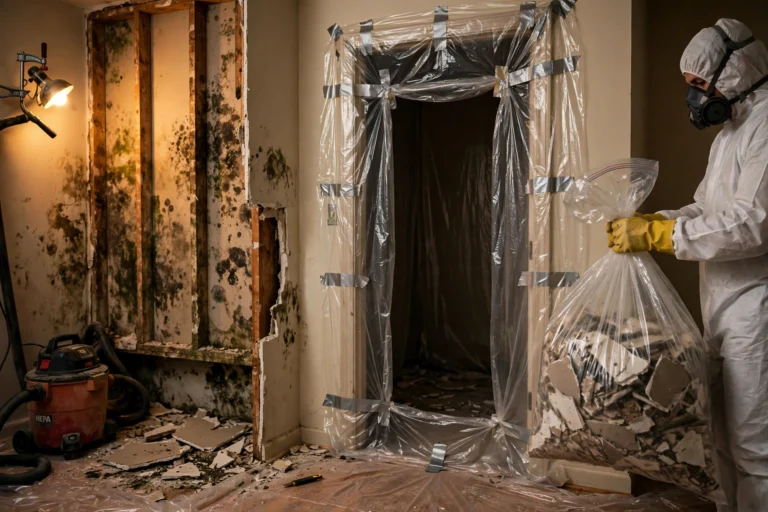
- Containment level. A single small patch needs a sealed work area. A large or multi-room job needs full containment with negative air pressure and HEPA filtration running the whole time, the setup described in our guide on whether removing drywall spreads mold through the house.
- Disposal. Contaminated drywall and insulation are bagged, sealed, and hauled as remediation waste, and the volume scales with the size of the cut-out.
- Moisture-source repair and patch-back. Fixing the leak belongs to a plumber or roofer, and hanging, taping, texturing, and painting new board is finishing labor. Honest scopes price both openly instead of burying them.
Cleaning vs Replacing Is the Biggest Single Cost Fork
Before any factor is counted, the job falls into one of two lanes. Painted, firm drywall with surface-only growth, usually common species such as Aspergillus or Penicillium sitting on the paint film, can be cleaned, treated, and kept, which is the least expensive outcome a moldy wall can have. Soft, crumbly, or deeply penetrated board must be cut out, and replacement adds demolition, disposal, new gypsum board, taping, mudding, sanding, texture, and paint on top of the remediation itself.
Which lane your wall is in gets decided by simple checks: firmness, paper condition, tide lines, and patch size, not by the look of the stain. We walk through those tests in our guide on whether drywall can be saved or has to be replaced. Treat any quote that never tells you which lane you are in as a guess, because the two lanes differ more than any two quotes within the same lane ever will.
A Written Scope Shows the Work; a Single Total Hides It
A professional quote is an itemized scope, not a number with a company logo. Look for these lines, each named and accounted for:
- Inspection and moisture mapping, the readings that define where the job starts and stops.
- Containment setup, sealed barriers and protected pathways through the home.
- Negative air and HEPA air scrubbing for the duration of the dusty work.
- Removal of affected drywall and any contaminated insulation, cut back to clean, dry material.
- Sealed bagging and disposal of contaminated debris.
- Antimicrobial treatment and HEPA vacuuming of the exposed framing and cavity.
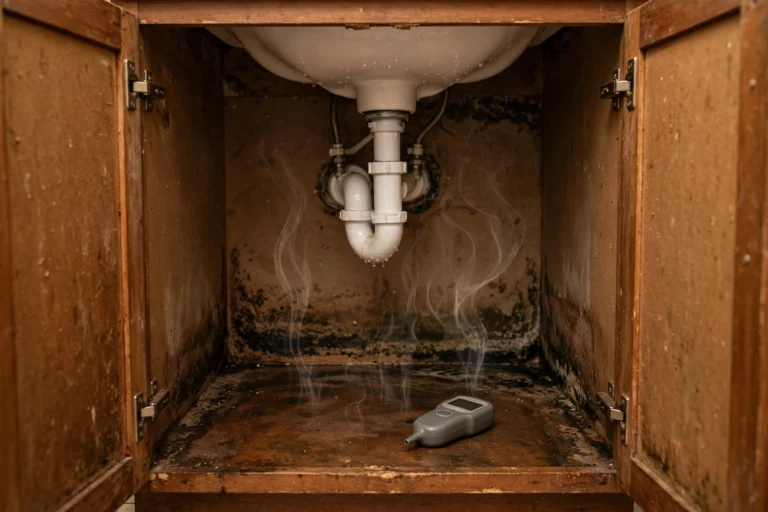
- Drying and moisture verification before closing, so new board never goes over damp studs.
- Patch-back listed separately: new board, tape, mud, texture, and paint, or an explicit note that finishing is excluded.
- Moisture-source repair identified as its own line, because it is a different trade and often a different company.
This structure follows the logic of IICRC S520, the standard professional mold remediation is built on: define the scope from conditions, contain the work, remove what cannot be cleaned, and verify the result. If a quote skips the verification line, the cheapest part of the job just became the most expensive callback.
Quote Red Flags That Predict an Expensive Mess
Some quotes are low because the scope is thin, and the missing lines reappear later as change orders or regrowth. Watch for these:
- A per-square-foot price quoted from photos or a phone call, before anyone has opened or metered the wall.
- No moisture inspection at all, just a visual glance and a total.
- A proposal to seal or paint over the mold instead of removing it.
- No containment line, which means the spores released by cutting land in your ducts and the next room.
- Pressure to sign the same day, often paired with a warning that the price expires.
- A single lump total with no line items and nothing in writing about what is excluded.
- The same company insisting on doing both the testing and the remediation with no independent check. Florida licenses mold assessors and remediators separately for a reason.
Per-Square-Foot Phone Quotes Mislead Because the Cavity Is the Unknown
A square-foot rate assumes every wall hides the same thing behind the same stain, and that is the one thing nobody knows until the wall is opened. Two bathrooms can show identical two-foot stains. Behind the first is clean framing and a colony that never left the paint. Behind the second is a slow drain leak, soaked insulation, and mycelium across the back of three sheets of board. The surface rate prices them the same; the real jobs differ by multiples.
That is why a phone number is either a guess or a low anchor that climbs once demolition starts. A documented inspection with moisture mapping is the only basis on which two quotes can be compared at all, and it is standard practice in professional drywall mold remediation. If you want a number built on your actual wall instead of a rate card, call +1 (954) 676-1007 and have the wall read before anyone quotes it.
Insurance Decides From Documentation, Not From the Stain
Whether a policy helps with drywall mold removal turns on the cause, and no honest company can promise an outcome on a policy it has not read. Sudden, accidental water events, a burst supply line or a failed water heater, are treated differently from slow leaks, deferred maintenance, and humidity-driven growth, which many policies limit or exclude. What a homeowner controls is the paper trail. Dated photos of the damage, moisture readings, an itemized written scope, and invoices that separate the water event from the remediation give an adjuster something concrete to evaluate. A lump-sum verbal quote gives them nothing. Getting the inspection documented before demolition starts is the single most useful step, whichever way the claim goes.
Florida Drywall Jobs Run Bigger Than the Stain Suggests
In Hollywood FL, the visible spot is routinely the small part of the job. AC condensation and slow plumbing leaks feed wall cavities for months before anything shows on the paint. Indoor relative humidity stays high enough that the paper facing on the cavity side rarely dries fully between wettings, so colonies spread across the back of the board and into insulation while the room side shows one modest patch. By the time a Florida homeowner calls, the cavity often holds more growth than the surface does, which is why local scopes so often include opening, insulation, and framing work that the stain alone never hinted at. It is also why the signs of mold behind drywall matter here: catching the cavity side early is what keeps a cleaning-sized job from becoming a rebuild.
Frequently Asked Questions
Is cleaning moldy drywall cheaper than replacing it?
Yes, cleaning is the low-cost lane whenever the board qualifies: surface growth, intact paint, firm board, small patch. Replacement adds demolition, disposal, new board, and finishing on top of remediation. The press, paper, and tide line tests decide the lane, which is why the inspection comes before any number worth trusting.
Does homeowners insurance cover drywall mold removal?
It depends on the cause and the policy. Sudden water damage is more likely to be covered than slow leaks or humidity growth, and many policies cap or exclude mold specifically. Document the damage with photos, moisture readings, and an itemized scope before demolition, and let the adjuster work from records instead of a stain that is already gone.
How long does drywall mold removal take?
A single contained section is often a day or two of work, but the calendar is set by drying. The cavity has to reach verified dry readings before new board goes up, and finishing adds taping, mudding, sanding, and paint after that. Larger or multi-wall jobs stretch accordingly. Rushing the drying step is how mold gets sealed behind a new wall.
Will mold come back after the drywall is replaced?
Only when the moisture source survives the job. New board over an unfixed leak or a chronically humid cavity is a countdown, not a cure. Proper scopes pair the replacement with the plumbing, roofing, or ventilation repair that fed the growth, and verify the cavity is dry before closing it.
Why do quotes for the same wall vary so much?
Because the scopes differ, not just the prices. One quote includes containment, disposal, drying verification, and patch-back; another quietly excludes all four and wins on the total. Compare line items side by side, and treat any quote that will not itemize as the most expensive one on the table, whatever its number says.
Is it cheaper to remove moldy drywall myself?
For a small patch, it can be. EPA guidance puts do-it-yourself cleanup at about 10 square feet or less, and a handy owner can cut and patch a section. The savings shrink fast without containment, sealed disposal, and verified drying, because spread spores and regrowth convert one cheap job into two. Most owners also underestimate the finishing: taping, mudding, and texturing new board to match is skilled work.
What should I ask before hiring a company for drywall mold?
Ask for the scope in writing, line by line. Ask how the area will be contained, how drying will be verified, whether patch-back is included, and who repairs the moisture source. In Florida, also ask whether the assessment and the remediation are independent, since the state licenses mold assessors and remediators separately. Vague answers to any of these predict the job.
Get a Written Scope for Your Wall in Hollywood FL
If you are looking at a stained wall and a handful of conflicting numbers, the fix is a documented inspection and an itemized scope you can compare against any quote. We serve Hollywood, FL and the surrounding area. For drywall mold removal priced from what your wall actually needs, call +1 (954) 676-1007 to schedule an assessment.
Why won’t mold companies just give me a price over the phone?
Because the price lives behind the drywall, and nobody can see through it from a photo. The visible stain tells them the surface area; the cavity decides the job. A company that prices sight unseen is either guessing high enough to cover surprises or anchoring low and planning change orders. An inspection with moisture readings is what turns a guess into a quote.
Is a per-square-foot mold quote ever accurate?
Only by luck. Square-foot rates assume uniform depth, and drywall mold is never uniform: one wall is paint-deep, the next is through the board with wet insulation behind it. A rate can describe the cleaning lane or the replacement lane, but a single rate cannot describe both, and you do not know your lane until the wall is checked.
My quote is just one total with no breakdown. Should I sign it?
No. A lump total cannot be compared, verified, or enforced, and it hides the four lines that decide whether the job holds: containment, disposal, drying verification, and patch-back. Ask for the itemized scope in writing. If the company refuses, that refusal is the answer about how the job would go. To get a scope built that way from the start, call +1 (954) 676-1007.
Does a bigger mold patch always cost more than a small one?
Usually, but depth beats size. A two-foot patch with a soaked cavity, moldy insulation, and framing to treat can cost more than an eight-foot patch of surface growth on sealed paint that only needs cleaning. That is why honest companies price the conditions they find, not the dimensions of the stain.




2 Comments