How to Remove Mold From Attic Ductwork vs Insulation
Learning how to remove mold from attic ductwork starts with one distinction: ducts and insulation are opposite materials. Metal and lined ducts can be cleaned and treated. Porous fiberglass or cellulose insulation cannot be cleaned at all and has to come out. Mixing the two up wastes money and leaves mold behind.
Ductwork and Insulation Sit Side by Side in the Attic, but They Are Opposite Materials
One attic problem is actually two different materials with two opposite prescriptions, and the material in front of you decides which one applies.
- Sheet metal duct is non-porous. Mold grows on the dust and condensation film sitting on its surface, and the surface can be HEPA vacuumed, wiped, and treated.
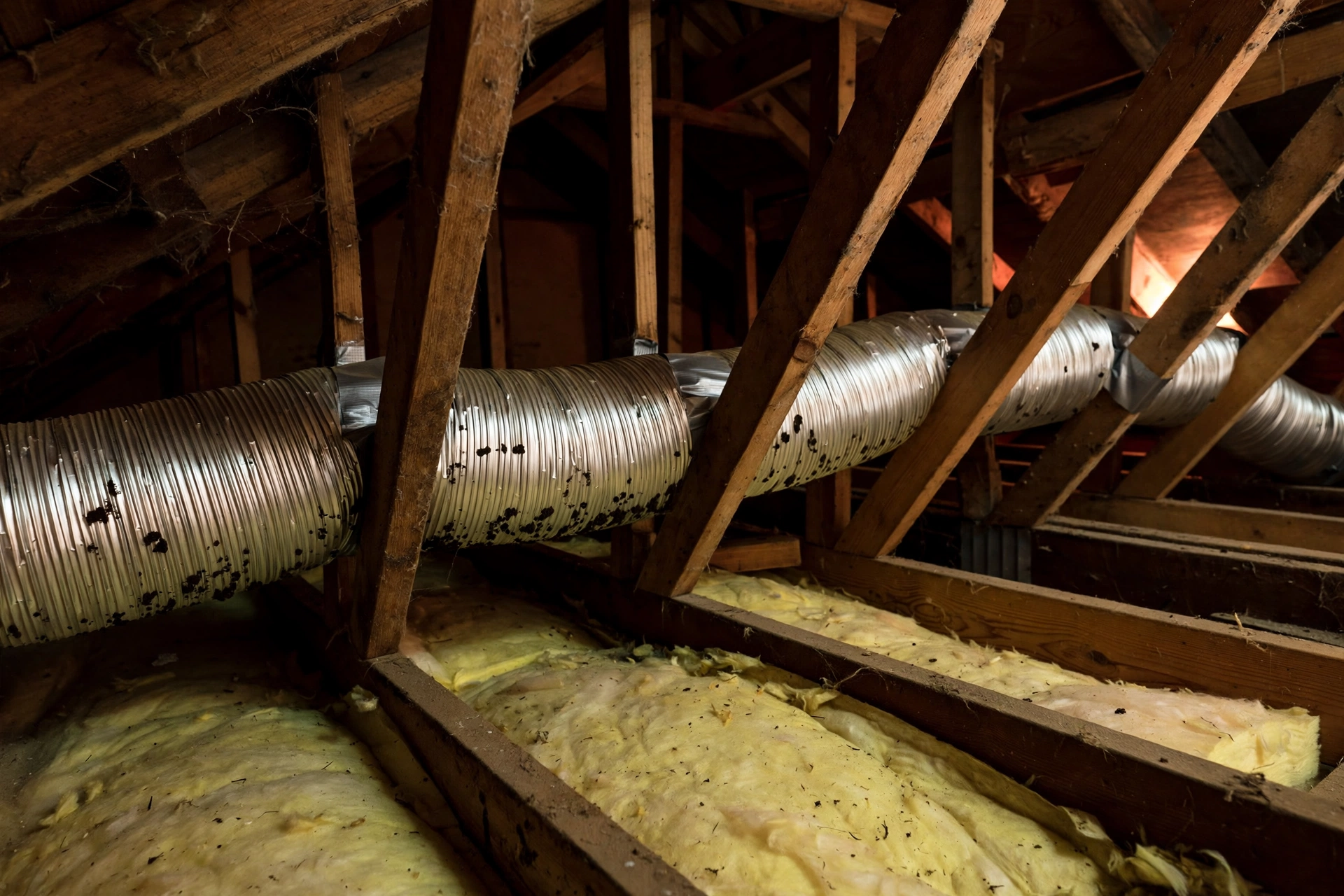
- Flex duct is a plastic inner liner over a wire coil, wrapped in an insulation blanket and a jacket. Surface growth on the liner can be cleaned. A run whose blanket is saturated, torn, or colonized cannot.
- Fiberglass duct board and internal duct liner are porous by design. Once colonized, they belong with insulation, not with metal.
- Fiberglass batts and blown cellulose insulation are porous all the way through. Spores and mycelium embed at depth, beyond the reach of any wipe or spray.
The authorities land in the same place. EPA guidance on duct systems holds that insulated ducts and fiberglass duct board that get wet or moldy cannot be effectively cleaned and should be removed and replaced. NAIMA, the insulation manufacturers association, takes the same position on moldy fiberglass insulation. NADCA, the duct cleaning trade association, sets the assessment and source removal standard for the cleanable side of the system. Different materials, different verdicts.
Telling the Two Apart Takes a Flashlight and Five Minutes
Most homeowners do not know which material is carrying their mold, and the two hide in different places. Work through the attic in this order.
- Big rectangular or round runs in shiny galvanized metal are sheet metal trunk lines. These are the attic’s most cleanable components.
- Gray or silver flexible runs snaking from the trunk to each room are flex duct. Pull a supply register inside the house and shine a flashlight in: visible fuzz or a sour smell at startup points inside the system.
- The material covering the attic floor is insulation: pink or yellow batts between the joists, or a gray, fluffy layer of blown cellulose. Growth here is a removal job by definition.
- White or green fuzz on a duct jacket exterior is surface condensation. Growth spread across the attic floor is in the insulation. The location is the diagnosis.
A moisture meter on the joists and decking around the growth tells you whether the area is still getting wet. Our guide to the signs of mold growing inside air ducts helps you read what you find at the registers before you climb up.
Cleanable Ductwork Gets Source Removal, Not a Spray and a Prayer
The professional method for how to remove mold from attic ductwork is source removal: the growth and the dust feeding it come out of the system, rather than being sprayed in place and left inside it.
- The system stays off from the first tool to the last. Running the blower during cleaning distributes disturbed spores to every room the ducts serve.
- Registers and grilles come off, are cleaned outside the duct, and dry fully before going back on.
- Accessible duct interiors are HEPA vacuumed and contact cleaned. Liquids are never sprayed blindly down a run, where they wet the liner and feed the next colony.
- Antimicrobial treatment, where used, follows the cleaning. Fogging a dirty duct is decoration, not remediation.
- The filter is replaced the same day, and the coil and condensate drain pan get checked, because a system growing mold in its ducts usually has a moisture story at the air handler too.
Our overview of HVAC mold remediation covers the air handler side, the other half of most attic duct cases.
A Colonized Flex Duct Liner Is Replaced, Not Cleaned
Flex duct fails quietly. The airstream only ever touches the smooth plastic core, and that core wipes clean. The trouble starts when the outer jacket tears, a seam opens, or a connection slips: humid attic air reaches the insulation blanket around the core, and that blanket is porous fiberglass. Mold established in the blanket cannot be vacuumed or scrubbed out, and the damaged run sheds fibers and spores at the tear every time the blower runs.
The same logic retires rigid fiberglass duct board, the trunk material in many older Florida homes. Its interior face is fiberglass, and once a colony roots into that face, cleaning reaches only the surface. In both cases the fix is a new run or section, sealed at every joint, not repeated cleaning of a material that cannot come clean.
Moldy Insulation Comes Out in Sealed Bags and Is Never Scrubbed
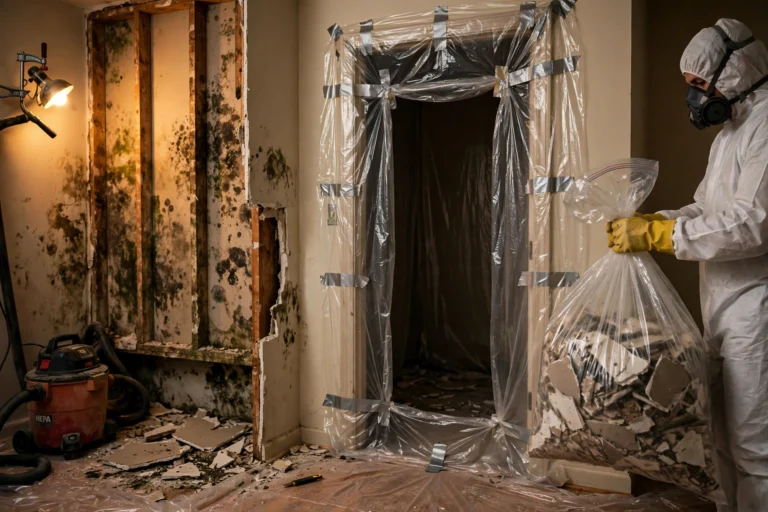
Insulation removal is the highest exposure task in the attic, because disturbing dry, colonized batts releases more spores than any other step. The protocol is strict for that reason.
- The work area is isolated first, with containment at the hatch and negative air pressure exhausting through HEPA filtration, so the living space below stays clean.
- Insulation is bagged where it lies, in heavy contractor bags sealed before they travel. Dragging loose moldy batts through the house undoes the entire point of the job.
- With it out, the exposed framing and ceiling drywall below get HEPA vacuumed and cleaned, and everything dries fully before new insulation goes in.
- Wet and compressed insulation also insulates badly, so replacement restores the R-value the attic quietly lost while the material was damp.
A whole attic floor of moldy insulation is a contained, multi-step job, not a weekend chore. If that is what you are looking at, call +1 (954) 676-1007 before you start pulling batts, because the removal order decides whether the spores end up in a sealed bag or in your bedrooms.
The Duct System Is Also the Delivery System, and That Cuts Both Ways
Leaky return ducts in the attic pull attic air, spores included, into the system on every cycle and deliver it to every room.
That is how an attic colony becomes a whole house air problem without a single spore drifting down through the hatch. It is also why the system stays off during attic mold work: the fastest way to spread a colony you are disturbing is to give it a ride on the blower.
The species mix in duct dust is usually dominated by Aspergillus and Penicillium, the common indoor molds. Stachybotrys chartarum favors chronically wet cellulose, such as insulation left wet for months, one more reason wet insulation is treated as urgent. Some molds produce mycotoxins, but CDC guidance does not change with the species list: find the moisture, remove the growth, and the exposure ends.
Sweating Ducts Are the Florida Mechanism That Wets Both Materials at Once
Cold supply air inside a duct crossing an attic that can pass 130 degrees guarantees condensation on any surface whose insulation jacket is thin, torn, or compressed. Water beads on the jacket, runs to the low points, and drips onto the insulation below. The jacket exterior grows mold where homeowners never look, and the insulation underneath quietly becomes the second problem.
The correction is mechanical, not chemical: intact jacket insulation on every run, sealed seams and connections, and attic ventilation that keeps the space as dry as the climate allows. Keeping indoor relative humidity in the 30 to 50 percent band slows the cycle from inside the house as well. It is the same moisture logic behind our attic mold removal work across Hollywood FL homes.
An HVAC Technician and a Mold Professional Split This Job Down the Middle
Call the HVAC technician for the machine: coils, drain pan and drain line, airflow, duct leakage, and replacing duct runs. Call the mold professional for the growth: assessment with moisture meters, containment, insulation removal, and remediation under IICRC S520 practice. A NADCA certified duct cleaner sits between them, handling whole system cleaning once active growth is dealt with. In Florida, mold assessment and remediation are separately licensed trades, and the assessor documenting your problem should not be the company selling the cleanup.
Sequence matters as much as personnel. Remediation done before mechanical repair is wasted if a sweating duct or clogged drain line re-wets everything within a season, and mechanical work done with growth in place spreads it. Unsure which half you have? Call +1 (954) 676-1007 and describe where the growth is: inside the duct, on the jacket, or in the insulation. Each answer points to a different first call. While the attic is open, the decking overhead deserves the same look; our guide to mold on attic plywood and roof decking covers the wood side of the visit.
Frequently Asked Questions
Can mold in attic ductwork spread through the whole house?
Yes. The duct system is the delivery network, and leaky returns in the attic draw spore laden air into it every cycle. That is why the system stays off during cleaning and why attic duct leaks get sealed as part of the job.
Should I replace ductwork with mold in it, or clean it?
Clean sheet metal ducts and flex duct liners with surface growth. Replace flex runs whose blanket or liner is saturated or torn, and replace colonized fiberglass duct board. Material and depth decide, which an inspection inside the runs settles.
Does standard duct cleaning remove mold?
Standard duct cleaning removes dust and debris, and that alone does not remediate active mold. Mold work adds assessment, containment, and source removal under NADCA practice, plus replacement of any porous components the colony has rooted into. A brush and vacuum pass over a live colony leaves it in place.
Can moldy attic insulation be cleaned and put back?
No. Fiberglass and cellulose are porous through their full depth, and spores and mycelium embed where no cleaning reaches. Moldy insulation is bagged and removed, the surfaces beneath are cleaned and dried, and new insulation goes in once the moisture source is fixed.
How can I tell whether the mold is in my ducts or my insulation?
Check location. A flashlight at a supply register shows the duct interior and liner. Fuzz on a jacket exterior means surface condensation. Growth spread across the attic floor is in the insulation. A musty blast when the system starts points inside the ductwork.
Is it safe to run the air conditioner with mold in the attic ducts?
Running the system distributes spores into the rooms it serves, so minimize runtime and get the system assessed promptly. Keep it off entirely during any cleaning or removal work. Comfort matters in Florida, which argues for sequencing the job quickly, not for ignoring it.
What affects the cost of fixing moldy ducts and insulation?
Cost follows scope: how many linear feet of duct need replacement instead of cleaning, how much attic floor insulation comes out, attic access, how much containment the layout requires, and whether the moisture source, a sweating jacket, a drain problem, or a roof leak, needs repair in the same visit.
Get Your Attic Ducts and Insulation Assessed in Hollywood FL
In Hollywood, FL, sweating ducts and tired insulation arrive together, and the right fix starts with knowing which material is carrying the growth. Call +1 (954) 676-1007 to schedule an assessment, and tell us where you saw the mold: inside a register, on a duct jacket, or spread across the attic floor. That detail tells us the trade, the tools, and the containment your attic needs.
My attic insulation has mold but my ducts look clean. What should I do?
Treat the insulation as the job: it comes out in sealed bags, with the surfaces beneath cleaned and dried before new insulation goes in. Have the duct interiors checked at a register anyway, because whatever wet the insulation, often duct condensation dripping from above, may affect the system too.
Can a duct cleaning company get rid of mold in my HVAC system?
A duct cleaner can clean the cleanable parts: metal surfaces and liners. Active mold changes the job into remediation, with assessment, containment, and source removal, and any porous component the colony has rooted into gets replaced rather than cleaned. Ask whether the company works to NADCA assessment standards.
Why is there mold growing on the outside of my air ducts?
Condensation. Cold air inside the duct chills the jacket below the dew point of hot attic air, water forms on the surface, and mold follows the moisture. The fix is intact, well sealed jacket insulation and dry attic air, not repeated wiping of a surface that re-wets every cycle.
Who do I call first for mold in my attic ducts, an HVAC company or a mold company?
Start with whoever can assess the growth, the mold professional, especially if insulation is involved or the area is large. Bring the HVAC technician in for the mechanical causes: duct replacement, drain problems, and airflow. Most complete jobs use both, sequenced so the moisture is fixed and the growth removed under containment.


4 Comments