Can Moldy Drywall Be Saved, or Does It Have to Be Replaced?
Can moldy drywall be saved? Sometimes, but only in a narrow set of conditions: the growth sits on intact, sealed paint, the board still feels firm, the patch is small, and the moisture source is fixed and dried. Once mold reaches the paper facing or the gypsum core, replacement is the only reliable fix.
The Answer Starts With Anatomy: Drywall Is Porous and Mold Eats the Paper
Drywall, also called gypsum board, is a slab of gypsum pressed between two paper sheets, and neither layer works in your favor once water arrives. The gypsum core is porous and holds moisture like a sponge. The paper facing is cellulose, which is food. A colony anchors to that facing with mycelium, root-like threads that work down into the fibers and eventually into the core itself.
That is why drywall behaves nothing like tile, glass, or sealed stone. On those non-porous surfaces a colony lives on top, where a wipe reaches it; on drywall it lives in the material. Common Aspergillus and Penicillium species colonize damp painted surfaces readily, while Stachybotrys chartarum, the species behind most black mold headlines, needs chronically soaked cellulose, typically after weeks of leakage.
Some molds also release mycotoxins as they grow, one more reason embedded growth is not a surface problem. The real question is never which cleaner to buy. It is how deep the growth has gone into a material that cannot be disinfected below its surface.
Five Checks Decide Whether Cleaning Is Even an Option
Run these checks in order before you clean anything. Fail any one of them and the answer moves from cleaning to replacement.
- The press test: press the patch firmly with your thumb. Firm board can be a cleaning candidate. Board that feels soft, spongy, or crumbly has a compromised gypsum core, and no cleaner restores lost strength.
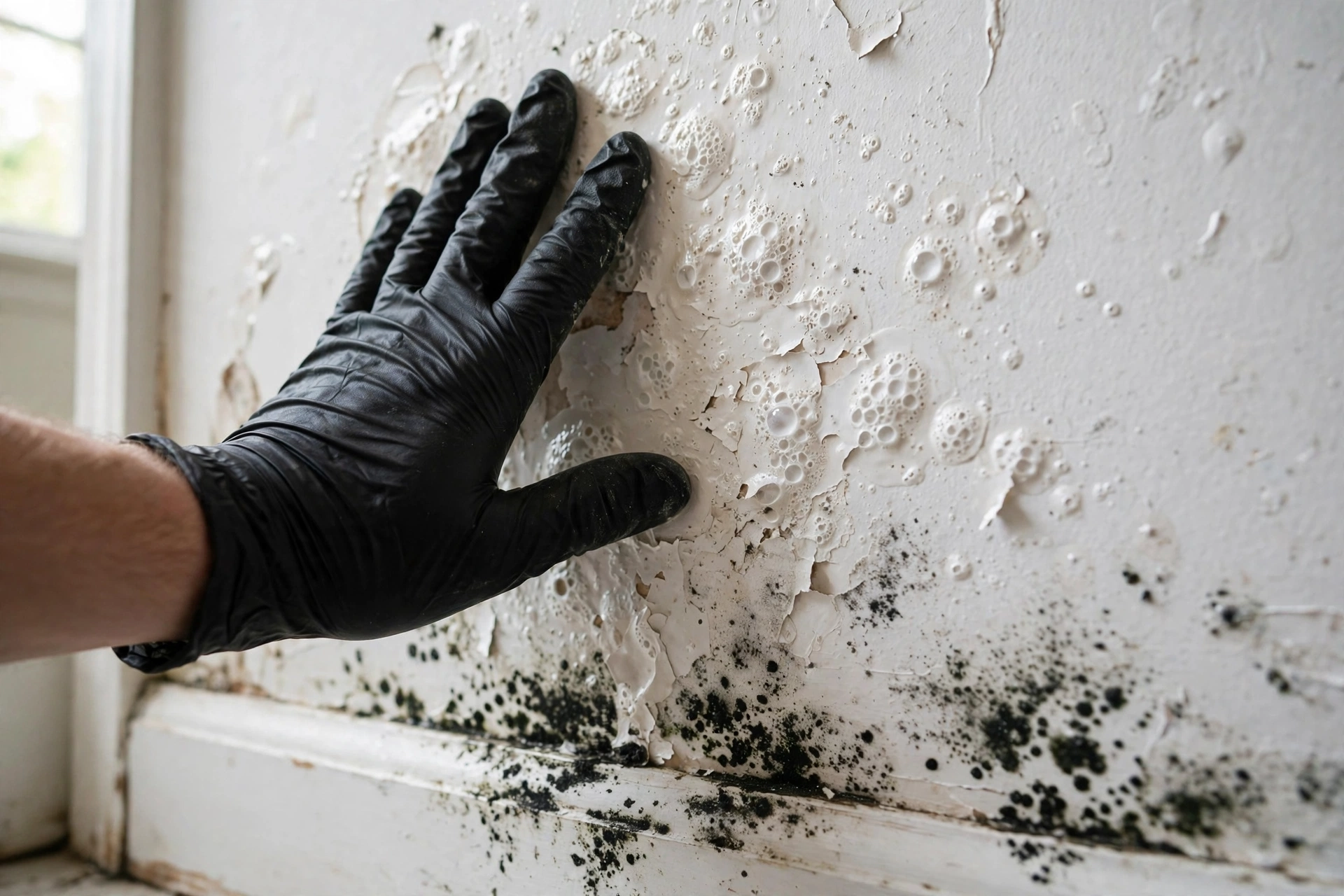
- The paper test: look closely at the facing. Peeling, bubbling, or blistering paint and torn paper mean the colony grows through the fibers, not on them, and wiping cannot reach it.
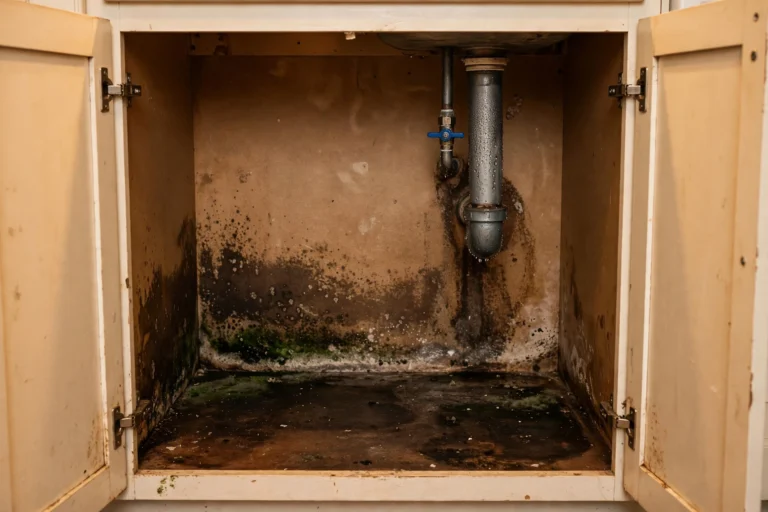
- The tide line test: a brown or yellow ring means water traveled through the board, so the cavity face is likely colonized even if the room side looks minor.
- The size test: measure the patch. EPA cleanup guidance puts the do-it-yourself ceiling at about 10 square feet. Anything larger, or several patches in one room, calls for a professional assessment.
- The smell and return test: a musty odor that lingers after the surface is cleaned and dried, or growth that returns in the same footprint within days, means the colony is behind the board or the moisture source is still active.
Painted Drywall Is the One Case Where Cleaning Can Actually Work
A coat of sound paint is the only barrier that can hold a colony on the surface where cleaning reaches it. The save scenario is real, but every condition has to hold at the same time.
- The paint film is intact, sealed, and unbroken across the whole patch, with no cracks, chips, or peeling edges.
- The board passes the press test and feels firm everywhere, including the stain edges.
- The patch is small, at or under roughly 10 square feet.
- No musty smell comes from behind the wall, the baseboard, or outlets on that wall.
- The moisture source is identified, fixed, and the board is fully dry before cleaning begins.
When all five hold, wipe the area with a cloth dampened with a detergent solution or an EPA-registered antimicrobial, using light pressure to protect the paint film. Do not soak the board; extra water feeds the problem. Dry the area completely with airflow afterward, and repaint only once it is bone dry, using a mold-resistant primer under the finish coat. If even one condition fails, stop scrubbing. At that point, most homeowners get more value from a professional drywall mold removal assessment than from another round of cleaning.
Unpainted Drywall Almost Never Qualifies
Bare gypsum board never had a barrier to begin with. Unpainted drywall in garages, closets, laundry rooms, and unfinished additions takes moisture straight into the paper facing, so the colony starts embedded in the fibers instead of on a sealed surface. Primer-only coats and cracked, chalking paint behave the same way: every break in the film is a doorway into the paper. If the board was never properly painted and sealed, plan on cutting that section out.
These Signs Mean the Wall Cavity Has to Be Opened
The cavity needs opening, by you or by a professional, when any of these show up:
- The board is soft, sagging, or bowing anywhere in or around the patch.
- A tide line keeps spreading after the surface has dried.
- A supply line, drain, shower, tub, or AC condensate line runs inside that wall section.
- The musty smell is strongest at the baseboard or an outlet while the visible growth stays small.
- Moisture meter readings in the wall stay high days after the room side feels dry.
- Growth appears on both sides of the same wall.
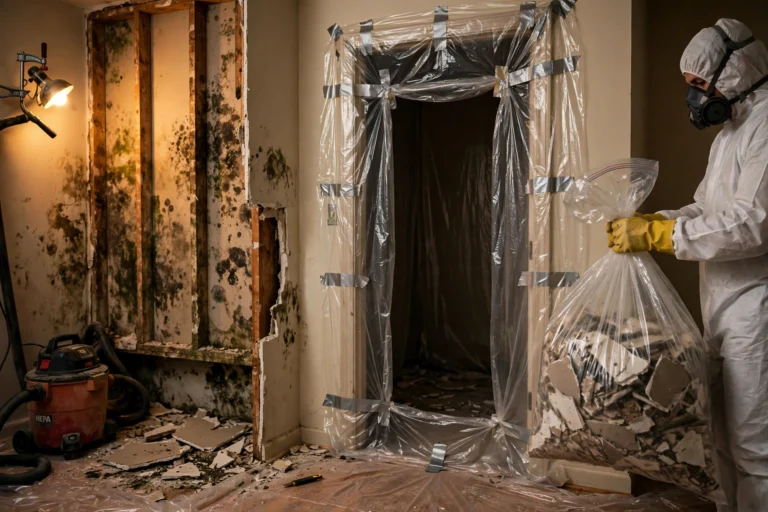
Opening usually confirms what the signs suggested. The back of the paper facing often carries the larger colony, insulation packed against it holds moisture and grows its own mold, and the studs may need cleaning and treatment. In Florida, mold assessors and remediators hold separate licenses, so the person who diagnoses the cavity is not the one selling the demolition. The cutting is done under containment with negative air pressure and HEPA filtration, so the burst of spores released does not seed the rest of the house, a risk we walk through in our guide on whether removing moldy drywall spreads mold. If two or more signs on that list match your wall, call +1 (954) 676-1007 before anyone starts cutting, so the opening is planned and contained.
When Part of a Wall Is Saved, the Cut-Back Margin and the Moisture Meter Decide
Saving a wall rarely means saving every sheet. When damage is localized, the failed section comes out and the sound board around it stays. The cut runs past the visible edge of the stain until it reaches board that is firm, clean, and dry, because mycelium extends beyond the visible stain. Removed pieces are bagged inside the work area, the open cavity is HEPA vacuumed and treated with an antimicrobial, and the framing is cleaned before closing.
Then comes the verification step most do-it-yourself jobs skip. A pin moisture meter pushed into the remaining board and the studs shows whether the material is actually dry or only dry at the surface, and a check of indoor relative humidity shows whether the room will keep it that way. Fresh board goes in only after the readings say the cavity is dry. Closing damp framing behind new drywall restarts the colony on a clean food source, which is why standards like IICRC S520 treat drying verification as a required step, not a courtesy. What that full scope does to the price is its own question, covered in our guide to drywall mold removal cost factors.
Florida Humidity Re-Wets a Saved Wall Faster Than the Room Can Dry It
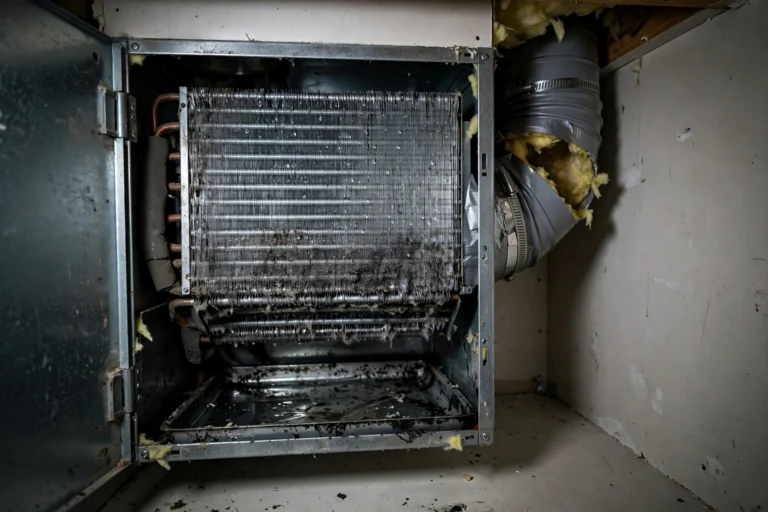
A saved wall in Hollywood FL goes back into service in one of the most humid housing climates in the country. Outdoor air stays moisture-laden most of the year, AC systems drip condensate, and bathrooms add steam to rooms that dry slowly. The EPA puts healthy indoor relative humidity between 30 and 50 percent; a room that lives above that range keeps feeding a paper facing through ordinary condensation, even with no leak at all. Timing matters just as much. EPA guidance is to dry water-damaged materials within 24 to 48 hours to prevent mold growth. A patch that sat wet for two weeks has usually crossed from cleanable to replaceable while it waited.
Renters and Owners Face the Same Mold With Different Options
If you rent, your side of the decision is documentation, not demolition. Photograph the patch with dates, note any leak, stain growth, or odor, and notify the landlord or property manager in writing before you clean anything large. Wiping a small surface patch on painted drywall is reasonable; cutting into the wall is the owner’s repair, and painting over growth turns a maintenance issue into a deposit dispute. If you own, the same five tests make the call, and a written professional assessment protects you later if the home is sold or the growth returns. Either way, mold fed by a leak is a building problem, not a surface one.
Frequently Asked Questions
Does moldy drywall always have to be replaced?
No. Drywall with surface-only growth on intact, sealed paint, a firm board, a small patch, and a fixed moisture source can be cleaned and kept. Drywall with growth in the paper facing or gypsum core, soft spots, or a spreading tide line has to be cut out and replaced.
Can I clean mold off drywall with vinegar or bleach?
On painted drywall, a detergent wipe or an EPA-registered antimicrobial is the safer choice. Bleach is mostly water, performs poorly on porous paper, and can add moisture to the facing. Whatever you use, drying the board completely afterward matters more than the product.
How do I know if mold is behind my drywall instead of just on it?
The tells are soft or sagging board, a spreading tide line, musty odor strongest at baseboards or outlets, and growth returning in the same footprint after cleaning. Our guide to the signs of mold growing behind drywall lists the full set of checks.
How fast does mold grow on wet drywall?
Fast. The EPA warns that mold can begin growing on wet building materials within 24 to 48 hours, which is why drying a leak quickly matters more than any cleaning product. Drywall that stayed wet for a week or more is usually colonized in the paper, not just damp.
Can I paint over moldy drywall with a mold-resistant primer?
No. Primer hides the stain while it seals live growth and trapped moisture against the paper, so the colony keeps spreading out of sight and prints back through. Remove or clean the growth first, fix the moisture source, verify the board is dry, then prime and repaint.
Is it safe to stay in a room with moldy drywall?
The CDC notes that mold exposure can cause nasal congestion, coughing, throat and eye irritation, and worsening asthma, with stronger reactions in people with allergies or weakened immune systems. A small patch handled promptly is routine maintenance; a large or growing one should not wait.
What does a professional check that I cannot check myself?
Moisture, mainly. A professional reads the wall and the cavity with moisture meters, scopes how far the growth runs, and opens the wall under containment with HEPA filtration when the signs point inside. For an assessment before you commit to cleaning or cutting, call +1 (954) 676-1007.
Talk to a Drywall Mold Specialist in Hollywood FL
If your wall failed one of the five checks, or the patch keeps coming back after cleaning, the next step is an assessment rather than another spray bottle. Still asking yourself, can moldy drywall be saved in this room, or has it gone too far? Call +1 (954) 676-1007 and tell us what the press test showed and where the stain sits. We serve homeowners across Hollywood, FL, and we will give you a straight answer before any work begins.
My drywall has dark spots but still feels hard. Can I just clean it?
Probably, if the paint is intact, the patch is under about 10 square feet, and the moisture source is fixed and dry. Wipe it with detergent solution or an EPA-registered antimicrobial, dry it fully with airflow, and watch it for two weeks. If the spots return in the same footprint, the colony is in the paper and the section needs to come out.
Why did the mold come back a week after I cleaned the wall?
Because the cleaning reached the surface and the problem did not live there. Either mycelium had already grown into the paper facing and gypsum core, where wipes cannot reach, or the moisture source is still wetting the wall. A moisture meter reading tells you which; call +1 (954) 676-1007 for that check before you clean a third time.
Should I cut open my wall to check for mold behind it?
Not as a first move. Check the signs first: soft board, spreading tide lines, odor at the baseboard, high moisture readings. If they point inside, the wall should be opened under containment, because cutting drywall releases a concentrated burst of spores. Professionals open the smallest section that answers the question, then decide the removal scope.
I rent in Florida and the bathroom wall has mold. What should I do?
Document it with dated photos and notify your landlord in writing. Do not paint over it or cut into the wall yourself; structural repairs belong to the owner. Wipe a small surface patch while you wait, and if a leak is feeding it, say so in the notice, because stopping the water is the repair that matters.


One Comment