
How Much Does It Cost to Remove Mold from a House in Florida? What Actually Affects the Price
Florida mold work has no flat rate, because the price follows the job, not the stain you can see. The affected area, the material involved, access, the moisture source, containment, independent clearance, and rebuild work all move the total. A written scope, compared line by line, is the only reliable way to judge a bid.
A Florida mold price is a scope, not a sticker
If you are asking how much does it cost to remove mold from a house in Florida, start with the scope, not the first number you hear. Two homes can show the same small stain and need very different work, because what sits behind the surface, what it grew on, and what keeps feeding it are rarely the same. A useful bid describes the work in enough detail that another company could price the same job from the same paper. A single lump sum with no breakdown does not give you that test, and it leaves the most expensive surprises for later.
Florida adds its own pressure to that picture. Year round humidity, long air conditioning seasons, summer storms, and homes that stay closed up for months all keep indoor moisture in the range where mold grows. The Environmental Protection Agency notes that damp materials should be dried within 24 to 48 hours, and that indoor relative humidity is best kept between 30 and 50 percent. When drying misses that window, a small wet patch can become a wall cavity job, and the scope grows with it. Timing, then, is not just a health point. It is a cost point.
Size on the surface rarely matches size behind the wall
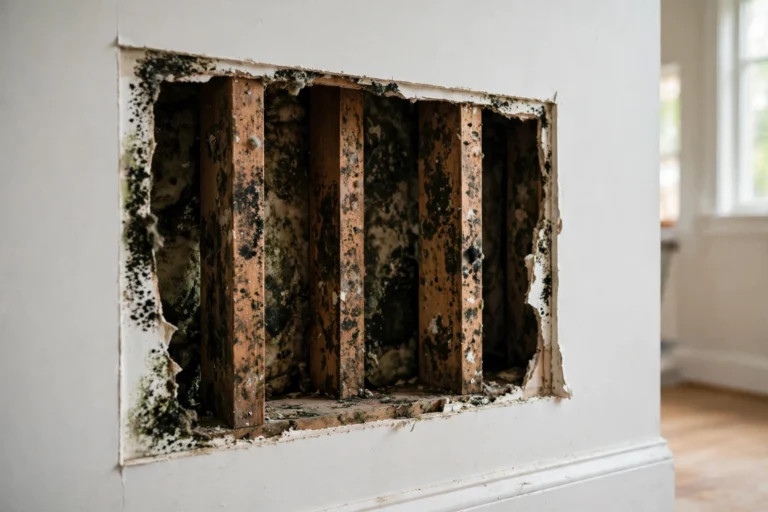
The visible stain is the least reliable measure of a job. Mold spreads as mycelium through porous material, and spores settle well beyond the dark patch you can see. A moisture meter reading, taken through drywall and framing, often tells a different story from the stain alone. That is why a careful assessor maps wet material room by room instead of pricing the stain.
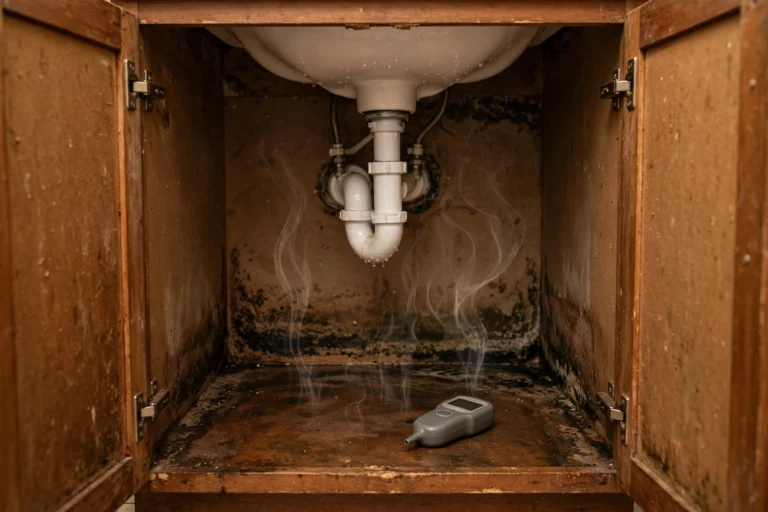
Consider the common Hollywood pattern: a slow leak under a sink, a failed shower seal, or a clogged air conditioning condensate drain. Each one wets material out of sight for weeks. By the time odor or discoloration appears, the affected area may include the back of drywall, the cabinet base, the wall cavity insulation, and the subfloor edge. Each of those layers adds removal, drying, and rebuild work, even though the stain on the surface stayed small. A bid that prices only the visible patch is pricing a different job from the one your house actually needs.
- Visible stain size measures only what you can see, not what a moisture meter finds behind it.
- Wall cavity growth adds drywall removal, insulation removal, framing treatment, and drying time.
- Growth that reaches framing or subfloor changes the job from surface cleaning to material removal.
- Multiple rooms fed by one leak count as one moisture problem with several affected areas, not several small jobs.
Material type decides clean versus remove
Porous versus non-porous material is the fork that decides most of a bid. Porous materials such as drywall, insulation, carpet padding, and particleboard cannot be reliably cleaned once mold has grown through them, because mycelium threads run inside the fibers. The standard approach under IICRC S520 principles is to remove and replace those materials under containment. Semi-porous wood framing can often be cleaned in place with HEPA vacuuming and antimicrobial treatment, provided it is structurally sound and fully dry. Non-porous surfaces such as tile, glass, and metal are the simplest to clean, because growth stays on the surface.
Species matters at the margin, not as a scare tactic. Stachybotrys chartarum, Aspergillus, and Penicillium are common indoor genera, and each produces spores and, in some cases, mycotoxins that call for careful containment and worker protection. A bid should explain the containment level in plain terms, rather than using a species name to justify an unexplained jump in price. If a species name appears in your quote, ask what extra step it actually changes: stronger containment, longer HEPA filtration, sealed disposal, or additional clearance sampling. The answer should be a step, not just a label.
For room by room detail, the drywall mold removal guide explains how porosity and spread decide whether drywall can be saved, and the drywall cost factors guide walks through the same decision from the pricing side.
Access and containment set much of the labor
Access is labor, and labor is most of a mold bid. An open bathroom wall, a cramped attic, a wall cavity behind finished tile, and ductwork inside a ceiling are not the same job at the same area, because the crew reaches them differently and contains them differently. Tight spaces slow cutting, bagging, and HEPA vacuuming, and they often need more containment zones to keep spores out of clean rooms.
Containment itself is a line item worth reading closely. Proper containment means sealed plastic barriers, a negative air pressure setup that pulls air into the work zone and exhausts it through HEPA filtration, and sealed disposal of removed material. The number of containment zones, the number of days air scrubbers run, and whether containment stays up through clearance all change the total. A bid that skips containment to look cheaper is not the same service at a better price. It is a different service, and it risks spreading spores through the house and through the HVAC system.
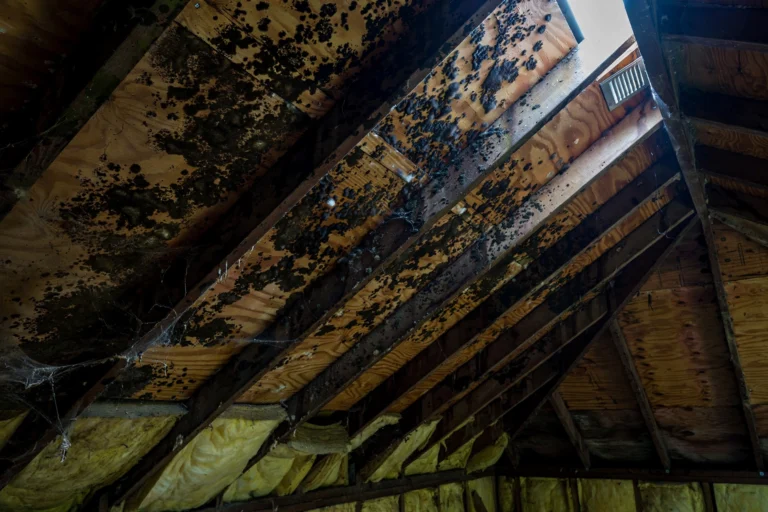
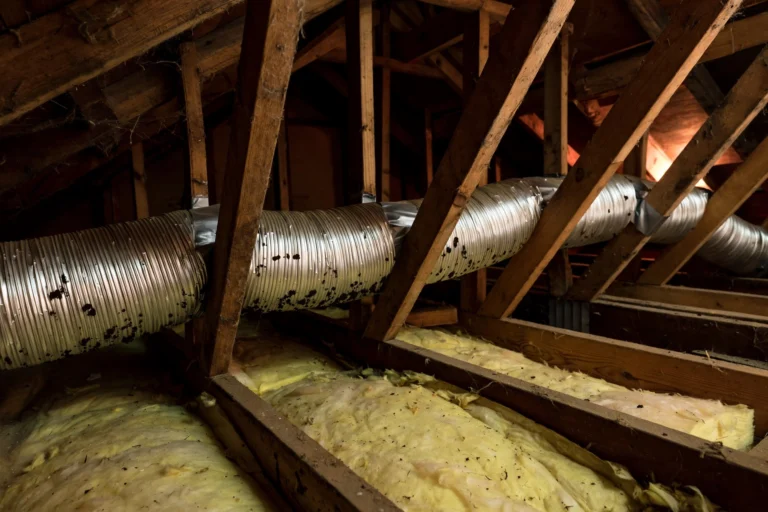
HVAC involvement is the clearest access example. When growth reaches an air handler or ductwork, the job adds system cleaning or duct replacement, longer containment, and coordination with the moisture source, usually a condensate drain or a ventilation fault. The HVAC mold removal guide and the HVAC cost factors guide explain that fork in detail, and the attic mold removal guide covers the same access problem overhead, where heat, tight framing, and roof deck involvement slow every step.
The moisture source is a separate job inside the same bill
No mold bid is complete without the moisture source, because mold returns wherever moisture remains. The source may be a plumbing leak, a roof or window failure, a condensate drain fault, poor bathroom or kitchen ventilation, or humid air entering through a building envelope gap. Each source belongs to a different trade or repair, and each one changes the total in a different way.
Read the bid for how it treats that source. A good scope names the source, states who fixes it, and sequences the work so remediation does not finish before the leak is repaired. A weak scope treats the stain and leaves the source vague, which sets up a second bill when growth returns. The bathroom and kitchen mold guide shows how often the source is a small, ordinary failure, such as a failed seal or a fan that vents into the wrong place, rather than a dramatic flood.
Storm timing belongs in this section too. After a named storm, crews book out, drying equipment is scarce, and bids drift upward while demand lasts. The cheapest decision after water intrusion is usually the fastest one: extraction and drying inside the 24 to 48 hour window, before a drying job becomes a removal job. Waiting through another wet season rarely saves money, because hidden growth keeps spreading behind the wall while the visible stain stays the same.
Read a quote line by line before you compare it
Most quote confusion comes from comparing totals that include different things. Use the table below as a checklist when a bid arrives, and ask for any missing line in writing before you sign.
| Line item | What to check | Why it moves the total |
|---|---|---|
| Assessment and protocol | Written protocol with mapped affected areas and moisture readings | Defines the job every bidder prices, so totals become comparable |
| Containment and negative air | Number of zones, HEPA filtration days, sealed disposal method | More zones and more days mean more labor and equipment time |
| Removal and cleaning | Which materials come out, which are cleaned in place, and why | Porous removal costs more than surface cleaning, and the mix varies by room |
| Drying and dehumidification | Equipment days and target moisture readings | Wet framing and cavities need days of drying, not a single visit |
| Moisture source repair | Named source, named trade, and sequencing before rebuild | An unfixed source turns one job into a repeat job |
| Clearance testing | Independent assessor, sampling plan, and pass criteria | Clearance is a separate professional service with its own scope |
| Rebuild and finishes | Drywall, insulation, flooring, paint, and trim, itemized or excluded | Rebuild is often the largest swing between two otherwise similar bids |
Two traps hide in that table. The first is the denominator: one bid may price by affected area, another by containment area, and a third by rebuild area, so a per area figure from one company cannot be compared with a per area figure from another until you know which area each one means. The second is the rebuild trap: a bid that excludes rebuild looks smaller on paper and larger in real life, because drywall, insulation, flooring, and paint still have to be bought and installed after clearance. Ask every bidder the same question: does this total leave my home finished, or does it leave it cleared and open.
Why two quotes for the same house can look nothing alike
When quotes differ sharply, the cause is usually scope, not hourly rate. One company may include rebuild, another may stop at clearance. One may include independent clearance testing, another may test its own work. One may treat the HVAC system, another may leave it untouched. One may price the wall cavity, another may price only the stain. Until the scopes match, the totals cannot be ranked.
Method also differs. A fogging only or ozone only offer is not remediation, because it does not remove contaminated porous material or fix the moisture source, and it leaves the colony in place behind the treatment. The Centers for Disease Control and Prevention and the Environmental Protection Agency both point homeowners toward removing mold and fixing moisture, rather than relying on air treatment alone. A bid built on removal, containment, drying, and verification is a different service from a bid built on spraying and leaving, and the price gap between them reflects that difference, not a bargain.
Property type adds another layer. Condos and multi tenant buildings bring shared walls, shared HVAC risers, and responsibility lines between unit owner and association, all of which slow decisions and can expand containment. The commercial mold removal guide explains how those shared system questions change scope, and the same logic applies, at smaller scale, to a condo unit in Hollywood. South Florida labor, coastal exposure, and storm demand add further pressure, but they should appear as explained scope differences, not as unexplained lump sums.
The assessor protocol is the comparison tool Florida gives you
Florida law gives homeowners a practical tool that most cost guides never explain. Under Chapter 468, Part XVI, mold assessment and mold remediation on work over 10 square feet require separate Department of Business and Professional Regulation licenses, and Statute 468.8419 bars the same person from assessing a property and then remediating it within 12 months. The assessor inspects, maps the problem, writes the remediation protocol, and later performs clearance testing. The remediator carries out that protocol.
Use that structure before you collect bids. Get the written protocol first, then hand the same protocol to each remediator and ask each one to price it line by line. That single step turns unlike totals into like totals, because every bidder is pricing the same mapped areas, the same removal list, and the same clearance standard. It also protects you from scope inflation, because a remediator who wants to add rooms must explain the addition against the assessor written scope, with moisture readings to support it.
Check licenses yourself in the state database before signing, and confirm who performs clearance. A clearance letter signed by the remediator who did the work is not the independent verification the law intends, and it carries little weight with an insurer or a future buyer. Independent clearance, done before containment comes down so failures can be fixed under the same setup, is one of the few line items that is almost always worth paying for, because it is the only objective proof the job passed.
Insurance changes the math, but it does not set the price
Insurance is a separate question from scope, and confusing the two is a common budgeting mistake. Florida homeowners policies typically cover mold only when it follows a sudden covered peril, such as a burst pipe or storm driven water intrusion, and they typically cap mold coverage and exclude gradual damage, long term humidity, and maintenance failures. Flood related mold falls under separate flood coverage, not a standard homeowners policy. Read your own policy for the mold limit, the deductible, and the cause wording, because those three terms decide more than any contractor estimate does.
Documentation decides claims. Photograph the damage before work starts, keep the assessor protocol and moisture readings, keep the remediator scope and invoices, and keep the clearance report. A claim that shows a sudden cause, a dated water event, and a professional paper trail is easier for an adjuster to follow than a claim that shows only a stain and a total. Also weigh whether to claim at all: a small job near your deductible, or a job caused by a gradual leak your policy excludes, may cost you more in time and future premiums than it returns. When the cause is unclear, the assessor report is the document that clarifies it, which is another reason to get it before remediation starts.
Changes after the wall opens are where budgets break
Every honest cost guide should warn you about the moment the wall opens. Hidden growth is, by definition, hidden, so even a careful protocol can understate the affected area. The difference between a fair job and a painful one is not whether the scope grows, but how growth is priced when it does.
Ask for the change rule in writing before work starts. A sound rule states that additional affected material is photographed, moisture metered, and priced on the same line item basis as the original bid, with your written approval before removal continues beyond an agreed threshold. A weak rule leaves additional work to verbal approval mid job, when containment is up, the crew is on site, and saying no feels impractical. Also agree on a stop and discuss trigger: if opening reveals structural damage, HVAC contamination, or growth far beyond the mapped area, work pauses for a revised written scope instead of rolling forward on an open ended verbal.
Before you sign anything, ask how much does it cost to remove mold from a house in Florida once clearance, rebuild, and moisture repair are all in the same written scope. That question forces the three most commonly excluded items into one total, and it is the question that turns a low looking bid into an honest one. If a bidder cannot answer it in writing, the bid is not finished yet.
What lowers cost without cutting corners
Real savings come from scope control, not from skipping containment or clearance. Acting inside the 24 to 48 hour drying window is the largest saver available, because drying is cheaper than removal. Clearing access to the work area, moving stored items out of affected rooms, and giving the crew a clear path to the attic or air handler all reduce labor time. Fixing the moisture source during the same mobilization avoids a second setup visit. Bundling adjacent rooms that share one leak into a single contained job is cheaper than treating them as separate visits.
Maintenance after the job matters as much as speed before it. Keep indoor relative humidity between 30 and 50 percent, keep condensate drains clear, run bathroom exhaust fans long enough to clear steam, and check under sinks and around air handlers after storms. Those habits do not replace professional work on a large job, but they keep a small moisture event from becoming a removal job. The attic cost factors guide makes the same point overhead: ventilation and roof integrity decide whether an attic job stays small or grows.
Red flags in a mold quote
A quote deserves a second look when it shows any of these signs. None of them proves dishonesty on its own, but each one is a reason to ask for the missing paper before you commit.
- A single lump sum with no breakdown of containment, removal, drying, clearance, and rebuild.
- The same company assessing the problem and remediating it, without explaining the Florida separation rule.
- Clearance testing performed or signed by the remediator instead of an independent assessor.
- A fogging only or ozone only plan with no removal of contaminated porous material.
- No moisture readings, no mapped affected areas, and no written protocol behind the total.
- Pressure to sign the same day, with the price framed as available only on the spot.
- Rebuild promised before clearance, so finishes cover work that has not yet passed verification.
- A moisture source left unnamed, so nothing in the bid prevents recurrence.
Frequently Asked Questions About Mold Removal Costs in Florida
What drives mold removal cost more, size or location in the home?
Both matter, but location often moves a bid more than raw size. A small area inside ductwork or behind finished tile can cost more in labor than a larger open wall, because access, containment, and system work add steps that area alone does not capture.
Why is my neighbor quote different from mine for a similar stain?
Stains look similar and scopes differ. Material type, hidden cavity growth, moisture source, containment zones, clearance, and rebuild inclusion all vary by house, so two totals for two stains are rarely comparable until the written scopes are compared line by line.
Should I get an assessor protocol before asking for bids?
Yes, for work over 10 square feet. The protocol maps affected areas and sets the scope every remediator prices, which makes bids comparable and gives clearance testing a standard to measure against.
Does black mold always cost more to remediate?
Not automatically. Species can raise containment and protection requirements, but the larger drivers remain affected area, material type, access, and moisture repair. Ask what extra step a species name changes in your bid, rather than accepting it as a standalone surcharge.
Is clearance testing worth a separate line in the bid?
Yes. Independent clearance by the assessor, before containment comes down, is the objective check that removal and drying passed. Without it, you are relying on the remediator own assessment of its own work.
Will homeowners insurance pay for mold removal in Florida?
It depends on cause, policy wording, mold limit, and deductible. Sudden covered water events are the strongest cases, gradual damage and long term humidity are commonly excluded, and flood related mold needs separate flood coverage. Document the cause with the assessor report before work starts.
Can I lower the total by doing part of the work myself?
Small surface growth on non-porous material under 10 square feet is the usual do it yourself boundary in EPA guidance, with detergent and water and full drying. Larger areas, porous material, hidden cavities, and HVAC involvement call for containment and professional removal, because partial cleaning without moisture control often spreads spores and leaves the source in place.
What should a Florida mold remediation quote include?
A written protocol, containment and HEPA filtration plan, removal list by material, drying plan, moisture source repair, independent clearance, and rebuild status, each as its own line.
How do I compare two mold removal quotes in Florida?
Hand both bidders the same assessor protocol, then compare line by line for containment, clearance, rebuild, and moisture repair, instead of comparing totals alone.
Why did my mold quote go up after the crew opened the wall?
Hidden cavity growth, wet insulation, or framing damage found after opening expands removal and drying. A written change rule, with photos and moisture readings, keeps that growth priced fairly.
Do I need a separate mold assessor and remediator in Florida?
Yes for work over 10 square feet. Florida separates the two licenses, and the same person cannot assess and then remediate the same property within 12 months.
Get a Written Scope Before You Commit
A Florida mold bid is only as honest as its written scope. Ask for the protocol, the line by line breakdown, the change rule for hidden growth, and independent clearance, and compare every bidder on the same paper. That discipline is what keeps a manageable job manageable, and it is what keeps a large job from growing without your approval.
If you are weighing a bid for a home in Hollywood, FL, call +1 (954) 676-1007 and ask for a written scope you can compare. Mold Removal Hollywood can walk through what your assessor protocol covers, what each line in a bid should mean, and what to check before you sign.


One Comment