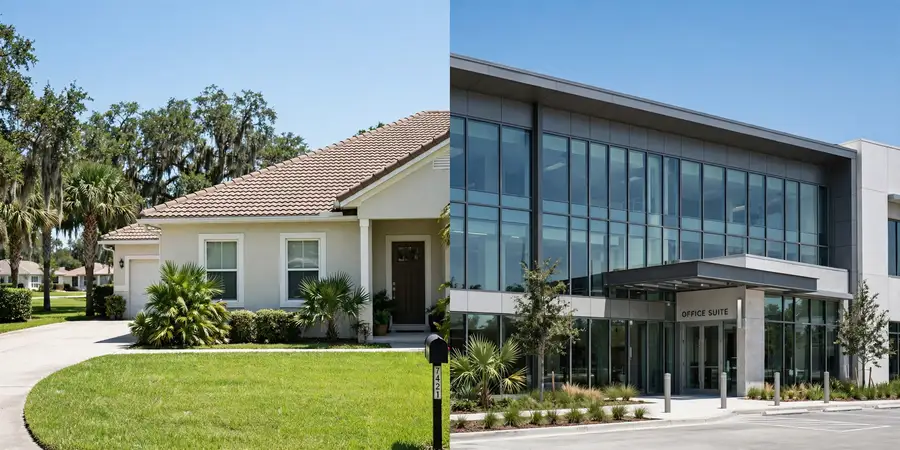
Residential vs Commercial Mold Remediation: What’s Actually Different?
Mold itself does not change between a house and an office building, but the job around it does. Residential jobs focus on one household and a single moisture source, while commercial work adds occupants, business hours, stricter documentation, and bigger containment. The right choice depends on who uses the building, who is liable, and how much proof you need afterward.
The mold is the same, the work around it is completely different
A patch of Stachybotrys chartarum on drywall is the same organism whether it grows in a bedroom or a break room. What changes is everything around the patch. In a home, one decision maker hires the crew, moves the furniture, and approves the work. In a business, the patch sits inside a chain of people: the owner, the property manager, the tenants, the employees, and sometimes an insurer. Each one needs information the homeowner never has to produce.
- Residential remediation answers one question: is the home safe for the family again.
- Commercial remediation answers several at once: is the space safe, can the business stay open, who documented what, and will the insurer accept the file.
- EPA publishes separate guidance for mold remediation in schools and commercial buildings because occupant communication and large-scale containment need their own playbook.
- Species like Aspergillus and Penicillium release spores the same way in both settings. The health conversation changes because exposure time and the number of exposed people change.
A residential company is the right call when one household controls the space
When you own the building, live in it, and make every decision about it, a residential remediation company has everything it needs. The typical fit is a single-family home, a duplex you occupy, or a small rental where you are both the owner and the decision maker and the mold traces to one clear source, like a plumbing leak or a roof drip.
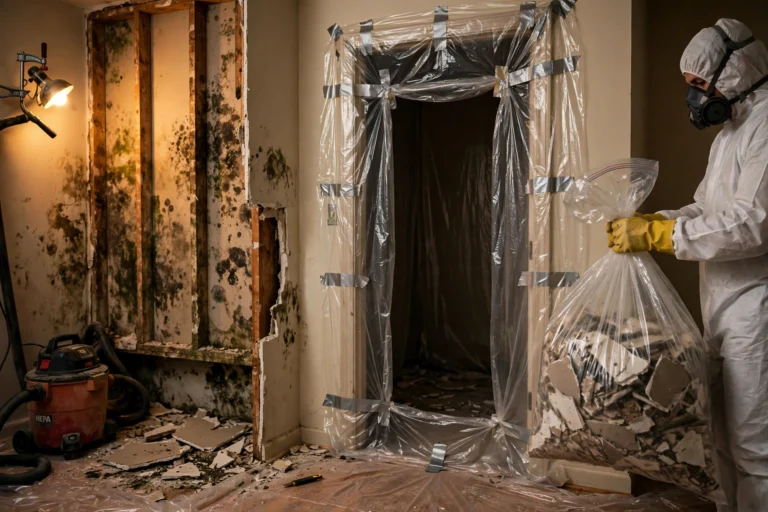
The technical work looks familiar in both worlds. Moisture meters pin down which framing is actually wet. Porous materials like drywall and insulation usually get removed once mycelium has grown into them, while non-porous surfaces can be cleaned. Containment still matters, because cutting into a moldy wall without it can spread spores through the house. The difference is scale and audience, not the fundamentals.
You need a commercial-capable company when other people depend on the building
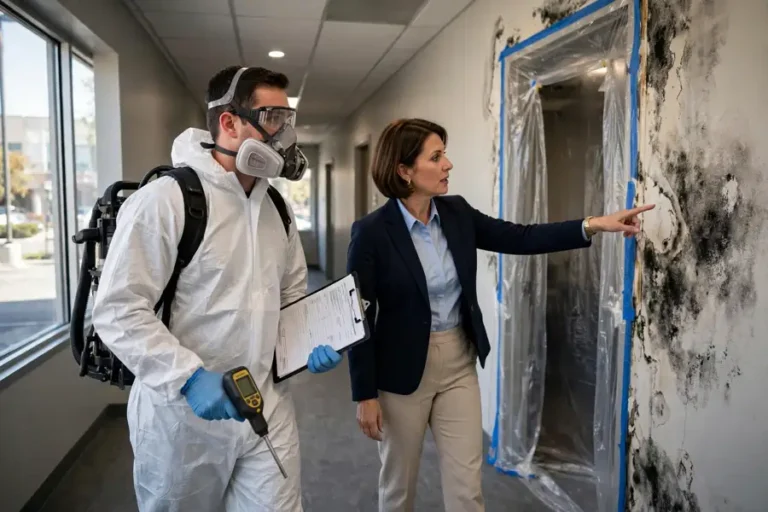
The moment employees, tenants, or customers breathe the air in the affected space, the job stops being residential in practice. A commercial-capable company plans for occupancy from the first visit: phased work areas, after-hours scheduling, negative air pressure that holds across larger zones, HEPA filtration sized for the air volume, and a written plan a property manager can hand to a tenant or an insurer.
When people search residential vs commercial mold remediation, the real question underneath is usually simpler: who else is affected if this goes wrong. If the answer is anyone besides your household, hire for commercial capability.
- Multi-tenant buildings often need separate containment zones and separate crew entrances so one unit’s leak does not shut down the whole floor.
- Food service, daycare, and medical spaces face stricter expectations for post-remediation verification, often third-party air or surface sampling.
- Business continuity planning, such as nights and weekends work in phased zones, is a commercial skill set, not an add-on a residential crew can improvise.
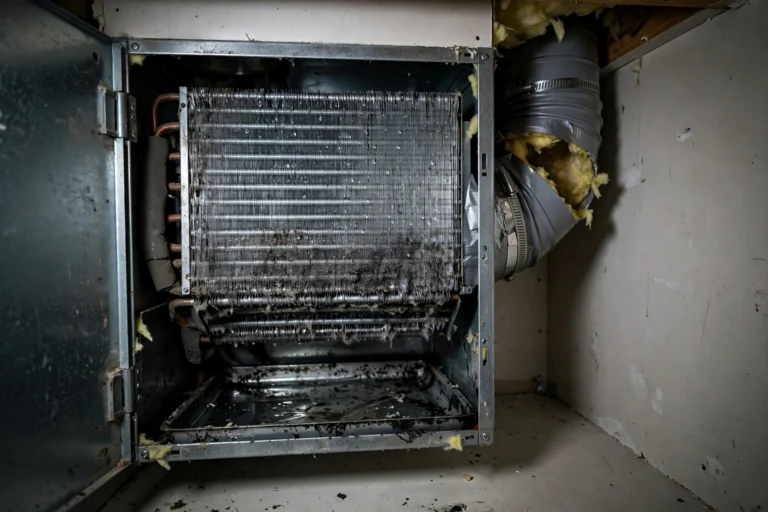
- Relative humidity control during and after the job matters more in commercial spaces, because a large building with a struggling HVAC system can re-wet dried materials fast in a Florida summer.
The gray zone is where most small business owners get stuck
Plenty of Hollywood properties sit between the two labels, and the label on the company matters less than the capability behind it. A home-based business, a daycare run from a house, an office in a converted residence, a small retail unit, or a landlord with a few rentals are the cases where people most often hire wrong. Use this test before you call anyone:
- If anyone besides your household works, shops, or sleeps in the space, treat it as commercial.
- If a lease, an insurer, or a tenant dispute could put the job in writing later, treat it as commercial.
- If the work must happen while the business stays open, treat it as commercial.
- If none of those apply and one owner makes every decision, residential is fine.
Mixed-use buildings deserve special care. A shop below apartments, or offices above a restaurant, means the crew must coordinate with people who have nothing to do with the mold but everything to do with the schedule. That coordination is exactly what separates a commercial-capable company from a residential one.
Documentation is the real difference you pay for
In commercial work the paperwork is part of the product, because someone besides you will read it. Dated photos, moisture meter readings before and after drying, a written scope listing what was removed and what was cleaned, disposal records, and clearance sampling results form a file that an insurer, a tenant’s representative, or a corporate risk manager may ask for months later.
This is the part of the residential vs commercial mold remediation decision most people skip, and it is the part that decides whether a dispute ends quickly or drags on. Companies that do commercial work routinely should be able to describe their documentation package before they start, including who performs the final verification. Reading how commercial companies assess risk before quoting shows what that upfront file should contain.
Florida draws a hard line between assessing mold and removing it
Florida licenses mold assessors and mold remediators separately, and state law bars the same company from performing remediation within 12 months of its own assessment on the same property. That separation, in Florida Statute 468.8419, applies whether the building is a house or a warehouse. It exists because the company that finds the problem should not profit from the size of the fix.
For landlords and business owners this rule is extra protection. An independent assessment gives you a baseline that a tenant, an insurer, or the other side of a dispute cannot easily dismiss, because the assessor had no financial stake in the remediation scope. You can verify any company’s license status through the Florida Department of Business and Professional Regulation before you sign anything. Our commercial mold remediation in Hollywood service page explains how licensed work is structured locally.
Cost factors follow the building, not the mold species
Nobody can price your job from a phone call, and a company that tries is guessing. What moves the cost is the size of the containment, the crew and equipment the schedule demands, after-hours labor, the documentation file, and how many parties need coordinating. A small office with one affected room can cost less to remediate than a large home with mold spread through wall cavities. The building type is only one input, and the moisture source, the materials involved, and the verification standard matter just as much.
Call Mold Removal Hollywood to Talk Through Your Situation
If you are weighing a home project against a business property in Hollywood, describe the building and who uses it, and we will tell you honestly which approach fits. Call +1 (954) 676-1007 to talk it through, or find our service area on Google Maps.
Frequently Asked Questions
Can a residential mold company handle a small office?
Sometimes, but judge capability instead of the label. A one-room office with no employees on site and a clear moisture source is close to a residential job. Once staff, customers, leases, or insurers enter the picture, you want a company that plans containment, scheduling, and documentation at a commercial standard.
Who is responsible for mold in a Florida rental property?
Florida law requires landlords to keep rentals in habitable condition, which includes fixing building-related moisture problems and remediating the resulting mold. Tenants should report mold in writing and keep copies. If the tenant caused the moisture, for example by ignoring a leak they knew about, responsibility can shift. These disputes turn on documentation, which is why a written assessment matters.
Does a home-based business need commercial remediation?
If clients, employees, or children in your care use the space, treat it as commercial in practice. The deciding factor is not the zoning on paper but who breathes the air and who could hold you accountable. A business run from a spare room with no visitors is closer to a residential job.
What paperwork should I receive after commercial remediation?
At minimum: dated photos of the affected areas, moisture readings before and after drying, a written scope of what was removed versus cleaned, disposal records, and the results of any post-remediation verification sampling. If a company cannot describe this package before starting, keep looking.
Can remediation happen while my business stays open?
Often yes, through phased containment and after-hours work. The crew seals the work zone under negative air pressure, runs HEPA filtration, and schedules noisy or disruptive steps outside business hours. Whether your specific space can stay open depends on the scope, the layout, and local code requirements for the occupancy type.
Do I need mold testing before remediation in a commercial building?
Testing is not always legally required, but in commercial settings it usually pays for itself. An independent assessment documents the baseline, defines the scope in writing, and keeps the diagnosis separate from the company doing the removal, which Florida law requires to be separate parties anyway. That separation protects you in any later dispute.
Is mold more dangerous in a commercial building than in a home?
The species and their mycotoxins do not change with the building type. What changes is exposure: more people, longer hours, and shared air systems can turn a small colony into a bigger health and liability problem. The CDC notes that people with asthma, allergies, or weakened immune systems react more strongly, and commercial buildings simply hold more of them.
I own a small shop in Hollywood and found mold in the back room, do I need a commercial mold company?
Yes, in practice. Even a small shop has employees or customers, a lease, and business hours to protect, which calls for contained, scheduled, documented work at a commercial standard rather than a simple residential cleanup.
My landlord says the mold in my apartment is my fault, what should I do?
Report the mold in writing with dated photos and keep copies of everything. In Florida the landlord must maintain habitable conditions, but responsibility can shift if tenant behavior caused the moisture. Written records decide these disputes, so create them from day one.
Can a mold crew work at night so my store stays open during the day?
Many commercial-capable companies offer after-hours and weekend scheduling with phased containment, so the business operates normally while the work zone stays sealed under negative air pressure. Confirm the schedule and the containment plan in writing before work begins.
How do I prove the mold is really gone after remediation?
Ask for the closeout file: before and after photos, moisture meter readings showing materials dried to target levels, a list of removed versus cleaned materials, and any third-party clearance sampling results. An independent assessor verifying the work, separate from the remediator, is the strongest proof.
One Comment