Black Mold Behind the Kitchen Sink: Why It Happens
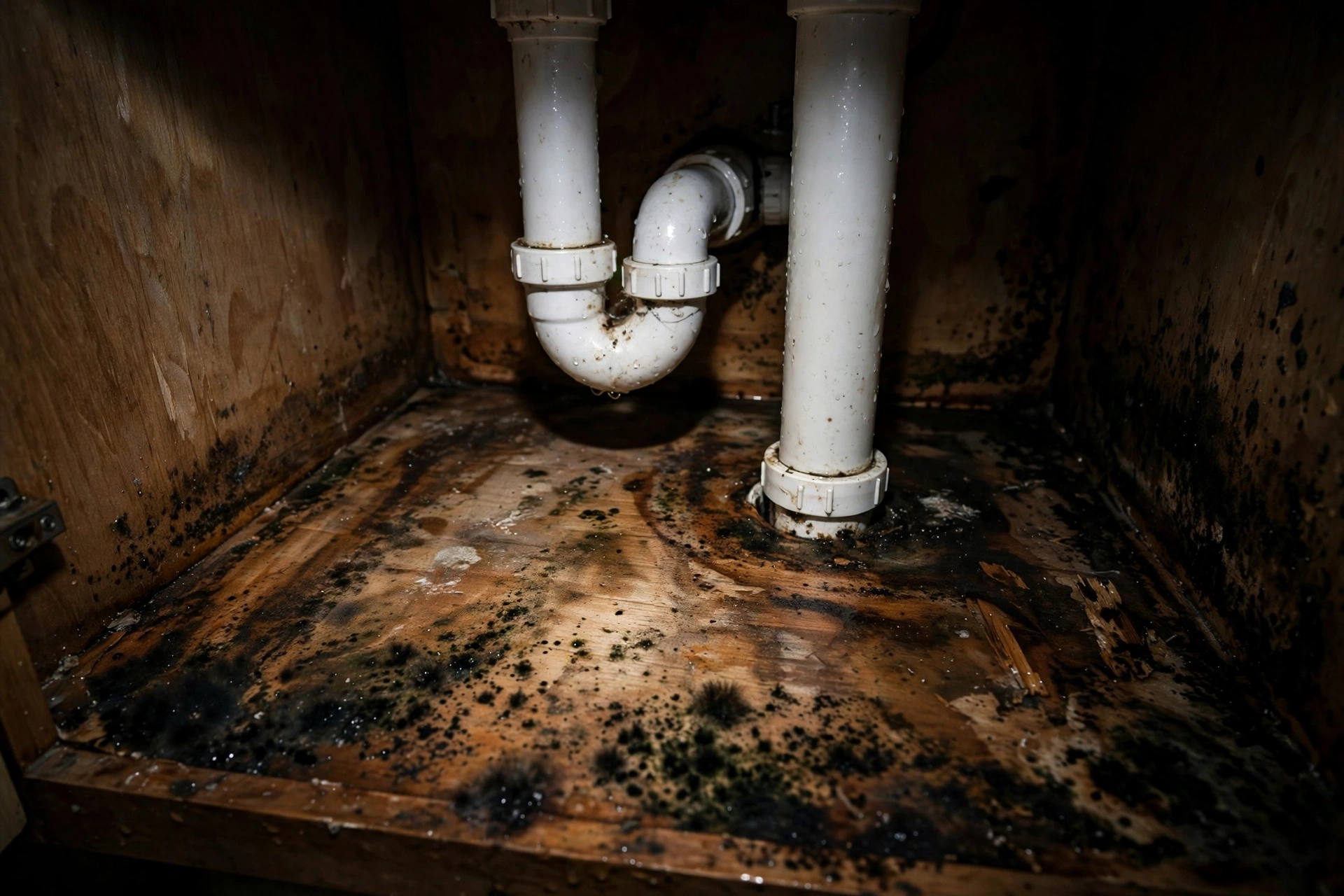
Black mold behind the kitchen sink is usually caused by slow plumbing leaks, dishwasher hose drips, or condensation trapped inside the dark cabinet. Small patches on hard surfaces can be cleaned yourself once the leak is fixed. If it has spread into drywall or keeps coming back, professional remediation is the safer option.
What Causes Black Mold Behind the Kitchen Sink?
Slow, hidden moisture causes it in almost every case. The cabinet under your sink is dark, enclosed, and full of plumbing connections. Any one of them can feed mold for weeks before you notice.
- Dishwasher hose drips. A loose or aging dishwasher supply or drain hose can mist or drip behind the cabinet. This matches the real “found mold under new dishwasher” situation: the install looked fine, but a slow connection leak soaked the cabinet base for weeks.
- Supply line drips. Hot and cold shutoff valves and their supply tubes can weep at the fittings. The drip is slow enough to evaporate on the surface while soaking the particleboard below.
- Drain pipe pinhole leaks. P-traps and slip-joint connections loosen over time. Even a pinhole keeps the cabinet floor damp around the clock.
- Garbage disposal seal failures. A failing disposal flange or side gasket lets water escape into the cabinet with every use.
- Condensation. Cold water lines in a humid kitchen sweat inside a closed cabinet, especially through Florida summers. No leak is needed, just persistent damp air.
Is It Actually Black Mold?
You cannot confirm the species by looking at the color. Many common household molds appear black or very dark green. True black mold needs professional testing to confirm, and the health conversation changes once a lab result exists. For cleanup purposes, treat any extensive dark growth with the same careful process. Our black mold remediation process in Hollywood FL starts with inspection and testing for exactly this reason.
How to Remediate Black Mold Behind the Kitchen Sink
Remediation works when you fix the moisture first, clean second, and verify dryness third. Cleaning without fixing the leak guarantees the mold returns.
Step 1: Find and Fix the Leak
Pull everything out from under the sink and run the faucet, the disposal, and the dishwasher while you watch with a flashlight. Mark every damp fitting. Tighten or replace what you can handle. If the leak is inside the wall or under the floor, stop and call a plumber before touching the mold.
Step 2: Protect Yourself and Limit Spread
Wear gloves, goggles, and a respirator mask rated for fine particles. Work in short sessions with the cabinet doors mostly closed, and avoid running the kitchen exhaust fan on high, which can pull spores into the room. Bag removed items instead of carrying them through the house.
Step 3: Clean Hard, Non-Porous Surfaces
On pipes, plastic, and sealed surfaces, scrub with detergent and water or undiluted white vinegar, then wipe dry. These cleaners handle surface growth. They do not rescue porous material.
Step 4: Remove What Cannot Be Cleaned
Particleboard cabinet bases, soaked drywall, and soft insulation cannot be scrubbed clean. Mold roots into the fibers. Cut out and bag the affected sections. This is the step most DIY attempts skip, and it is why the mold comes back.
Step 5: Dry Completely and Monitor
Aim a small fan into the open cabinet for at least a day. The area must be fully dry before you put items back. Check again after a week. Any returning discoloration or musty smell means the moisture source is still active.
When DIY Is Not Enough
Call a professional when the growth is extensive, has reached inside the wall, or keeps returning after a proper cleanup.
- The affected area is larger than about 10 square feet, the EPA’s rough threshold for handling mold yourself.
- Mold is inside drywall, behind the cabinet back panel, or under flooring.
- You cleaned it correctly and it came back within weeks.
- Anyone in the home has breathing issues that worsen near the kitchen.
- The home is a rental and the landlord needs documented findings.
If any of these apply, call us at +1 (954) 676-1007.
What Affects the Cost of Removing It
The price depends on how far the mold has spread and what has to be removed, not on a flat rate.
- Size of the affected area and whether it extends beyond the cabinet.
- Whether drywall, insulation, or subfloor must be cut out and replaced.
- Whether the moisture source needs a plumber first.
- Accessibility of the space behind and beneath the sink.
How to Keep Mold From Coming Back
Mold returns when moisture returns. Prevention is mostly about keeping that cabinet dry and checked.
- Inspect supply lines, the P-trap, and dishwasher hoses every few months. Look with a flashlight, not just a glance.
- Leave the cabinet doors open for a while after heavy sink or dishwasher use so air circulates.
- Fix any drip the day you find it. A slow drip is exactly how these jobs start.
- Keep the area under the sink uncluttered. Stored items trap humidity and hide leaks. For everyday kitchen moisture habits, see our guide to preventing kitchen mold.
FAQ
How do I know if the mold behind my kitchen sink is black mold?
Color alone does not identify it. Dark green or black patches are common across several mold types. If you need certainty, for example for a landlord dispute or an insurance claim, professional testing identifies the species. For cleanup, extensive growth gets the same careful process either way.
Will bleach kill black mold behind the sink?
Bleach can lighten surface discoloration, but it does not penetrate porous materials like wood or drywall, where the mold’s roots are. On particleboard or drywall, removing the affected material works better than any surface cleaner.
How fast can mold grow under a kitchen sink?
On a persistently damp surface, visible growth can start within a day or two. That is why a slow dishwasher hose drip can create a serious problem in a single month.
Should I throw away items stored under a moldy sink?
Throw away porous items like cardboard, paper, and fabric that sat in the moldy cabinet. Hard plastic containers can usually be washed and kept.
Does homeowners insurance cover mold behind the kitchen sink?
It depends on the cause. Damage from a sudden pipe burst is often covered, while mold from a long-term slow leak usually is not. A documented inspection helps either way.
Can I just paint over mold under the sink?
No. Paint seals the surface but leaves the growth and the moisture underneath untouched. It will return, often worse.
Get Black Mold Behind Your Kitchen Sink Handled in Hollywood FL
If the mold is inside the wall, keeps coming back, or you would rather not gamble with it, get it assessed properly. We serve Hollywood, FL and surrounding areas.
Call us at +1 (954) 676-1007 to get it assessed.



One Comment