Why Does Mold Keep Coming Back in My AC After Cleaning?
You are asking why does mold keep coming back in my AC because the cleaning removed visible growth but not the moisture feeding it. In Florida AC systems, a clogged condensate drain, a damp evaporator coil, or a porous fiberglass duct liner will regrow colonies within weeks. Cleaning treats the symptom; fixing the moisture source stops the cycle.
This is one of the most common complaints HVAC and mold professionals hear in South Florida, and the frustration is understandable. You paid for a cleaning, the smell went away for a while, and then it returned. The pattern below explains what is happening inside the system and what actually ends it.
The Cleaning Treated the Visible Growth, Not the Wet Material Underneath
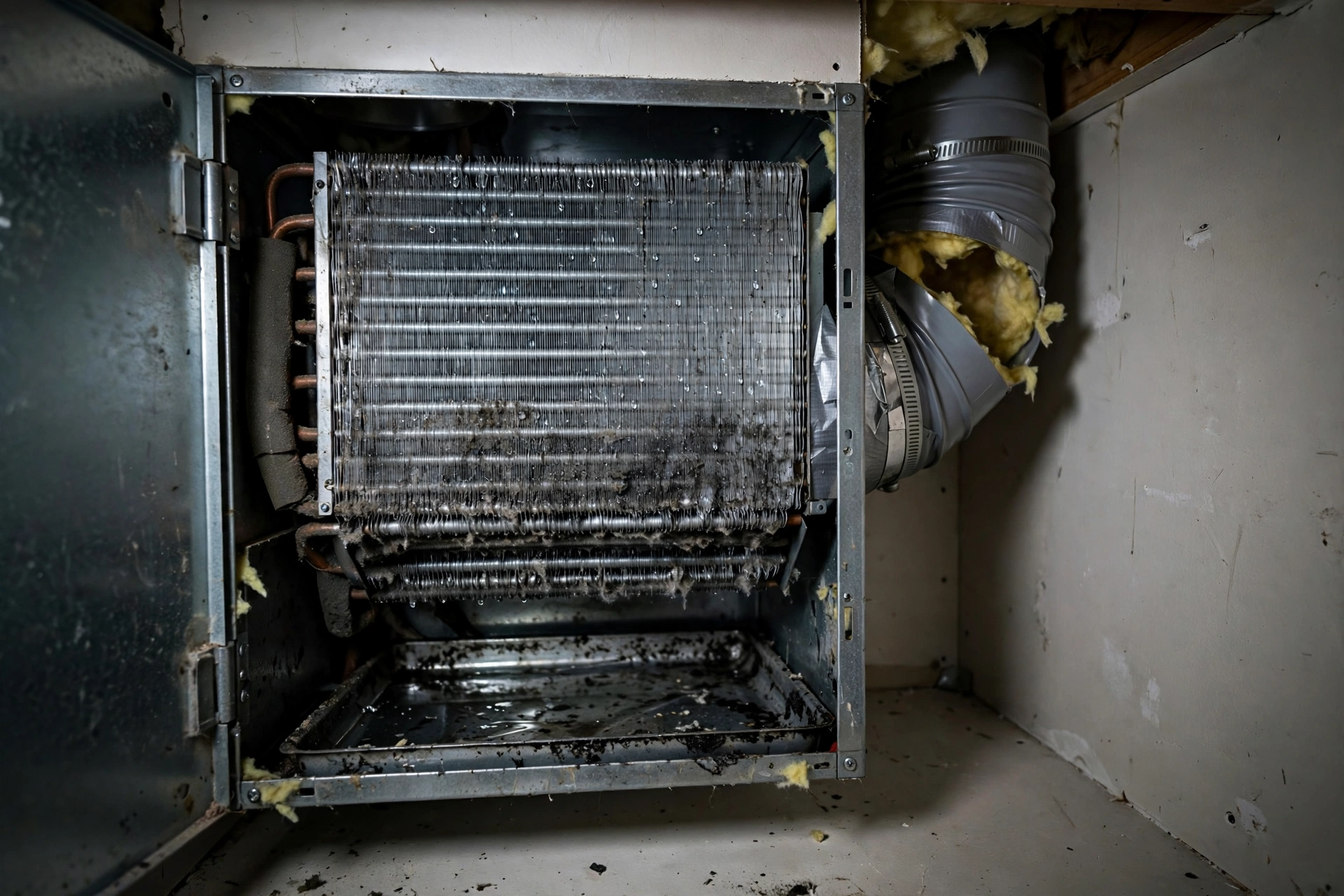
Most AC cleanings are surface work. A technician wipes the coil fins, clears the grilles, maybe treats the drain pan, and the system looks clean when the panel goes back on. But mold grows as a three dimensional network of microscopic threads called mycelium, and on porous materials like flex duct liner, fiberglass duct board, and the insulation around the air handler, those threads root deep into the fibers. Wiping removes the surface colony; the embedded network stays alive and reactivates the moment humidity rises again.
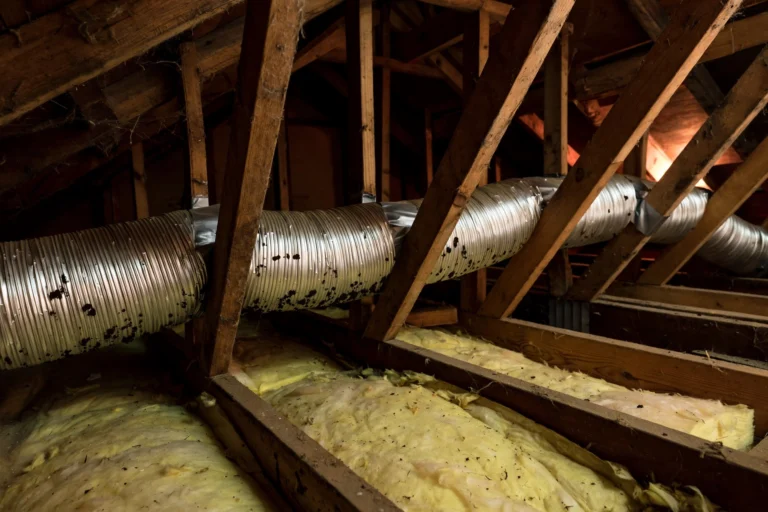
This is not a guess. The EPA, NADCA, and NAIMA are aligned on the rule that matters here: wet or moldy fiberglass duct material must be removed and replaced, not cleaned, and no EPA-registered biocide exists for porous duct materials. Bleach sprayed on porous liner is no better. It lightens the stain without reaching the roots, and the water in it adds more moisture to the material. If your recurrence lives in flex duct or duct board, the cleaning never had a chance, because the material itself is the problem. Bare sheet metal is non-porous and can be mechanically cleaned, which is exactly the fork our guide to what HVAC mold remediation costs in Hollywood FL uses to explain why scopes differ so much.
The Condensate Drain Clogs Again and Standing Water Feeds the Coil
An air conditioner makes water every time it runs. Warm humid air crosses the cold evaporator coil, condensation forms, and the condensate drain line carries it away. When that line clogs with algae and biofilm, water backs up into the drain pan and sits there, sometimes for days. A wet pan and a constantly damp coil are an open invitation to Aspergillus and Penicillium species, and where water stands long enough, even Stachybotrys chartarum. The musty smell returns every time the blower starts.
Homeowners describe this exact loop over and over: the service clears the drain, the smell fades, and two or three months later the odor is back because nothing changed about the conditions that clogged the line. Clearing the drain is maintenance. Checking the pan slope, the line routing, and why the water was standing is the fix. Until someone answers that second question, you are on a subscription to the same service.
The System Cools Too Fast to Dry the Air
An oversized air conditioner is a common culprit in Florida, and it surprises people because the house feels cool. Short cycles cool the air quickly and shut off before the coil has run long enough to wring moisture out of it. The result is a home that is cool but damp, with indoor relative humidity sitting above 60 percent, squarely in mold friendly territory. The EPA recommends keeping indoor humidity between 30 and 50 percent.
In Hollywood FL, where the system runs nearly year-round and humidity is a constant rather than a season, a short cycling system is a mold factory on a timer. Dehumidification is a function of run time, not temperature, which is why cooler air alone never prevents regrowth. None of the generic national pages about recurring mold connect this mechanism to Florida conditions, so homeowners here keep blaming the cleaning when the sizing is the real driver.
Duct Cleaning Was Purchased, but Mold Remediation Was Needed
This is the distinction that costs homeowners the most money. Duct cleaning removes dust and debris. Mold remediation fixes the moisture source, contains the work area under HEPA-filtered negative air pressure so disturbed spores do not spread through the house, physically removes contaminated porous material, and verifies the area is dry and clean before closing up, following the IICRC S520 standard. A duct cleaning does none of the remediation steps, so buying it for a mold problem is paying for the wrong scope.
The smell fades because loose debris was removed, then returns because the colony and its moisture source were untouched. If a company sells you repeated cleanings for a recurring mold problem without ever naming the moisture source, they are treating the symptom on a schedule. The CDC and EPA both frame the point the same way: moisture control is the key to mold control, and nothing in a duct cleaning quote addresses moisture control.
Restricted Airflow Keeps Surfaces Damp Long After the Cycle Ends
Cold surfaces that cannot dry will grow mold even in a recently cleaned system. Clogged filters, closed supply vents, kinked flex duct, and furniture blocking returns all restrict airflow, which keeps the coil and nearby surfaces cold and wet longer than intended. Leaky return ducts are worse: they pull hot humid attic air across cold supply surfaces, and the resulting condensation soaks the duct exterior and nearby insulation.
A moisture meter reading on the duct wrap or the ceiling around the air handler often reveals the damp zone long before growth is visible, which is why readings matter more than eyeballing. Better airflow helps surfaces dry after condensation forms; sealing duct leaks stops the condensation from forming in the first place. Our comparison of mold in attic ductwork versus insulation goes deeper on how duct material and surrounding insulation interact, because in Florida those attic runs are where the dampest surprises hide.
Breaking the Cycle Means Fixing the Moisture, Then Proving It Stayed Fixed
Recurring mold in an AC is a moisture problem wearing a mold disguise, and the permanent fix follows an order. First, identify the moisture source, with the drain, coil, pan, duct material, duct leaks, and indoor humidity all checked, not just the visible spot. Second, replace the porous materials that cleaning cannot save. Third, do the removal work under containment with HEPA-filtered negative air, because cutting into contaminated ducts without it spreads spores through the house. Fourth, verify the fix with moisture meter readings and a post-work inspection before anything is closed up.
EPA guidance also says a system found contaminated with mold should be turned off and not used until remediation is complete, because a running system distributes spores into every room it serves. When the moisture source is corrected and the porous material is replaced, the recurrence stops, because there is nothing left for the spores to grow on. If you want the full picture of how a professional scope is built, start with our HVAC mold removal services in Hollywood FL page and work outward from there.
The Answers to the Questions That Come Up Most
Does cleaning the AC remove mold permanently?
Cleaning removes visible growth, but the mold returns if the moisture conditions stay the same. The EPA puts it plainly: mold will come back if the conditions that caused it are not corrected. Permanent results require fixing the drain, the humidity, or the porous material, not just another cleaning.
Why does the musty smell come back every time the AC runs?
The smell comes from gases released by active colonies, known as microbial volatile organic compounds, and it appears when the blower moves air across them. If the odor returns with the airflow, the colony is still in the system, usually on the coil, in the drain pan, or in porous duct material. Odor that tracks the system cycles is a diagnostic clue, not a coincidence.
Can moldy flex duct be cleaned, or does it have to be replaced?
It has to be replaced. The porous inner liner lets spores and mycelium embed too deep for cleaning to reach, and no EPA-registered biocide exists for porous duct materials, which is why NADCA and NAIMA call for replacement. Before authorizing it, ask the contractor to cut a small inspection window so you can see the condition of the liner yourself.
My AC was serviced and the smell returned in weeks. What should I check first?
Check the condensate drain and pan for standing water, look at the filter and return vents for airflow blockages, and have someone measure indoor relative humidity. If the drain was cleared but the pan still holds water, or the humidity reads high, the service treated a symptom. A recurring problem that survives professional service usually means the moisture source was never named.
Will a UV light stop mold from coming back?
A UV lamp near the coil can suppress growth on surfaces it directly illuminates, but it does nothing for a clogged drain, wet porous duct liner, or high indoor humidity. It is a supplement to moisture control, never a substitute. If the growth recurs in the ducts rather than on the coil, the light was never aimed at the real problem.
Is it safe to keep running the AC while mold is being removed?
No. EPA guidance says a system found contaminated with mold should be turned off and not used until remediation is complete, because running it distributes spores through the ductwork into every room. Professionals seal the supply and return registers and maintain negative air pressure during the work.
Should I call my HVAC technician or a mold specialist?
If you keep asking why does mold keep coming back in my AC after repeated service visits, the answer is usually scope, not effort. An HVAC technician handles the mechanical side: drains, coils, airflow, and sizing. A mold specialist handles the remediation side: moisture source investigation, containment, porous material removal, and verification. Recurring growth needs both, in that order.
Get a Written Scope That Names the Moisture Source
If your AC has been cleaned and the mold came back, the next step is not another cleaning, it is an inspection that finds the moisture source and puts it in writing. Call +1 (954) 676-1007 and tell us what was already cleaned and how fast the mold returned. We will explain what a real remediation scope should include, and you can compare it against anything you were quoted. We serve homeowners across Hollywood, FL.




2 Comments