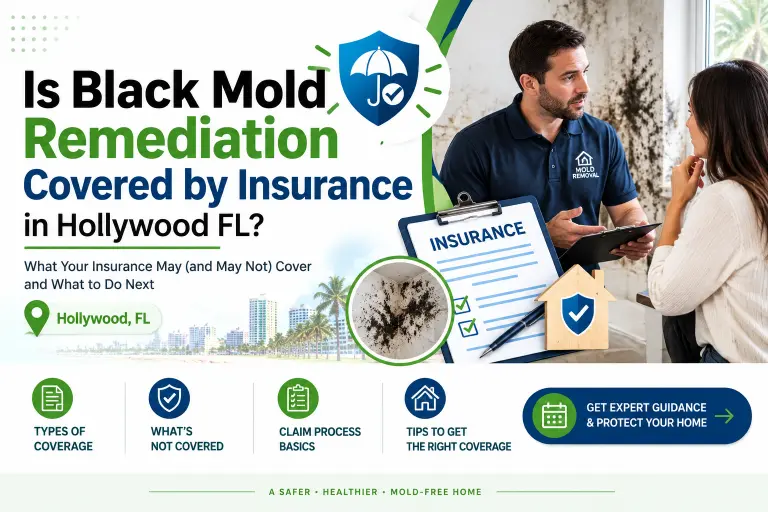
Is Black Mold Remediation Covered by Insurance in Hollywood FL?
Homeowners insurance in Florida typically covers black mold remediation only when the mold results from a sudden, accidental event that’s already covered under the policy, such as a burst pipe or a sudden appliance leak. Mold caused by gradual leaks, humidity, or ongoing maintenance issues is usually excluded, and even covered mold claims are often capped at a set dollar limit, commonly somewhere between $5,000 and $25,000 depending on the policy.
Why Sudden and Accidental Is the Key Phrase in Every Policy
Insurance is built to cover unexpected losses, not conditions that developed slowly over time. That distinction is the single biggest factor in whether a black mold claim gets approved or denied.
- Covered scenario: A washing machine hose bursts overnight, floods a laundry room, and mold develops within days before it’s discovered.
- Excluded scenario: A slow leak behind a shower wall goes unnoticed for months, and mold spreads gradually as a result.
Insurers treat the second scenario as a maintenance failure, something a homeowner is expected to catch and fix, rather than an insurable accident.
What Counts as a Covered Peril for Mold
A covered peril is the underlying event that caused the water damage, not the mold itself. Common examples that typically qualify:
- A burst or frozen pipe
- Sudden overflow from a washing machine, dishwasher, or water heater
- Storm or hurricane damage that lets water in unexpectedly
- Accidental plumbing failures inside a wall
If the underlying event isn’t covered, the resulting mold generally isn’t either.
What’s Almost Always Excluded
Across insurance forums and industry sources, a few exclusions come up consistently:
- Long-term leaks. Water intrusion that persisted for weeks or months before discovery is treated as a maintenance issue, not an accident.
- Humidity and condensation. Mold from ongoing moisture exposure, common in Florida’s climate, without a specific triggering event.
- Pre-existing mold. Mold present before the policy started, or found during a home purchase, isn’t retroactively covered by a new policy.
- Neglected repairs. If a known leak or moisture issue wasn’t addressed promptly, resulting mold is often denied.
Florida-Specific Coverage Caps
Florida homeowner policies that do include mold coverage typically apply a sub-limit, a separate, lower cap specifically for mold remediation, distinct from your overall dwelling coverage. It’s common for these caps to fall well below what a full remediation across multiple rooms or an HVAC system actually costs. This matters most for larger jobs, a small bathroom spot might fall within a policy’s mold sub-limit, while multi-room or whole-HVAC remediation frequently exceeds it. Checking your specific policy’s mold sub-limit before you need it is the only way to know where you stand.
How to Document a Mold Claim Properly
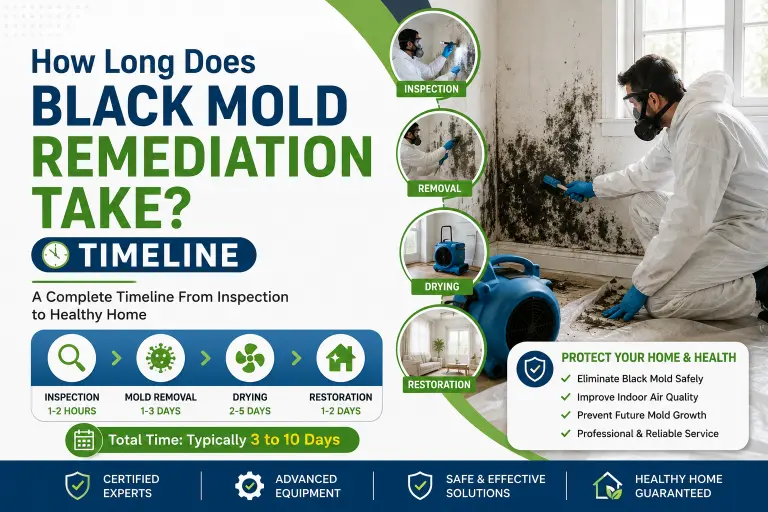
Insurance adjusters and mold remediation professionals consistently point to documentation as the deciding factor in disputed claims. Timing matters here too, understanding how long black mold remediation typically takes can help you plan around an active claim while work is underway.
- Photograph everything before any cleanup begins, the visible mold, the suspected water source, and any surrounding damage.
- Get a professional inspection report that identifies the mold’s extent and, where possible, its likely cause.
- Report the issue immediately once discovered, delays are one of the most common reasons claims get denied as “neglect.”
- Keep records of the triggering event, a plumber’s repair invoice for a burst pipe, for example, ties the mold directly to a covered peril.
- Request a written scope of work from your remediation company before work starts, this becomes part of your claim file.
Does Documented Mold Remediation Affect Home Value?
For sellers, addressing mold properly, and keeping the documentation to prove it, tends to protect home value rather than hurt it. Undisclosed mold that surfaces during a buyer’s inspection can lead to renegotiated pricing, delayed closing, or a canceled deal. A documented remediation report, by contrast, gives a seller something concrete to show: the problem was identified, treated by a licensed specialist, and verified as resolved. For buyers, that same documentation is often the deciding factor in whether a mold-affected property feels like a manageable fix or a reason to walk away.
FAQ
Does homeowners insurance cover mold remediation?
Only when the mold results from a sudden, accidental event already covered by the policy, such as a burst pipe. Mold from gradual leaks or ongoing humidity is typically excluded, and covered claims are usually subject to a lower mold-specific dollar cap.
Does home insurance cover mold from water damage?
It depends on what caused the water damage. Sudden water damage from a covered peril, like an appliance failure, generally allows the resulting mold claim to proceed. Water damage from a slow, unnoticed leak is usually treated as a maintenance issue and excluded.
Does homeowners insurance cover mold from a roof leak?
If the roof leak was sudden, such as storm damage that created an opening, resulting mold is often covered. A roof leak that developed gradually from wear and was left unaddressed is typically excluded as a maintenance failure.
Does State Farm homeowners insurance cover mold?
Coverage depends on the specific policy and endorsements in place, not the insurer alone. As with most major carriers, State Farm policies generally follow the same sudden-and-accidental standard, with mold remediation subject to a policy-specific sub-limit. Checking your individual policy documents or calling your agent directly is the only way to confirm your exact coverage.
What evidence do I need to support a mold insurance claim?
Photos of the mold and its suspected source taken before cleanup, a professional inspection report documenting the extent and likely cause, records tying the mold to a specific covered event (like a repair invoice), and a written scope of work from your remediation company.
When is it worth paying for mold remediation out of pocket?
When the mold resulted from a gradual or excluded cause, filing a claim that gets denied wastes time you could spend addressing the problem directly. If a policy’s mold sub-limit is low relative to the job’s actual scope, paying out of pocket for the remainder while still filing for whatever portion is covered is often the more practical path.
Mold problems don’t wait for a claim decision to spread further. If you’ve found black mold in your Hollywood, FL home or business, our black mold remediation team can provide the documented inspection you need, whether you’re filing a claim, closing on a sale, or just want it handled properly. You can also view our location and reviews on Google. Call now to get started.